



Apr 02, 2026 8:00pm IST
Why India’s 3 Hour Blockbusters Are No Longer a Problem for Theatres (EXCLUSIVE)

For much of the multiplex era, a long runtime was treated as a commercial compromise. Every additional minute meant one less show, tighter scheduling, and a smaller window to maximize revenue across the day. But as Indian theatrical business becomes increasingly driven by event films rather than volume programming, that old equation is beginning to crack. The system is returning to where it was when it began.
That logic is now being challenged by the very films dominating the box office. From “Animal” (2023, 3 hours 21 minutes), “Pushpa 2 The Rule” (2024, 3 hours 20 minutes) and “RRR” (2022, 3 hours 2 minutes) to the recent ones like “Dhurandhar” (2025, 3 hours 34 minutes), “Dhurandhar: The Revenge” (2026, 3 hours 49 minutes) and “Border 2” (2026, 3 hours 20 minutes), Indian filmmakers are once again embracing the oversized theatrical epic. More significantly, exhibitors no longer seem alarmed by it.
The reason is straightforward. In the current theatrical economy, a packed show is proving more valuable than an extra empty one.
“The assumption that fewer shows automatically means lower revenue is outdated,” says Devang Sampat, managing director of Cinépolis India. “The question is never how many shows you can fit. It is how much demand each show generates.”
Occupancy Is Beating Scheduling Math
That distinction is becoming central to how exhibitors assess long form event cinema. A three hour film may reduce the number of daily screenings, but if those screenings are driving high occupancies, the yield per show can more than compensate. In other words, the business case for a long film no longer hinges on efficiency alone. It hinges on whether the film can turn itself into an event.
Akkshay Rathie, director at Aashirwad Theatres Pvt Ltd, puts it more bluntly. “There’s no point in having an overdose of shows if we can’t generate occupancy,” he says. “The figure we should focus on is the footfalls.”
Related Stories


That shift in thinking reflects a larger reset in audience behavior. In the streaming era, theatrical moviegoing increasingly demands scale, immersion and a sense of occasion. A film now has to justify not just its ticket price, but the decision to leave home at all. And for many audiences, longer runtimes are not necessarily a deterrent if the payoff feels substantial enough.
"What audiences are really telling us is that they will commit time when the payoff justifies it,” Sampat says. “A 90 minute film with a weak script will struggle just as much as a three hour film with a weak script. Runtime is not the variable. Content conviction is.”
A Longer Film Can Mean A Bigger Spend
That has obvious implications for ticket sales, but the upside for exhibitors extends beyond admissions. Longer films also tend to stretch the overall spend per patron. If a viewer is in the auditorium for three hours or more, the cinema outing begins to behave more like a leisure block than a quick watch and exit experience, often translating into stronger food and beverage sales. “When someone is in a cinema for three hours, the likelihood of a second order goes up,” Sampat notes.
Still, the economics are not entirely frictionless. Fewer shows do mean reduced scheduling flexibility, and that becomes a problem when a film underperforms. A long film that fails can lock up screens while limiting a theater’s ability to optimize playtimes or quickly pivot to stronger product.
That, according to the trade, is where the real risk lies. “The risk is not runtime. The risk is a long film that does not deliver on its promise,” Sampat says.
The Real Risk Is Not Length But Failure
Raj Bansal, Jaipur based multiplex owner and distributor, frames the trade off in starkly commercial terms. “It affects the revenue by about 15%,” he says of the reduced showcasing a longer film brings. “But if you make a lengthier film and if it is successful, you can hike the price by 15 to 20% because it’s a lengthier film, you’ll get less showcasing. So it compensates that way.”
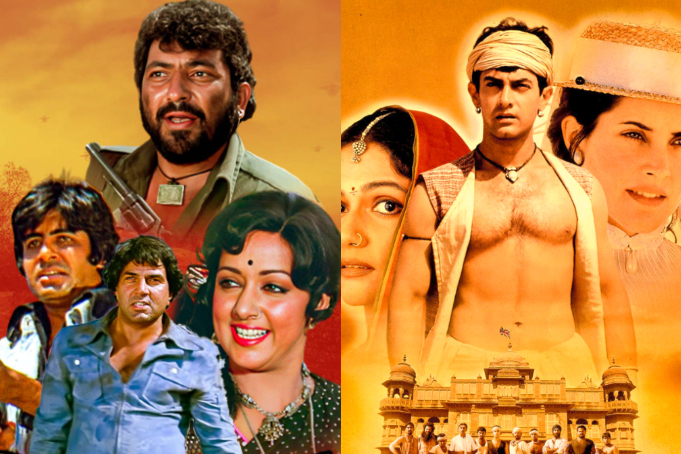
In Bansal’s view, the current wave of long form blockbusters is less a new trend than a return to Indian cinema’s original grammar. He points to “Mughal e Azam” (1960, 3 hours 17 minutes), “Sholay” (1975, 3 hours 24 minutes) and “Lagaan” (2001, 3 hours 44 minutes) as reminders that the Hindi film industry was historically built on sprawling, immersive storytelling. The shorter multiplex era film, he suggests, was in many ways a commercial correction rather than the natural default.
The recent success of South Indian spectacles helped speed up that correction. Films like “Pushpa: The Rule” and “RRR” demonstrated that audiences would not only sit through longer runtimes, but actively reward films that felt expansive enough to command their time.
Theaters Want Events Not Just Extra Shows
That may be the key lesson for the industry now. Audiences are not rejecting length. They are rejecting films that do not earn it. For exhibitors, that changes the conversation entirely. The question is no longer whether a three hour film is too long. It is whether the film is compelling enough to turn those three hours into a must watch outing.
And in a theatrical marketplace increasingly dependent on eventization, that distinction matters more than ever. A shorter film may still offer more shows. But a longer one, if it lands, can offer something more valuable. A phenomenon.

















Comments are moderated. They may be edited for clarity and reprinting in whole or in part in Variety publications.