



Mar 08, 2026 11:48am IST
‘Thinking Violence Works These Days Is Small Way Of Thinking’: Saurabh Shukla And Pankaj Kapur On Trend-Driven Cinema (EXCLUSIVE)
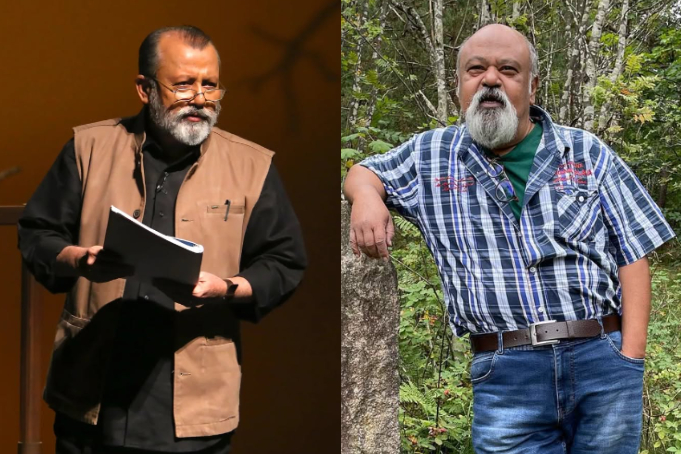
The conversation around algorithms deciding what films studios should make next, and filmmakers chasing popular formulas to land that one blockbuster, is becoming increasingly common. Violence as a genre is also clearly the flavor of the season. Pushing back against this idea are Pankaj Kapur and Saurabh Shukla, whose film “Jab Khuli Kitaab” recently released.
The feel-good drama, directed by Shukla and starring Kapur in the lead, released on Z5 and stands in stark contrast to much of what is currently being produced in India. In an exclusive conversation with Variety India, the two veterans spoke about trend-driven cinema and how they view it through the lens of decades of experience in the industry.
When asked about the growing trend of the industry ecosystem leaning toward a particular kind of filmmaking, Shukla said, “Look, all this happens in marketing. These statistics get created. The answer to this is actually very simple. First of all, a film does not become good because of its genre or a particular type of film. You can say everything should be love stories or family films, but that does not make films good, right? Make a good film. Whatever you want to say, whether you want to talk about violence, make a horror film, or create a fantastical story, say whatever you want, but make it well. It should be engaging and people should take something back home from it.”
Related Stories

Shukla continued, “There is always a flavor of the season. And that flavor is not created by the audience. It happens when the market decides. For example, someone says, ‘That sandalwood soap is selling well,’ and suddenly everyone assumes that this is the soap everyone will use. Then fifty more versions appear in the market.”
Explaining further, Saurabh Shukla added, “Let me give you the example of a vest. One vest becomes very famous and sells a hundred pieces, just as an example. Then another person says, ‘Oh, that one is selling a hundred pieces, I will also start making vests.’ Fine, you start making vests. But out of those hundred sales, ten shift to yours and your ten start selling. So where is the intelligence in that? Instead of making another vest, make something else.”
Shukla also cited the example of Sholay to explain how the blueprint of a successful film is often copied repeatedly without success.
“Maybe someone makes something like Sholay. It becomes a super-duper hit. After that, for the next five, six or even seven years, people keep making films on the same blueprint using the same formula, and they keep flopping. So even if you have a sense of marketing, thinking that ‘these days violence works’ or ‘these days action works’ is a very small way of thinking. What will actually work is whatever is made well and released well.”
He added that the process involves several stages. “First comes the writing, then the making, and then, in today’s environment, how the film is released, what kind of publicity it gets, how far the film reaches and what perception is created around it.”
Pankaj Kapur, meanwhile, offered another perspective on the debate. “The real wisdom lies in this: if you create something different from what is currently trending, that is what will attract attention. In drama, since we are students of drama, there is a basic principle that is taught. If something is moving very fast on one hand, the one that stands still on the other is more dramatic.”
He went on to cite The Godfather as an example of how an unconventional marketing strategy helped amplify the film’s impact.
“That is a strategy. I am saying that a lot goes into how a film is made and how it is released. We should not think in such static terms where we say, ‘Out of 50 people, 40 watched this film and only 10 watched that one.’ Maybe on that particular day when you created that data, the other 50 people were busy with something else. Something might have been happening at their homes. So how can you make such conclusions? Although people do. I am not saying they do not. I have just never been able to understand it. I think we should try to find new ways of marketing.”
In conclusion, Kapur said, and both actors agreed, “There is no other way. It is a process of growing. I am not against any of these approaches. I am simply saying that it is a process of realization for them, of understanding what actually works. And finally, what our understanding tells us is that something must be good, it must be made well, and it must be realized intelligently.”















Comments are moderated. They may be edited for clarity and reprinting in whole or in part in Variety publications.