



Nov 27, 2026 10:30am IST
‘Shraddha Kapoor Gained 10-12 Kgs For ‘Eetha’’s Second Half and Climax Song,’ Reveals Choreographer Vaibhavi Merchant (EXCLUSIVE)
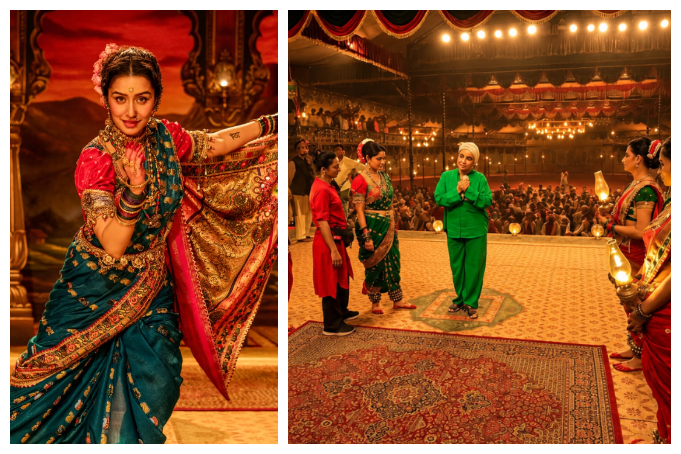
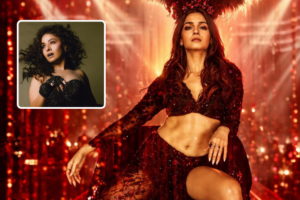
National Award-winning choreographer Vaibhavi Merchant is returning to the big screen this December with Laxman Utekar’s “Eetha.” She last worked on “Rocky Aur Rani Kii Prem Kahaani” in 2023. In an exclusive interview with Variety India, Merchant opens up about preparing Shraddha Kapoor for the grueling physical demands of the traditional Lavani dance form for tracks like "Ji Ji Re Ji," while sharing why she now prefers selective, challenging projects, from collaborating with director Atlee on “Raaka” to directing a grand, new stage musical for the Nita Mukesh Ambani Cultural Centre (NMACC).
For ‘Eetha,’ how did you structure Shraddha Kapoor’s training and choreography to get the spirit of a seasoned Lavani performer?
Shraddha began with character workshops alongside Laxman Utekar, followed by dance workshops with two Lavani performers: the late Shakuntala Nagarkar and Akshay Malvankar. Even while battling cancer and undergoing treatment, Shakuntala tai led a seven- to ten-day workshop to pass on the essence of connecting with an audience and adjusting to heavy, traditional 1940s-50s ghungroos (musical anklets).
Laxman decided to shoot in reverse order, starting with the second half and the climax song first. That meant preparing Shraddha after she had gained roughly 10 to 12 kilos for that stage of the character. Extra weight increases strain on the knees, calves, and stamina during fast transitions, so we pushed through grueling rehearsals and conditioning, taking it hour by hour.
Just before lunch on the second day of shooting that climax sequence, Shraddha suffered a serious injury: dancing barefoot on a floor warmed by daytime heat created friction and risk. It rattled everyone’s morale, but after a six-week to two-month break and strict physiotherapy, we returned with renewed focus and built mandatory warm-up, cool-down, and physio protocols around every subsequent Lavani.
Related Stories
How did you weave the choreography into the narrative of ‘Eetha’?
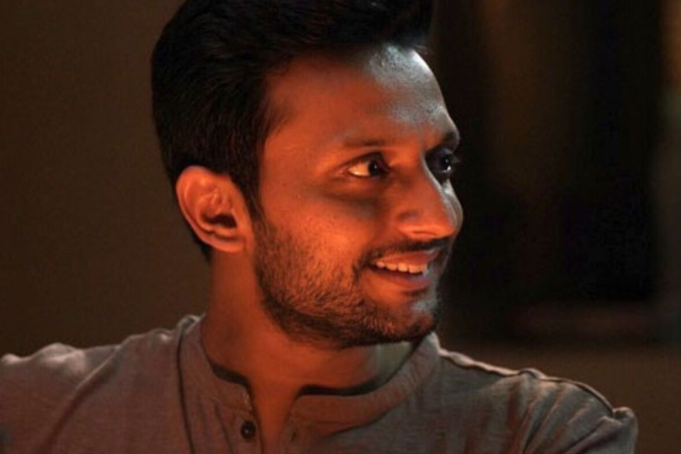
Crowd reactions are essential to making a performance feel alive, and capturing genuine non-actors —including villagers brought in for the shoot — was one of the hardest parts. Alongside actors like Siddharth Jadhav, Mohammad Zeeshan Ayyub, and Ishtiyak Khan, the crowd needed to react naturally without overacting, whether hooting, tossing money, or getting swept up in the moment.
To get authentic reactions, especially during late-night shoots, I let Shraddha perform longer, uninterrupted stretches of the mukhda, antara, or a two-part hook step so the crowd reacted in real time. That raw energy showed during big moments like her spin and salaam, and the climactic fall.
Because we shot in reverse, the choreography had to reflect her shifting stature, vulnerability, rise, and fall across three to four months. Shraddha’s discipline stood out: she gained weight for the character and later shed roughly 12 to 15 kilos to look lean for the final song filmed, all while we carefully managed her recovery and injury prevention.
You won your first National Film Award for ‘Dholi Taaro Dhol Baaje’ in 1999 and your second for ‘Dhindhora Baje Re’ in 2023. Between those two milestones, what has changed the most about how you design a song?
Between those two National Awards, life happened: bringing a cycle of learning, unlearning, and deeper respect for everyone on set, from the steadicam operator to the jimmy jib crew. Having an established body of work also makes communicating a vision to directors and producers easier than at the start of my career.
The biggest shift is that I have consciously slowed down. I prefer one or two meaningful projects and spending time in theatre, which I love balancing with cinema. After “Rocky Aur Rani Kii Prem Kahaani,” I’m returning with “Eetha,” alongside upcoming songs for “Raaka,” “KING” and “Maatrubhumi” for my dear friend Salman Khan. I only want projects that challenge and excite me.
Technologically, VFX and AI tools speed up parts of the workflow, yet my core process hasn’t changed. I still feel that nervous energy on set until I find the pakad (grip) on a sequence. Earlier, I controlled every beat on paper and stuck rigidly to my shot list; today, I’m much more open to exploring on the floor while pushing myself out of my comfort zone.
With ‘Eetha’ gearing up for its December release, what kind of projects are you looking forward to next?
While there are projects I can’t talk about yet, including a major film announcing next year, I recently shot a fantastic sequence with Atlee for “Raaka.” He boldly uses cutting-edge cinema technology, and I’ll be shooting more sequences with him in January.
After that, I’m gearing up to direct a large-scale stage musical for the Nita Mukesh Ambani Cultural Centre, aligning with Mrs. Ambani’s vision for theater. It will be my second production there after “Civilization to Nation,” mounted as a grand spectacle for their five-year celebration in 2028. Meanwhile, I’m keeping my fingers crossed to direct my own feature film soon. Outside of work, I just want to travel, read plenty of books, and enjoy great food.


Comments are moderated. They may be edited for clarity and reprinting in whole or in part in Variety publications.