



Feb 11, 2026 2:50pm IST
Rajkumar Hirani: ‘We Have to Become Conscious of Entourage Costs, Otherwise, Budgets Will Start Beating Us Down’ (EXCLUSIVE)
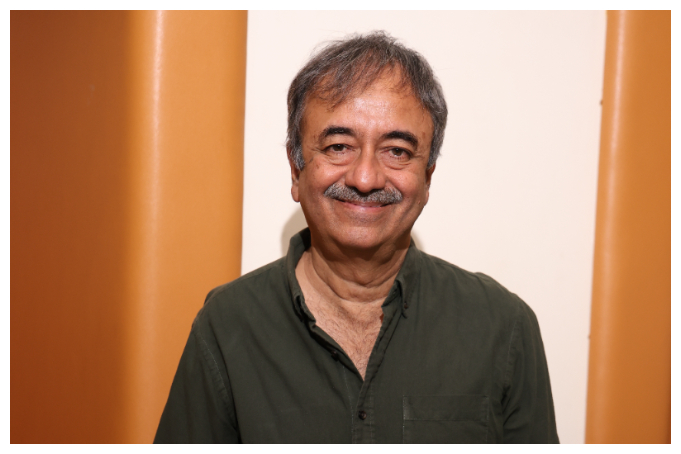
Rajkumar Hirani’s office feels less like a workplace and more like a walk-through of his filmography. Every corner carries a memory, the instantly recognizable “bum seats” from "3 Idiots," the beloved two-seater bike from "Munnabhai M.B.S.S." — relics of stories that have made audiences laugh, cry, and reflect. It’s a space, much like Hirani’s mind, crowded with images that trigger emotion before a single word is spoken.
As we settle in for a sit-down, Hirani asks where I want to take the conversation. What follows over the next 60 minutes is a free-flowing exchange from behind-the-scenes anecdotes from his most iconic films to his curiosity about artificial intelligence and the ideas shaping his future. These are excerpts from a conversation with one of Indian cinema’s most instinctive storytellers.
Your protagonists are ordinary. Is it a conscious way to countering the larger-than-life heroism rampant in Bollywood?
It’s not something that has been done consciously. Creation happens from our memories, our experiences and our understanding of life. So all the time, you’re picking triggers from life. I have grown up in a small town. So, these were the characters, possibly. So, my understanding of these characters is probably more. And that’s how they keep coming on paper.
As a kid, were you always intrigued by the simple slice-of-life characters?
My natural bent as a kid was more toward watching Hrishikesh Mukherjee films or kinds of human-interest stories. Then action. It’s not that I can’t enjoy or don’t like action. But within the action, there has to be something more dramatic happening, rather than just people bashing unnecessarily; which beyond a point, can get tiring.
Comedy being your most potent tool of storytelling. Does humor ever restrict you in terms of genre?
My natural bent is toward light-hearted things. But wherever there is a need where you need to go serious, like say, "3 Idiots" — when Sharman (Joshi) has to give that interview, or R Madhavan has to tell his father that he can’t become an engineer, those things were treated with sincerity and honesty, we are not going to crack unnecessary jokes there. When I look at my cinema, I don’t call it a comedy as such. It’s got a blend of everything. Every filmmaker will have an attraction for certain kinds of things. Somebody will like a thriller. I tend to think light-hearted.
Related Stories
Popular on Variety
How did you receive the mixed response to "Dunki"?
Nobody starts a film by saying, ‘I want to make a lesser film.’ Some films will work more, some will work less, and some films will not work. But to be honest, it’s not that "Dunki" didn’t work. It did fairly large numbers. It’s just that at that point, Shah Rukh Khan’s other two films did way beyond any other film. And possibly this was slightly less. Sometimes, some subjects will find resonance, and some won’t. "3 Idiots" was about education. Every household having a kid in school or college, so when you talk about not pressuring them, they see their own family, and find a connect. "PK", was about religion, again, every household will find a connect. But not every subject will be like that. Like "Sanju". Similarly, with "Dunki", I realized later, that not many people found resonance. But you won’t be able to make a subject which will find resonance all the time. So you have to be okay with that and say, ‘But I’m convinced and I feel strongly about that’. We gave it our best. Sometimes that ‘best’ might not find resonance. But we were still lucky that it, really, did extremely good numbers.
How careful are you with money as in film budgets?
I am extremely conscious and aware of budgets. As they say, films don’t fail, budgets fail. So you have to really make it cost-effective. My learning has been like that, even before I made my first film, whatever ads I did or whatever little bit of other work I did, we always operated in extremely tight budgets and small budgets. Even my first film was extremely tight on budget. So one has to plan enough to stay within the budget. Or do your math, that, ‘Okay, if I make it in this budget, I’ll be able to recover (the cost). You don’t want anybody to lose money on your film. There are always ways, I feel, to cut down costs. In fact, sometimes when you have a liberal flow of money coming in, you’re thinking less. You say, ‘Haan, yeh bhi le lo (Take this as well). Like my first film, I distinctly remember we were shooting in the Agriculture College in Pune, and we had lot of these corridor shots, for which we had to use a steady cam. I said I will call the steady cam on one day and finish the scenes. I didn’t have access to a crane in many places, as we had a tight budgets. You will find ways, when you have to. There was a last photograph we had to shoot in "Munna Bhai M.B.B.S.", of Sanjay Dutt getting married, on a stage. We went to a real location where somebody was getting married. Sanju had to wait till 11 pm, till the bride and the groom left. I said quickly take the picture. So, you say, okay, this is where I need the money, I’ll spend. This is where I can save it and do it in the budget. I think films can be made on a small budget if you plan it well.
Of late, mounting film is not as easy as it used to be. What is your take on excessive spending on stars and their crews?
My first film got made in 2003. It’s been over 20 years now. I have seen a major change and observed why the costs have started going up. A lot of things we did ourselves as a small team. You have a direction team, you have a small production team, and they all got together and did things. There were no casting directors then. The assistant would cast. I’m not saying that a casting director doesn’t help. There were many locations, but there were no location managers. We would go and hunt for locations ourselves. Of course, location managers help. But there are so many things that have just been added. Costumes, the way they are being made now, compared to the way they were being made then. Production design, the way it’s being handled now. Our crew sizes have increased. We made films with a much smaller crew. And now, with so many things being added, somewhere the costs have gone up, which can still be controlled. And of course, the entourage we are talking about, as I said, I have been lucky that I have worked with mostly people — Aamir (Khan), Shah Rukh (Khan), Ranbir (Kapoor) — who have been very conscious that we don’t need extra hands. But when I make ads, I see the amount of money being spent on the entourage and how every actor comes with a bunch of people. At some point, we have to become conscious of these things. Otherwise, the budgets will start beating us down.
Bollywood is churning out one-third of the volume of movies it once did. Do your industry peers debate this downsizing?
Post-pandemic viewing habits have changed. Earlier, nobody was watching so much of OTT. When people sat at home for a long stretch of time, they started watching it. They got exposed to world and regional cinema at the ease of their home. The televisions became bigger. You could watch it anytime, you could stop it and continue it whenever you wanted. There’s a certain section of the younger people who go out to have fun. But a little older people found this (home viewing) easier. So now it’s only when they hear of a film with a lot of noise, that they feel the need to go and watch it in the theaters. The other big problem is, knowing it’s going to release on OTT soon, people say, ‘We will watch it when it comes at home.’ As an industry, we need to change certain things, like what Aamir has been talking about. There should not be a window, of just two months between theatrical and OTT release. Like earlier, it was six months. Now people feel it’s going to come in two months. Yeah. So why go out? That’s one thing. And the rest, I think, will purely depend on the quality of cinema. The moment we improve our quality, people will, I guess, also come to see them. I feel the visual thirst is over. Every week, fortnight, you’d say, ‘Oh, I have not seen this film, let’s go’. But now you’re watching reels and YouTube, for 4-5 hours a day, possibly more. There’s so much content. So we’re competing with the phone. It’s a changing world. I guess we have to make better cinema. The moment we make better cinema, people will come to the theaters.
What is your take on violence on screen?
I very strongly feel that everybody should be allowed to do whatever they want as a filmmaker. If it’s rated as an adult film, don’t go and watch it. If violence bothers you, don’t go and watch it. They’re rating it ‘A’. Today’s thing is, violence is too much. Tomorrow, we might say this humor is too much and it’s affecting some of my sensibilities, hurting somebody else. Don’t be so overtly sensitive. I think censorship should not be there. Let people make whatever they want to make. Nobody’s forcing you to go and watch it.
What can we expect in terms of films going forward?
I think the next six months are going to be spent on writing whatever film I’m going to finally make. Hopefully, by the end of 2026, we’ll start something. Which will take another year. Luckily, I have a few ideas. I’m also sometimes very excited about this AI thing... I want to do a short AI film.







Comments are moderated. They may be edited for clarity and reprinting in whole or in part in Variety publications.