



Mar 09, 2026 8:08pm IST
Marathi Cinema’s Leading Women On Risk, Reinvention And The Fight For Complex Roles: ‘If Everyone Plays Safe, Creativity Dies’ (EXCLUSIVE)
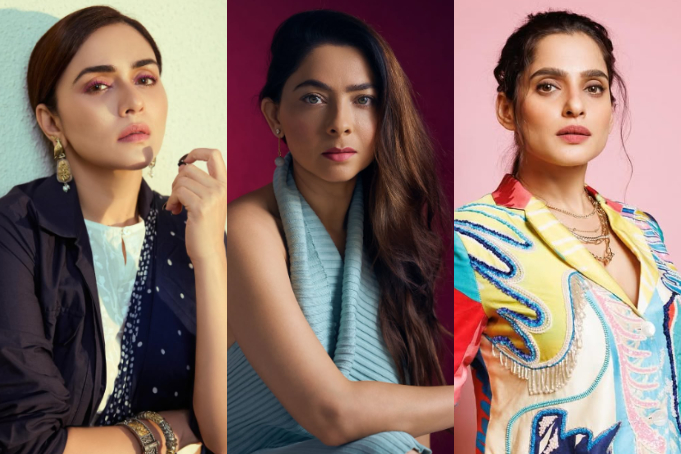
For decades, Marathi cinema has built a reputation that many larger film industries still aspire to: a storytelling space where women are written with agency, contradictions and emotional depth. Long before “female-led cinema” became a popular industry phrase, Marathi filmmakers were crafting narratives in which women navigated marriage, ambition, morality and power with striking nuance.
But the ecosystem that nurtured those stories is now going through a period of transition. With theatrical revenues still recovering and the industry searching for financial stability, actors say the appetite for risk has begun to shift. Filmmakers are becoming more cautious, producers are recalibrating investments and actors are increasingly exploring opportunities beyond the industry.
Variety India spoke to Sonalee Kulkarni, Priya Bapat and Amruta Khanvilkar — three of the leading women of Marathi cinema today — about how they see this moment of change. While they acknowledge the challenges the industry faces, they believe Marathi cinema’s creative strength remains intact. Its future, they say, will depend on whether filmmakers and producers are willing to embrace experimentation again.
The Legacy of Complex Women
Any conversation about female representation in Marathi cinema inevitably begins with its legacy. The industry has produced some of Indian cinema’s most iconic female characters, from Smita Patil in Umbartha and Jait Re Jait to Mukta Barve in "Jogwa" , and Kulkarni herself in "Natrang".
Related Stories

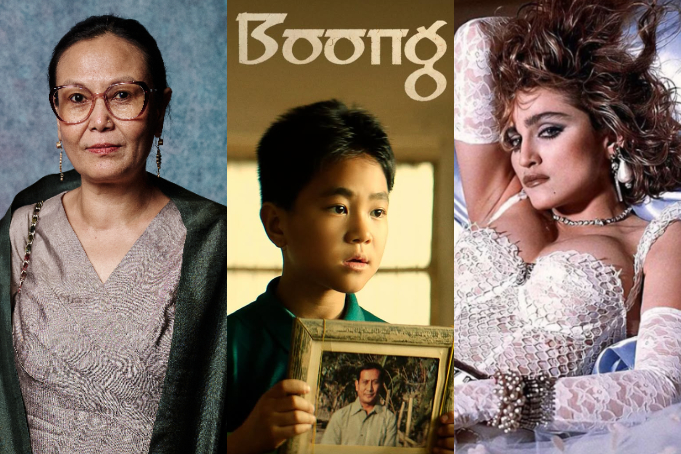
These films did not simply center women. They examined desire, vulnerability and moral conflict in ways rarely seen in mainstream Indian storytelling. Their characters were flawed, emotional and often caught in complicated social situations — qualities that made them feel deeply human.
According to Khanvilkar, that tradition continues even today. “Even today actresses are getting opportunities to explore equally layered roles,” she says. “In Marathi cinema, even in the smallest and simplest films you often find deeply complex characters. The length of the role may or may not be very big, but the emotional depth is always there. That emotional graph gives actors a wonderful opportunity to explore their craft.”
A Culture of Caution
What has changed, however, is the environment in which these stories are being produced. For Bapat, the most noticeable shift is the growing caution within the industry.
“I feel that the women characters in Marathi cinema earlier were very, very strong,” she says. “I don’t think it has shrunk or that we no longer have such nuanced or layered characters. Those kinds of roles still exist.”
“Overall, the complexities in storytelling have been reduced a little,” Bapat explains. “Everyone is trying to play a slightly safer game because no one really knows the recovery game right now. When the economics of filmmaking become uncertain, the risk-taking naturally reduces.”
Yet she also senses the possibility of another creative shift. “In the last year or so I have started noticing a very different change in the way Marathi cinema is approaching storytelling,” she says. “So I’m hopeful that the picture will change soon and we will start seeing more experimentation again.”
Actors Seeking Creative Growth
The evolving landscape has also influenced how actors approach their careers. In recent years, several performers from the Marathi industry have taken on projects in Hindi cinema and on streaming platforms, often prompting speculation about whether regional industries are losing talent.
Bapat rejects that interpretation. “I don’t think Marathi cinema is pushing its talent away,” she says. “But as actors we constantly feel the need to grow. We want to take new challenges, learn new things and explore different kinds of storytelling.” For her, working in Hindi projects was less about leaving Marathi cinema and more about expanding creatively.
“Hindi definitely gave me more challenge in terms of the roles that came my way,” she says. “The characters I played there demanded something different from me as an actor. But that doesn’t mean I have distanced myself from Marathi cinema. It’s still very much home.”
Khanvilkar agrees that actors simply follow strong stories wherever they appear.“At the end of the day, what really matters is the story, the director and the character,” she says.
Women Creating Their Own Opportunities
Interestingly, many female-driven films in recent years have been propelled by women themselves. Khanvilkar believes actresses are increasingly taking the initiative to bring such projects to life. “A lot of women-centric films actually happen because women themselves take the initiative to make them happen,” she says. “Sometimes they produce the film or bring the whole project together.” That commitment often goes far beyond performance.
“When a woman truly believes in a story, she puts her heart and soul into it,” she says. “She literally moves heaven and earth to make sure the film gets made and promoted properly.” The success of "Baipan Bhari Deva" demonstrated the power of that effort. The film became a cultural phenomenon in Maharashtra, drawing large groups of women to theatres and turning the theatrical experience into a collective celebration.
The Financial Challenge
Despite those successes, financial pressures continue to shape the industry. According to Khanvilkar, the economics of Marathi cinema remains one of its biggest challenges. “Because of that, many people are a little apprehensive about investing money in Marathi films,” she says. This caution inevitably shapes the projects that get greenlit. Kulkarni believes the industry sometimes falls into a pattern where success leads to imitation rather than innovation.
“If something works, everyone wants to do the same thing,” she says. “People try to follow the safe route because they feel that is the most secure way forward.” Over time, she warns, that mindset can flatten the creative diversity that once defined the industry. “The exhibitors don’t want to take a risk. The audience also sometimes hesitates to experiment,” she says.
The Road Ahead
Despite these challenges, Kulkarni believes Marathi cinema’s creative identity remains strong. “I don’t think it’s diluted,” she says. “Rather, it has become more filtered and more concentrated.” According to her, both the industry and its audiences have matured. “The storytelling has matured, the writers have matured and the way they approach their narratives has evolved,” she says. Ultimately, the future of Marathi cinema will depend on whether the industry can balance financial realities with creative ambition.
Kulkarni believes actors themselves must also help push that change. “If people like us who have been in the industry for quite some time don’t stand up and make these choices, then who else is going to do it?” For Bapat and Khanvilkar, the answer lies in continuing to tell stories about women who are complex, flawed and deeply human — the very qualities that helped Marathi cinema build its reputation. If the industry can rediscover that fearless spirit, its next chapter may be just as powerful as the one that came before.













Comments are moderated. They may be edited for clarity and reprinting in whole or in part in Variety publications.