



Jan 31, 2026 9:32pm IST
Freedom At Midnight Season 2 Has A Powerful Beginning, Weary Middle And A Reflective Aftertaste: TV Review
The pool of Indian dramas “adapted from real incidents” today feels bottomless. Add a few thinly sketched historical figures, serviceable production design and dialogue engineered to echo whichever ideological position is being taken and the template practically assembles itself. Amid this clutter, the real challenge is to make a film or series that refuses to play this game, one that is hell-bent on digging up another side of history, preferably the humane one.
It is a striking coincidence, then, that Sriram Raghavan’s theatrical release Ikkis and Nikkhil Advani’s SonyLIV series Freedom At Midnight: Season 2 arrived just a week apart. Both works share a deceptively simple idea: to reveal the humanity of historical figures and to look at tragedy through an unbiased lens that resists the temptation to pick sides.
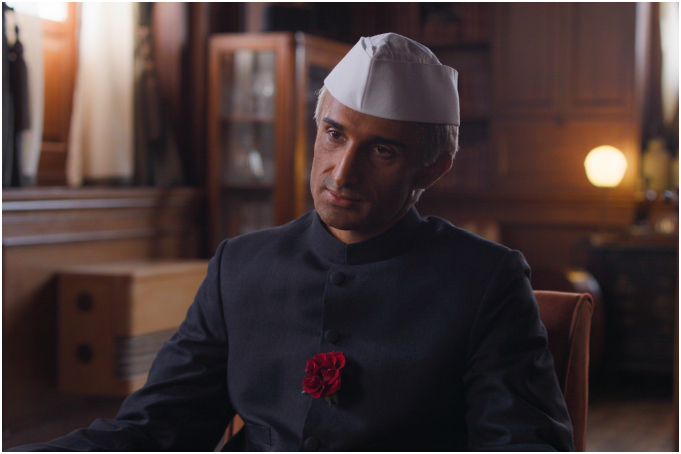
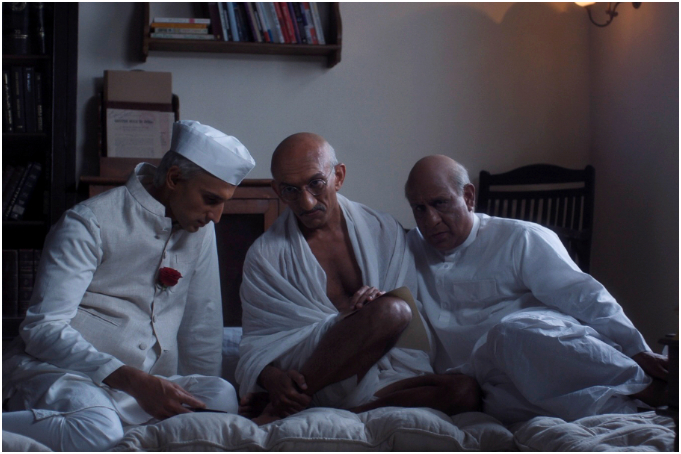
Freedom At Midnight focuses on the final leg of India’s freedom struggle, where Jawaharlal Nehru (Sidhant), Sardar Vallabhbhai Patel (Rajendra Chawla), and Mahatma Gandhi (Chirag Vohra) find themselves pitched against Muhammad Ali Jinnah (Arif Zakaria) and Liaquat Ali Khan (Rajesh Kumar). The series explores the months leading up to and immediately following August 1947. Crucially, this is not a blame game narrative, nor does it indulge in historical finger pointing. Instead, it aims to tell the story with nuance and perspective.
Related Stories

What sets the show apart is how these towering figures are introduced. They are not presented as untouchable icons, but as people who once were colleagues (even collaborators) for decades before Partition intervened. These are men suddenly forced to navigate an impossible political reality while attempting to hold together relationships that history itself was tearing apart.
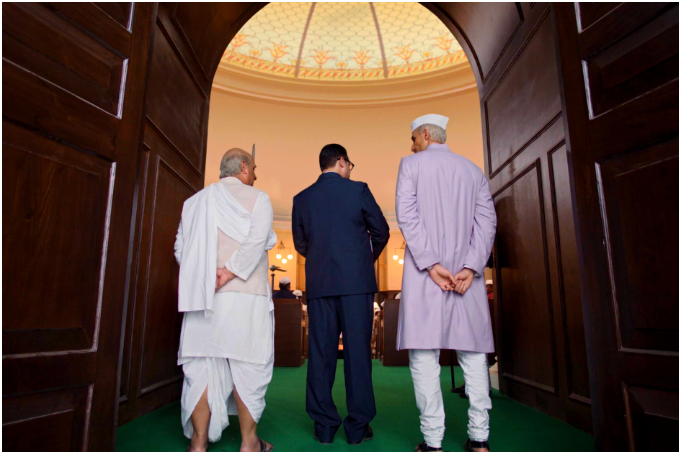
While Season 1 examined the tension leading up to that defining midnight, the moment when the line was drawn, Season 2 turns its attention to the aftermath. It explores how that single decision altered the subcontinent not just for years, but for generations. This is where Freedom At Midnight truly distinguishes itself. It never slips into a textbook style recounting of events, the way Kangana Ranaut’s Emergency (2025) did. Instead, it remains immersive, treating history as lived drama and insisting that every character be understood rather than judged.
Season 2 picks up exactly where the first left off. The tension is now at its peak and the responsibility of restoring peace weighs heavily on every decision. The writing, led by Abhinandan Gupta and supported by a strong team, shapes a narrative that speaks to the viewer on a deeply personal level. The show understands that the Line of Control did not merely divide land. It fractured friendships, devastated families and permanently altered countless lives.
That said, Freedom At Midnight is not without its flaws. By the second episode of Season 2, Partition has already been announced and the line has been drawn. The title has, in a sense, served its purpose. What follows is an exploration of the consequences, the negotiations, the administrative chaos, the moral fatigue. While this is compelling at first, the show begins to over invest in dramatic detailing around Episode 5. What initially feels layered starts to become repetitive, causing a noticeable dip in momentum.
Thankfully, the arc surrounding Mahatma Gandhi’s assassination is handled with exceptional care and restraint, pulling the show back on track. The final stretch leaves a strong aftertaste, and that ultimately is what matters.
Advani’s direction breathes life into the world the writers create. Working with cinematographer Malay Prakash, he makes some bold visual choices. The framing often subverts expectations of what an Indian historical drama should look like, lending the series a distinct visual identity. The scale of the production design and art direction is impressive without ever overwhelming the narrative. Performances are uniformly strong and, crucially, never slip into caricature.
Sidhant brings a quiet charm to Nehru, while Rajendra Chawla is outstanding as Patel, grounding the role with authority and restraint. Arif Zakaria commands attention whenever he appears on screen and Chirag Vohra delivers a phenomenal portrayal of Mahatma Gandhi. A special mention goes to Anurag Thakurr, who follows up his crackling turn in Black Warrant last year with another memorable performance here.
Editor Shweta Venkat Mathew deserves praise for her inventive choices, particularly the use of jump cuts that overlap real archival moments with enacted scenes. One striking instance features the real Jawaharlal Nehru speech playing over Sidhant’s presence on screen, a brief but powerful moment that blurs history and performance.
In the end, Freedom At Midnight may not be entirely bulletproof, but it stands as a compelling template for how historical dramas should be made. It asks viewers to look beyond the names etched into textbooks and see the humans behind them.
Read More About: FAM, Freedom At Midnight, Freedom At Midnight Season 2, Nikkhil Advani, Sidhant, SonyLIV
More from Variety













Comments are moderated. They may be edited for clarity and reprinting in whole or in part in Variety publications.