



Feb 28, 2026 9:01am IST
‘AI Is A Tool, Not A Soul’: ‘Boong’ Producers Shujaat Saudagar and Vikesh Bhutani Push Back On The Fear Of A Creative Takeover (EXCLUSIVE)
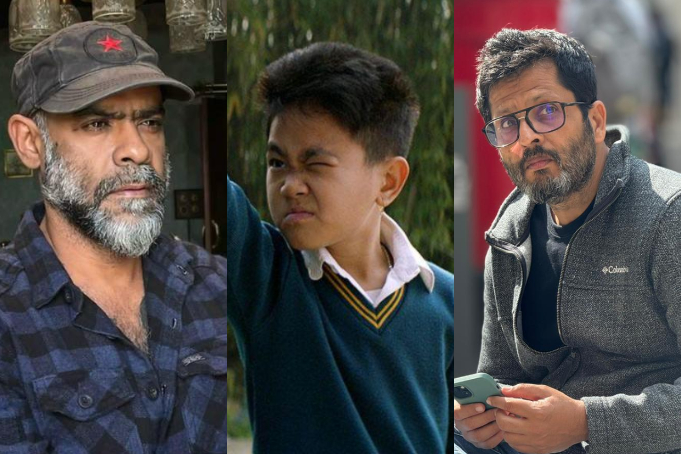
As the conversation around Artificial Intelligence intensifies, there seems to be a new development every single day. The debate has grown louder. Is AI a boon or a curse? Is it here to assist or to replace? And more crucially for cinema, can it ever replicate the soul of a story?
Speaking to Variety India are Shujaat Saudagar and Vikesh Bhutani, co-producers of 'Boong', which won the Best Children and Family Film award at BAFTA 2026, creating history as the first Indian film to achieve the honour. Even as they continue to celebrate the milestone, the conversation inevitably shifts to the larger technological tremors reshaping the industry.
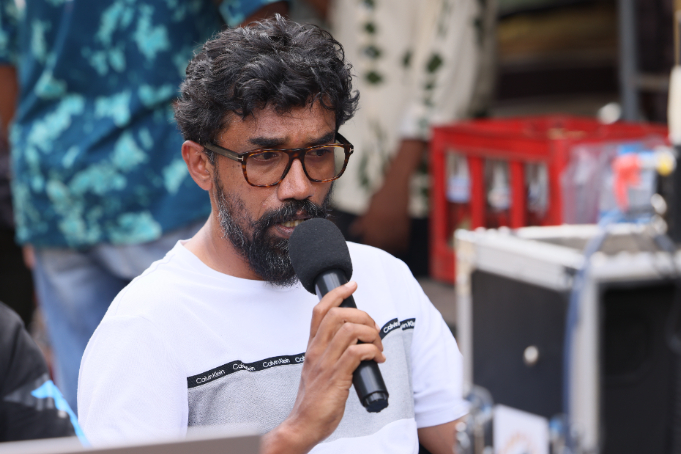
When asked whether AI could ever recreate the emotional rootedness of a film like 'Boong', Saudagar responds with characteristic candour. “I would like to quote one of my most favourite directors, Guillermo del Toro, who said, ‘f*** AI.’ Right?” he says with a laugh. “But I also think AI is definitely going to be helpful as an engine to support filmmaking.”
Related Stories

He clarifies that his scepticism is not rooted in fear, but in faith in human storytelling. “I personally am quite hopeful that AI is not going to take over human nuances, human emotions, or a certain understanding of society and social fabric. It’s going to be really difficult. You will still need humans to keep telling these stories.”
For Saudagar, AI is an extension of technological evolution rather than an existential threat. “We have already been doing this with VFX. We all love big screen spectacles, whether it is the 'Mission: Impossible' world, the 'Marvel Cinematic Universe', or the 'DC Extended Universe'. There is a serious amount of visual effects involved. Nobody said the people sitting behind computer screens were going to take over the world and leave us jobless.”
What makes AI feel different, he suggests, is its rapid evolution. “Yes, it feels more dramatic because the technology is improving so fast. And there is some phenomenal stuff happening. But as a tool to enhance narratives, that is where I see it reaching. It cannot feel. And whoever is prompting that feeling needs to understand it deeply. That is a prerequisite.”
He adds that there is nothing inherently wrong with using AI to build atmospheres or create backdrops for emotional scenes. “If good filmmakers decide to use it to build an environment, absolutely, fair enough. No issues with that. But I am personally not seeing it take over. Of course, there are colleagues who are freaked out. I get messages saying, ‘Brother, what are we going to do? This thing is taking over our lives.’ I just tell them, chill, relax. I do not think it is going to be that dramatic. At least, I hope not. We will only know in time.”
Bhutani approaches the subject with humour layered over realism. “Listen, I am personally ready to become a farmer. I do not mind going back to my roots,” he jokes. “But honestly, with every technological revolution, humans have felt threatened. And so has AI done to all of us. But we have always found a way to co-exist.”
For him, the anxiety stems from uncertainty. “We are all kind of groping in the dark, trying to understand how damaging it might be. But somehow we will find a way to use it to our advantage. And I think we all collectively need to be part of that change. Change is always seen as bad initially until it becomes part and parcel of our lives.”
He reiterates that AI, at its best, should complement filmmaking rather than compete with it. “As a tool supporting filmmakers and filmmaking per se, it can be a great, great asset. Farming can also be taken over,” he laughs, picking up on his earlier joke, “but production in India cannot. There is no chance you can handle a 150 person crew here with AI.”
In fact, he argues that the unpredictability and complexity of Indian productions make them uniquely human. “It is not an easy country. Managing logistics, people, weather, emotions. AI might just hand it back to us and say, ‘Guys, you handle this.’”
Between Saudagar’s measured optimism and Bhutani’s grounded pragmatism, there is a shared belief. AI may be powerful, even transformative, but it is not sentient. It cannot draw from lived experience, from memory, from cultural contradictions, or from the deeply personal reservoirs that give films like 'Boong' their emotional texture.










Comments are moderated. They may be edited for clarity and reprinting in whole or in part in Variety publications.