



Mar 19, 2026 1:01pm IST
Riteish Deshmukh: ‘In front of what Chhatrapati Shivaji Maharaj achieved, I am a tiny dot’ (EXCLUSIVE)
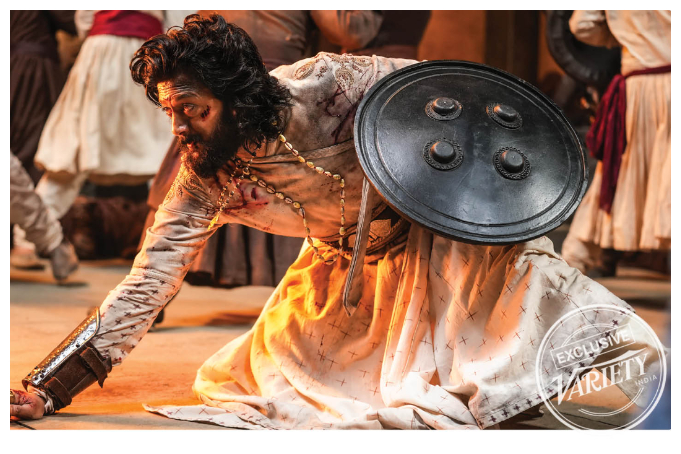
The stunning Sahyadris are synonymous with the warrior king, the legend, the hero who lives in the heart of every Indian — Chhatrapati Shivaji Maharaj. He fought tough battles, sometimes with valor, sometimes with guile (he invented the guerrilla war tactic, in a sense) but always with a sense of righteousness. For Riteish Deshmukh, bringing alive the Maratha hero on screen is a matter of pride! As a Maharashtrian, there is the added responsibility of playing Maharaj; to his family and his state. While several films have been made on the Maratha king, Riteish is confident that the version and scale of his Shivaji Maharaj movie is incomparable. After years of research and prep, the actor-director’s dream project has its release date in sight.
In this Variety India exclusive, Riteish shares bits of his film and the journey to documenting a portion of Chhatrapati Shivaji Maharaj’s life. It’s not just about his battles to protect his sovereignty and ideals of Swaraj. It’s also about his childhood, his relationship with his father and siblings. In an unfiltered chat, Deshmukh elaborates that “Raja Shivaji,” will also chronicle the family history of the young royal who became one of the formidable kings of the Deccan Plateau. The film releases on May 1, a day associated with Maharashtrian culture and ideals.
So many films have already been made on Shivaji Maharaj, what made you want to direct another film on him?
Coming from a Marathi family, we’ve grown up reading and hearing about stories of Chhatrapati Shivaji Maharaj’s valor. His relevance holds true, even in today’s generation. I don’t think there is another like him anywhere in the world. I’m not talking about gurus or gods; I’m talking about a king who lived almost 350 years ago, but till today, people are willing to sacrifice everything for him. He still inspires them. The king who has left an everlasting legacy, that still inspires you.
The film took a long time in making...The initial thought for the film came in 2015. Unfortunately, there were some hurdles and the film stopped. At that time, not a single film on Chhatrapati Shivaji Maharaj in Marathi had come out and we’d announced ours. Eventually, other films started coming in. After I directed “Ved,” Genelia asked me, ‘Why don’t you think of directing this film (“Raja Shivaji”)?’ This was a huge undertaking and I wasn’t too sure, but I said, ‘Let me just start.’ I got a core group together and we started reading and writing. The actual process began in January or February of 2023.
Was it always planned as a bilingual?
“Raja Shivaji” is a Marathi bilingual film, and we are exploring other languages, too. The attempt was to scale it up. Often, Marathi films become limited in terms of scale. Population-wise, Maharashtra has about 12 crore people, with maybe 10 crore Marathi-speaking people. That is far more than the population of many other states or even countries. However, box-office numbers do not reflect that. The potential is there, as shown by “Sairat” (2016), “Lai Bhaari” (2014) or “Ved” (2022). I want to tap into the business Maharashtra can generate. Shivaji Maharaj is revered by people across India. We want people to see what went into the making of the king and his childhood influences. The story moves from him being a witness, to him asking questions, to him taking decisions about who he wants to be. That is a very different side of him that we are exploring. As much as it is a historical epic, it is also a story of family — of a father, a son, a husband and a brother.
Related Stories
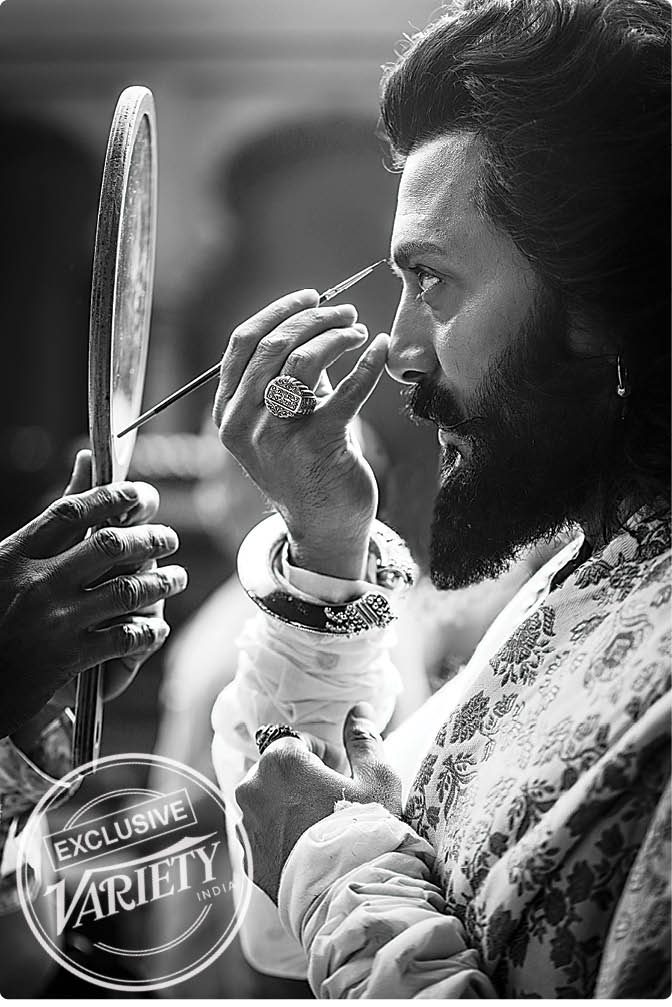 How does "Raja Shivaji" differ from other movies released on the legendary ruler?
No film can do justice to the life Shivaji Maharaj has led. Nobody. Neither mine nor anybody else’s. This is a humble attempt to show just five percent of my version; how I look at it through my prism. Everyone can look at him differently. Your vantage point of looking at a situation might be different. This is just my perspective on such a vast personality. For example, when looking at Shivaji Maharaj as a child, I am going to look at him from the top angle. But as he starts achieving, my camera will go down to a low angle to make him look larger than life. If I look at him today, I am looking at a towering personality because of the achievements, the glory, and the adoration built over centuries. No one is able to match that legacy; it just keeps growing. But you have to look at the situation he was born into. His father was serving other kingdoms, moving from the Mughals to the Adil Shahi or the Nizam Shahi. That was the plight of Maratha families who tried to be independent but weren’t able to form their own state. He is also probably the only king who did not ‘attack’ other kingdoms; he simply pushed the boundaries to claim his own land. It wasn’t about capturing foreign territory; it was about taking back the land that belonged to his people.
How has making this film changed you?
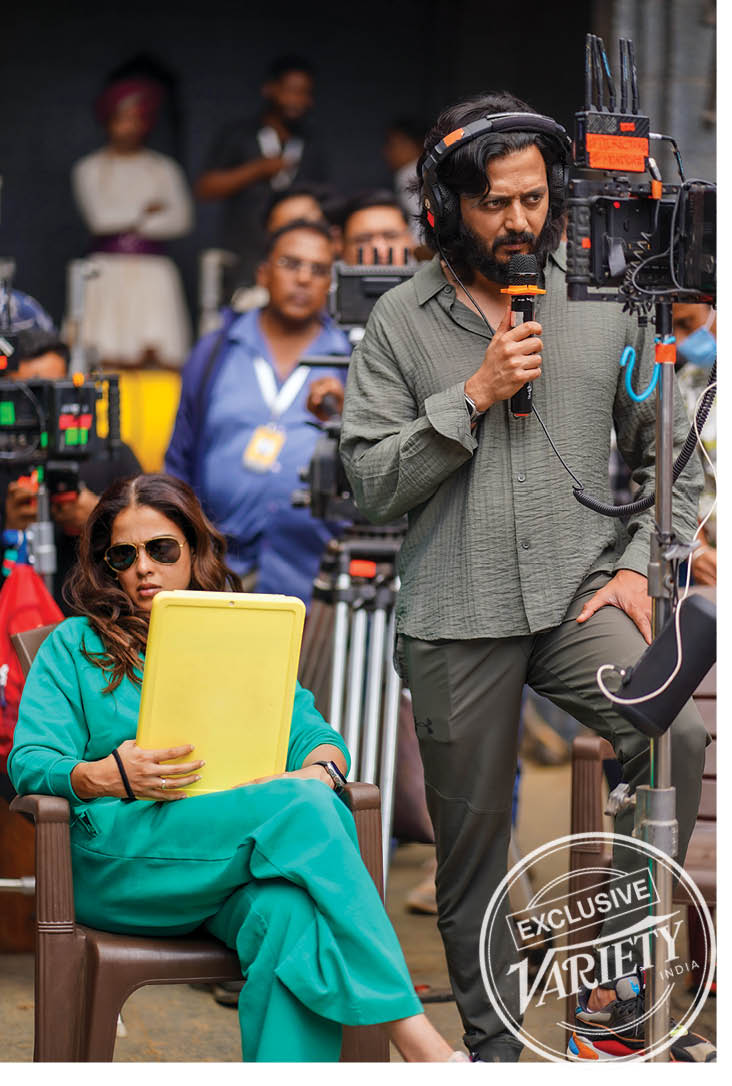
A lot of things have changed. I’ve worked with different makers. Some who knew exactly what they wanted and were very adamant about how I do it. I’ve also worked with people who were open and collaborative with every thought that came. I am that second type of filmmaker — if I may call myself one — because I’m open to suggestions from everyone. I feel a great thought can come from anywhere, and you should just be open to it. It’s not because I’m unsure of what I want — I’m very sure of what I want. I’m just always in quest of something better. I decided that when making a film, you should always surround yourself with people who are better than you. They help the film improve and their vision helps take the script to a higher level. That is how we got Santosh Sivan Sir on board. Genelia (Deshmukh) had worked with him before. Back in 2015, when the film was first announced, Santosh Sir had called her as he was interested even then, but the film didn’t happen at that time. Later, while we were writing this version, he randomly called again and asked, “Are you doing anything on ‘Raja Shivaji’?” I said, “Yes, I’m working on it,” and he said, “I want to shoot it.” You can’t get anyone better than him. He brings magic to a film, not just with cinematography but with his sense of art direction, too. Then there is composer duo Ajay-Atul (Gogavale), who are great artists. We tried to get people who could really take this film to the next level. That is what one should do — surround yourself with people better than you to make the work better.
What is your take on violence in our recent films?
We have to understand that cinema has to be an exhilarating experience, and be cognizant of what is happening around us — what kind of films are people watching? I am not making a home video to sit and watch by myself. I am making a film for people to experience. If there is no action in Raja Shivaji, then it would be a different kind of film. Regarding the ‘extremes’ of violence, it depends on your target audience. Because he is such a revered personality, it’s important that children can see it, but I want adults to enjoy it, too. Finding that balance is key. When you make a film on Shivaji Maharaj, you eventually reach the battle where he cuts open [Afzal Khan’s] stomach. That is the most popular story from one’s school days. You have to decide: Is there too much gore? Is there less gore? Do we show the intestines? You have to draw a line. If you want only a ‘mass’ film, you can go all out, but the beauty of cinema lies in what you choose to show. For some, extreme action is exhilarating. In Chhaava, the last 30 minutes were painful and uncomfortable, but that was the brilliance of the maker. He wanted people to feel the discomfort of what that man died for. In The Passion of the Christ — Mel Gibson nailed that. You felt the pain and every nail.
How political is your film?
"Raja Shivaji" is also a political film. I mean the politics of that time. When you say ‘politics,’ people assume it’s a commentary on the present, but that’s not the case here. It is about the politics of that era — understanding why Shah Jahan and Adil Shah decided that Shahaji Raje shouldn’t be in Pune. The family was literally thrown out of their house in Pune and sent to Karnataka. When you realize that, you understand the strategy of that time: keep the Marathas away from their land and military, and they will lose their strength. They knew exactly what they were doing. But people don’t often know the politics of what Shivaji Maharaj went through as a child.
How did you manage the budget?
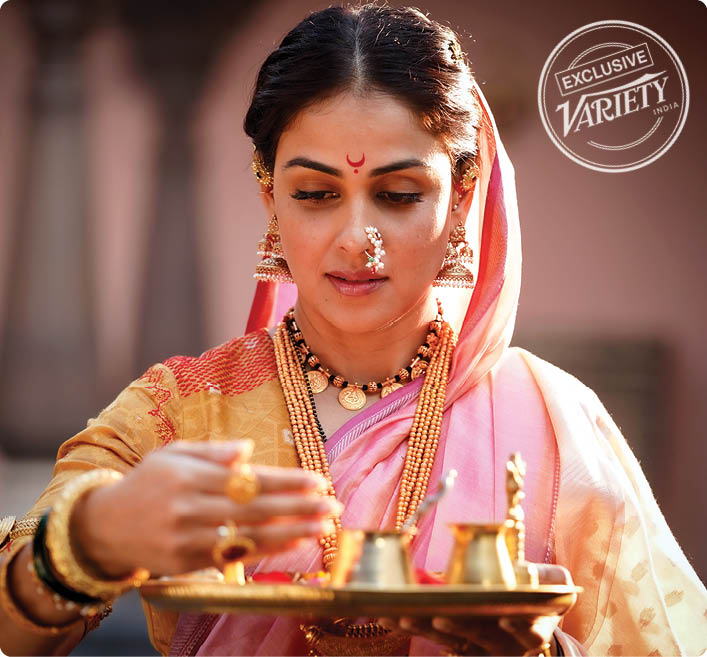
It is very critical. Jyoti Deshpande of Jio Studios wanted to back "Raja Shivaji" and go all out. The attitude was that if we have the opportunity, let’s just do this. We would figure out the ‘how’ later. As the producer, Genelia said, ‘You just worry about the film that you want to make. It’s my job to provide you with what you need for your vision.’ If there ever came a point where we couldn’t afford something, she would say, ‘I will try and manage,’ she never said ‘no’ to my vision. That is why we were able to achieve so much, even within our limited capacity.
How is Genelia as a producer?
She wanted what is best for me and the film, and you need people like that. In a smaller film, you can figure out little ‘ups and downs’ easily. But in such a big film — I mean, we had many massive ups and downs. Especially in the sense of weather: I have had sets washed out. Lost days. I really thank all my co-actors. Everyone on this project came with the attitude of: ‘What can I contribute to this film?’ I take that very personally and deeply. Everyone knew we were doing something far beyond our means and reach.
Your Bollywood friends came onboard out of goodwill...
All of them joined because of the relationships built over the years. When we started casting, we thought, ‘How do we do this? Can we dream of making a Marathi film bigger?’ Then it became: if you’re dreaming, can you make this a Hindi-Marathi film and reach a wider audience? To scale it up, I made calls to friends who said, ‘I would like to be part of it in any capacity — one scene, half a scene, one shot, whatever.’ I was overwhelmed. I realized this is a big thing and I need to use it correctly to enhance the visual experience for the audience. Chhatrapati Shivaji Maharaj is an important historical figure, but when you have an established actor playing a role, it lends even more credibility to that sequence. For example, the first thing Abhishek Bachchan, said was, ‘Tell me the dates you need.’ When I went to give Salman Khan a brief, he said with graciousness, ‘We are doing a film on Chhatrapati Shivaji Maharaj, I want to be part of it.’ Him wanting to be part of the film, adds such huge value. They were all so kind, going out of their way. Being part of this film might not make a big difference in their lives, but it makes a big difference to the film. It was the same with Vidya Balan. She just said, ‘Done.’ Sanju Sir was very busy. I told him, ‘If you do it, it will add so much credibility and stature to the film because it’s a larger-than-life movie.’ He said he was too busy, but I asked him to just see if he could. Then he said, ‘I’ll do it.’ He gave me two-three days, managed his schedule, and we filled it up. Now, when I see the star cast, it feels overwhelming. Our industry can be so transactional in many ways, but this was just out of pure love.
 You want kids to watch your film. Did that affect the movie's treatment?
The biggest mistake we make is thinking everyone will view a film in the same way. Children understand movies very differently than adults, which I’ve realized, after becoming a dad. My younger son’s friends saw some scenes while I was editing; and their perspective was, ‘Oh, that’s a double kill! Oh, wow, that’s a triple kill!’ In one shot, three people were hit and they were looking at it through a video game lens — using that terminology. I feel kids are much more accepting when they watch movies.
Was making "Raja Shivaji" a spiritual experience for you?
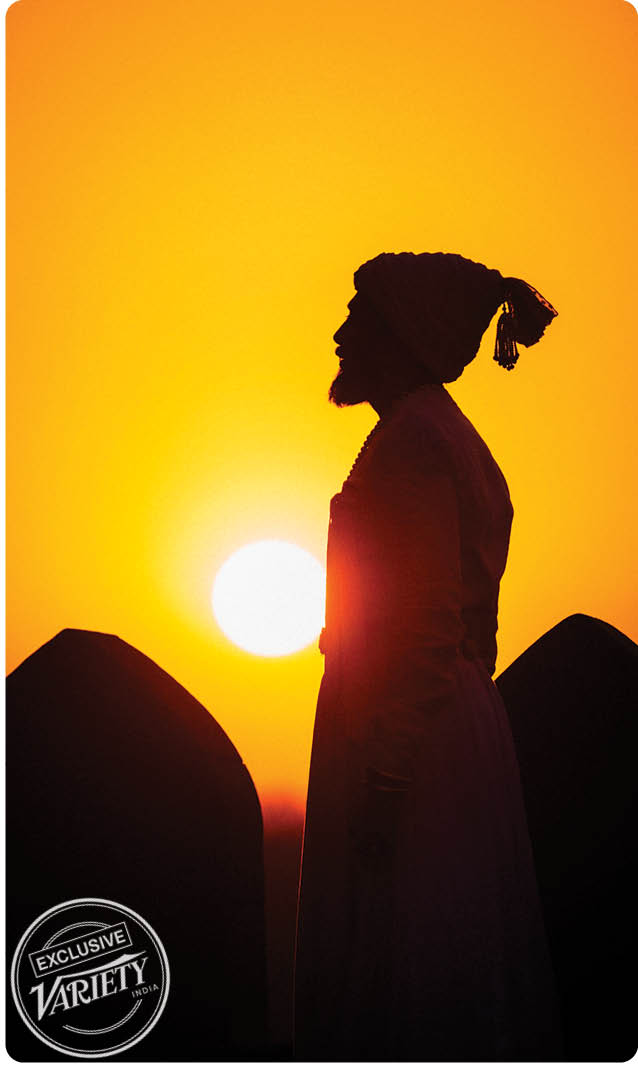
He died young at the age of 50, but by that time, he had achieved so much. I am just trying to encapsulate his life within two and a half or three hours. But he lived that intensity every single day of his life. Every day, I struggled to get to a location on a mountain, worrying about where the unit is or how I will set up the shot. And he was doing this — going up and down those mountains — constantly. I remember standing on top of those peaks, looking at the whole Sahyadri range and feeling so small. I was dressed in his costume, standing at the edge of the Sahyadris where you can see the whole world below. I stood there as Riteish, feeling tiny, but dressed as a man of his greatness. He owned that land. He had the vision to look out and say, ‘The enemy might be coming from there; I have to fight for this land and for these people.’ In front of what he achieved, I am a tiny dot.






Comments are moderated. They may be edited for clarity and reprinting in whole or in part in Variety publications.