



Feb 24, 2026 3:00pm IST
Oscars 2026: ‘I Remember Crying When I Watched ‘Sholay,’ says ‘The Voice of Hind Rajab’ Director Kaouther Ben Hania (EXCLUSIVE)
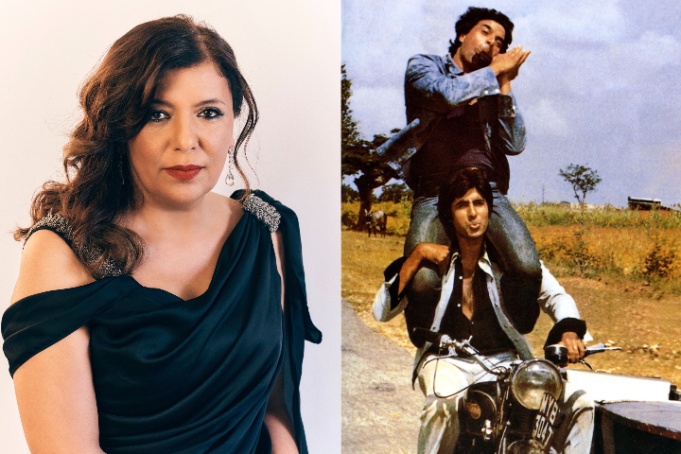
"The Voice of Hind Rajab" has secured a nomination in the Best International Feature Film category at the 2026 Academy Awards. Written and directed by Tunisian filmmaker Kaouther Ben Hania, the film tells the real life story of six year old Hind Rajab, who was trapped in a car under fire in Gaza, pleading for rescue. On a phone call with a humanitarian organisation, she begs for help before eventually succumbing to her injuries.
The incident forms the emotional and political core of "The Voice of Hind Rajab," which has won multiple awards, most notably the Grand Jury Prize at the 82nd Venice International Film Festival.
Related Stories
In an exclusive conversation with Variety India, Ben Hania spoke about the making of the film, her early love for Indian cinema and navigating the whirlwind of Oscar buzz. Here are edited excerpts from the chat.
Of all the reactions you received to the film, is there one that has stayed with you the longest?
It is honestly very difficult to isolate just one reaction because there have been so many, and they have come from very different places. But what has stayed with me the most are the people who told me the film changed them in a radical way. Some said it changed how they look at conflict. Others said it changed how they see responsibility, or parenthood, or even the news they consume every day.
When someone tells you, “This film changed me,” that is perhaps the most powerful response a director can receive. The reactions from parents have been especially intense. Parents of young children often tell me they could not detach themselves from the film and that they felt physically present inside it.
For me, cinema is not only about telling a story. It is about creating an experience that lingers. So when people say the film stays with them for days or even weeks later, that means a lot.
What was the one non negotiable for you while making this film?
From the very beginning, I knew I did not want to stage graphic violence. During development and financing, several people suggested that we show the battlefield, the tanks, the explosions and even the death of the child in a more direct and visual way. But for me, that was completely out of the question.
The sound already carried the violence. Sometimes sound is more powerful than image because it allows the viewer’s imagination to participate. I am not interested in the glorification of violence. I am not interested in spectacle.
What interested me was something quieter and perhaps more insidious. Systemic violence. The bureaucratic structures. The idea that an ambulance can be eight minutes away and yet cannot arrive because of complicated procedures. That invisible violence, the violence of institutions, felt much more important to portray than images of tanks or gunfire.
So that was non negotiable. I wanted the film to remain restrained visually but emotionally overwhelming.
Was there a film that shaped you as a filmmaker, something that changed how you saw cinema?
There is not one single film from my childhood that determined everything. But later in life, when I watched Close Up by Abbas Kiarostami, it truly opened something inside me. I discovered this hybrid form, a space between documentary and fiction, and I found it fascinating. It showed me that cinema does not have to obey rigid categories. It can exist in a more fluid and ambiguous space.
Going back to my childhood, I grew up in Tunisia during the VHS era, and we watched many Bollywood films in video clubs. One of the films that left a mark on me was 'Sholay.' I watched it when I was very young, and I remember crying. My whole family cried. That was my early cinematic education. Emotional, dramatic and collective. Only later did I discover other film movements and art house cinema. In many ways, my first cinematic emotions came from Indian films.
Have things changed for female filmmakers? Has it improved?
Things have changed. There are more female filmmakers now, and there are many strong voices coming from different parts of the world, including India. That is very encouraging.
But I would not frame what I have to say as advice. It is more of a warning. Be prepared. Be prepared to work twice as hard. Be prepared to fight more for financing, credibility and trust. The industry still gives less money to women directors compared to men. A privileged man in power is often believed more easily.
So I would say expect resistance, but do not let it discourage you. Know that you might have to work twice as hard and prepare yourself mentally for that reality.
What are your thoughts on AI entering filmmaking?
AI is evolving very quickly. It is impressive, but also a little frightening. It can already replicate spectacle, large scale visuals, complex imagery and expensive looking productions. So I sometimes ask myself what is left for us as human filmmakers.
I believe what remains is reality. Real human experience. Documentary filmmaking. Stories rooted in lived truth. AI can simulate images, but it cannot replicate the emotional complexity of real human presence in the same way. I think there will be an even greater need for films grounded in reality because authenticity will become more precious.
How did major figures like Brad Pitt, Joaquin Phoenix, Rooney Mara, Alfonso Cuarón, Spike Lee and Michael Moore come on board as executive producers?
After finishing the edit, we wanted the film to resonate beyond a niche audience. We reached out to respected filmmakers and artists whose voices carry weight. We sent them the film and asked if they would consider supporting it as executive producers.
We honestly thought maybe one person might agree. Instead, they all watched it, were deeply moved and decided to support it. That kind of solidarity is very meaningful because it amplifies the film’s reach.
How does it feel to be in the middle of Oscar buzz?
It is exhausting, physically and mentally. There are interviews, screenings and discussions constantly. But it is important.
This is not an easy film that people casually choose for entertainment on a Saturday night. It is a difficult film, but an important one. The Oscars provide visibility. They create conversation. My main goal has always been to make 'The voice of Hind Rajab' echo.
If this spotlight helps more people watch the film and reflect on it, then the exhaustion is worth it.
Are there plans for an India release?
There is an Indian distributor attached to the film, but from what I understand, there are still visa related matters being resolved. We are waiting.
I truly hope it releases in India. Given my early connection to Indian cinema, it would mean a lot to me for Indian audiences to see it.



Comments are moderated. They may be edited for clarity and reprinting in whole or in part in Variety publications.