



Feb 14, 2026 3:20pm IST
Karan Tacker: ‘There’s A Strong Bias Against TV Actors; They Don’t Want Us In Lead Roles’ (EXCLUSIVE)
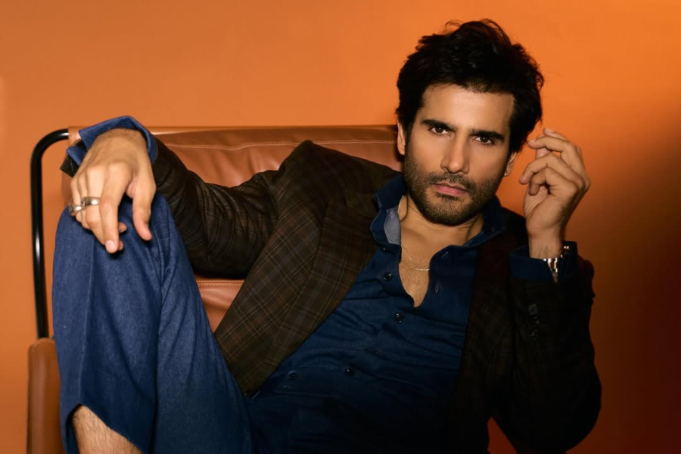
Karan Tacker has been in the business for 16 years now and has navigated through multiple formats and mediums of visual content. The actor who entered the world of acting through television has remained one of the most viable actors.
Most recently seen in “Bhay: The Gaurav Tiwari mystery,” Tacker is now turning a new page.In an exclusive chat with Variety India, Tacker talks about chasing authenticity over gimmicks while he continues his larger fight, which is to change the perception around television actors. He talks about the bias against TV actors and what it might take to create an equal space for creative folks, regardless of the format.
Karan, you’ve built your career patiently across TV and OTT. In an industry obsessed with instant success, how did you train yourself to play the long game?
For one, people will always remember me for the success I had on television. And I truly felt at that time that I was cut out for maybe larger things. It's a different thing that my journey took forever. Because at the time I quit television, there was no OTT. There were only films and television. And in films, the reigning stars were Akshay Kumar, Hrithik Roshan, Shah Rukh Khan and Salman. They were not experimenting with new people, new boys. Girls were always new in films, and that trend continues even today.
So that journey at that moment was very difficult. It's not like work didn't come my way. But I was very clear about what I wanted to do and how I wanted to play it. After seven years of a hiatus from acting which people actually mistake for being jobless, because during those seven years I hosted reality shows and stuff like that I was very clear that I would act only on the day that I felt I was adding value to my career.
So, with ‘Special Ops,’ that really changed things. That really instilled faith in me. Because sometimes you need that as an actor, when one of the biggest makers in the country wants to put his faith in you.
Related Stories
But how difficult is it to win that faith?
Believe me, even till date it's been about five and a half years that I have been an actor on OTT, had I not had Neeraj Pandey's support, I don't think any platform would have wanted to work with me. Because everyone has such a bias against actors from television. They are very, very clear that if the actor is from TV, they do not want to cast him in a lead role. So, there was a lot of pushback. There was massive pushback on “Special Ops.” There was massive pushback on “Khakee: The Bihar Chapter.” There was massive pushback even on “Bhay.”
But there has always been somebody in the room who has had faith in me. So, the reason for the patience is that I have had these people in my life. The answer to why it has been slightly slower is because of the pushback and the perception of TV actors within the industry. And I think till the time that doesn't change, actors like me and many more, I'm sure will take forever to keep cracking and pushing the barrier.
We’ve been hearing for years that television actors are treated differently — and despite all the conversations at conclaves, nothing really changes. Do you see a real solution where an actor is just seen as an actor, not boxed into TV, OTT or film?
I would definitely see a solution to this, yes. I feel like and I am going to sound slightly dry when I say this it has to start from the ground level. Everyone has to make changes. Today, even you must be bored with seeing the same five actors everywhere. You are seeing them in films. You are seeing the same people on OTT. You are seeing the same people doing brands. There is no sense of newness. So, until the entire ethos of the system changes, you will not have new actors coming in. Also, I feel like the media has to give very wide support.
Today, if I am doing an interview with Variety India, I am actually really thankful for it. Because I need a Variety India. I need the right kind of perception outlets to write about me, to talk about me, to talk about the fact that I am versatile as an actor. To talk about the fact that “Special Ops” was delivered by me it's India's biggest show till date. “Khakee” cracked the top ten worldwide in the first three days of release. Not just that, “Khakee” was in the top ten for two years after its release. And it has contributed to 4% of Netflix's global subscriptions. Today, “Bhay” stands at number three on Ormax within two days of its release, amongst big giants, and with very little marketing.
I would love it if people like you and multiple outlets support actors like me not just me and create a larger ecosystem. So that there are more actors, more directors, more writers. I would love it if someone spoke about my writer for fleshing out such a beautifully done show. I would love it if someone wrote about my director. Because that's how the industry will grow.
There’s constant pressure to be the “hero,” didn't you ever aspire to be one?
Yeah, it was a conscious decision. Because when I came from TV, I realized that the basic pushback against me was that everybody thought I was just a good-looking guy from television. So, I had to break that mold and that perception. I actually said no to a lot of work. It was a very hard decision to make when you're sitting at home and rejecting commercial work because you want to do something that artistically puts you out there.
That's when people start believing that I am not just a good-looking guy — I could probably do work that has more craft attached to it. The reason for doing every single role, including Gaurav Tiwari, was exactly that. These are strategic decisions. That is why it takes time to find the right script and the right material. Today, as an actor, it's not just about finding a script. You have to find a concept. You have to sit with your writers and directors. I invested six months into pre-production and then three months filming it.
Only then are you able to create something that might have value attached to it. That is why every decision has been conscious. But now I personally feel that I am done playing in the shadows. I want to do something that is very out there. Because the dynamics of the industry have changed. Now you have to go slightly more front-footed so that people notice you.
How do you handle the machinery of self-promotion?
This passion has developed over the last half a decade. Earlier, I didn't know the craft or the industry so well. But now, after investing more than 16 years, I know what I want from the rest of my career. That drives me every single day.
Is it frustrating? Of course. A lot of times it's very demoralizing. Because you expect a lot of support within the industry, and more often than not, you don't get it. But I have come to terms with it. I don't complain. I just keep my head down and keep doing what I need to do. I don't have a godfather. I'm not someone's son. But I keep working.
Right now, are doors opening for you more easily? Are you getting the right work and choices?
It's a privilege to have choices. Today, “Khakee” was offered to me by Neeraj Pandey. Someone at Amazon thinks I'm good enough to play Gaurav Tiwari (Bhay) and for other projects in 2026. So yes, I am in a very good place where a lot of work is coming my way, and I have the privilege of selecting what I want to do. But does that mean every door is open? Definitely not. I still reach out to the biggest makers. Sometimes you get a reply, sometimes you don't. That's the nature of the industry.
Why do you think newer actors are unable to build fan bases like the stars of the 90s?
Because perception is built by platforms and media. When major publications start putting newer actors on covers, not just the same industry kids, that is when fan bases will change. If audiences keep seeing the same faces for 30 years, they will continue following them. The ecosystem has to support new actors.
Would you ever consider going back to television?
Not really. I don't think I would get creative satisfaction from it. It is great to work every day on a set, but I would not be creatively happy. That is why I left television in the first place.
With new projects, an entrepreneurial venture and a renewed creative drive, Tacker is clear about one thing: He will no longer be content staying in the shadows.



Comments are moderated. They may be edited for clarity and reprinting in whole or in part in Variety publications.