



Feb 18, 2026 4:00pm IST
India’s OTT Reset: Sudip Sharma, Prosit Roy And Tanuj Chopra On A Shrinking Market Where “It’s Very Difficult For A New Voice To Bloom” (EXCLUSIVE)
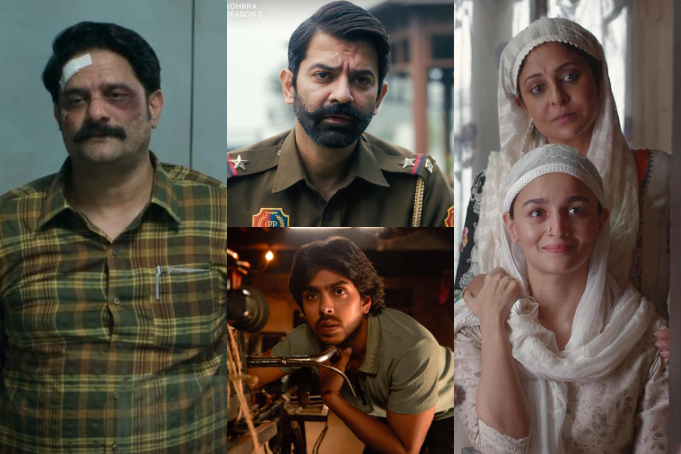
The streaming space in India was growing at an incremental pace before the pandemic hit and people were confined to the four walls of their homes. That is when the OTT sphere skyrocketed, transforming it from a supplemental to a complete parallel space for visual entertainment. For over a year, OTT became the only source of entertainment as theaters remained shuttered. This resulted in makers placing their full faith in the medium and investing far more heavily than before. Subscriber numbers grew rapidly; global platforms intensified their India bets and commissioning pipelines opened wide. The strategy was simple: scale fast, produce more and occupy every genre, language and audience segment before competitors got there.
However, now that we are a few years removed from the lockdown and life has largely returned to normal, the theatrical wave is back and audience attention is divided. According to the latest Ormax Media report released earlier this week, the supply of Indian streaming originals continued its downward slide in 2025. After an 18% drop in 2024, the number of original shows across major OTT platforms declined by another 13%, falling below the 300 mark for the first time since 2020.
The number is far more than a statistic — it signals something significant: a reset of sorts, where streaming originals in India are no longer greenlit as easily as they were half a decade ago. It marks a clear turning point in the evolution of the country’s streaming ecosystem. To understand this shift better, Variety India spoke to creators who are actively making original shows and films for OTT to learn what is happening inside the rooms that decide which projects move forward.
Related Stories
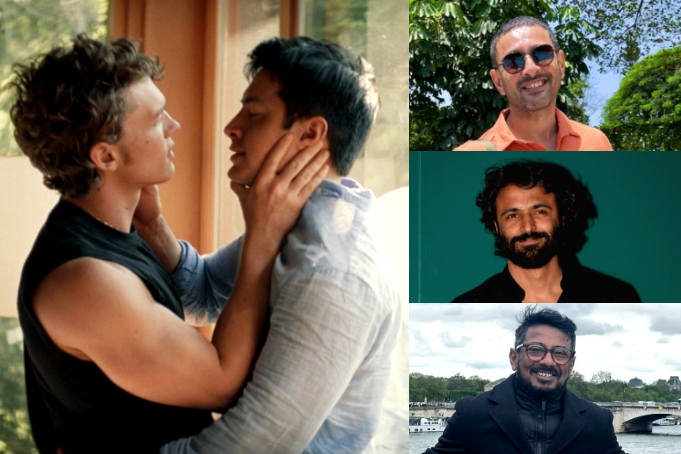
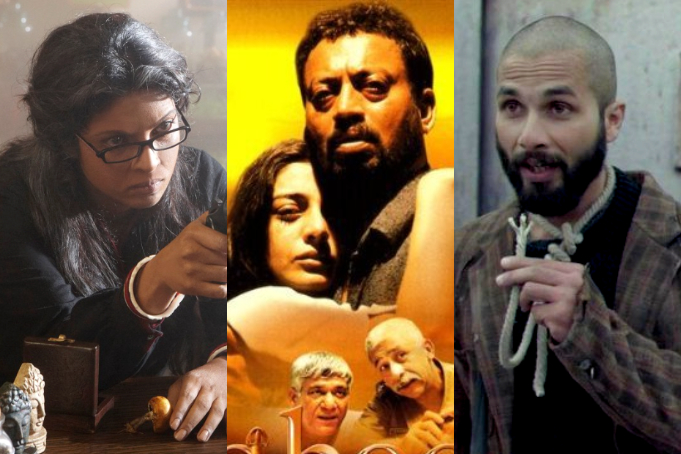
The Correction After the Boom
One common view across the board is that the industry is no longer in a hurry to churn out volume but is recalibrating toward scale. Creators feel the shift was inevitable — and overdue. For Sharma, who has worked on two massively successful streaming shows, including “Kohrra” and “Paatal Lok,” this is a natural consequence of an overheated phase during COVID.
“There was a lot of overheating of the industry right after 2019, during the COVID period. At that point, suddenly everyone had lots of free time and nothing to do, and that’s when OTT shows really picked up and became the number-one source of entertainment at home. What you’re seeing now is the tail end of that. It actually started two or three years ago — it began cooling off then — and this is just the result of that steady decline finally becoming visible,” he said.
According to Sharma, output had begun to exceed capacity. “It came to a stage where quality was really going down. The entire ecosystem was not ready to support the number of projects being greenlit at one time. There are only so many legitimate filmmakers, writers and producers in the country. When too many projects get commissioned too quickly, the system simply cannot sustain that level of production without affecting quality.”
With growth slowing, so has the appetite for experimentation. “Risk is directly linked to how much confidence streamers have in the market’s growth potential. When growth is strong, they are willing to take more chances because they need content and audiences are watching everything. But when that growth slows down, risk automatically comes down as well. Earlier, there was a boom and people were watching, no matter what you were making. Now that phase has slowed; you’re seeing risk aversion slowly come in.”
For creators working outside conventional storytelling lanes, the impact is immediate. “The nudge from the market right now is to play safe. If you think slightly left of center, that automatically makes you a risk. It’s a tough place right now for most filmmakers and creators. But at the same time, if a show works — something like ‘Kohrra’ or ‘Black Warrant’ — it proves audiences will still respond to well-told stories. Ultimately, the audience is saying: give us quality, and we’ll lap it up.”
The Time Economics of Long-Form Storytelling
While experimentation has limits, time is also a major factor influencing decisions. Roy, who has worked on “Paatal Lok” and is now creating “Rakh” for Amazon Prime Video, elaborated on this.
“Making a show is an extremely time-consuming process. You need enough time for writing, shooting and editing. Getting a show onto the floor itself takes more than a year. There are approvals, multiple drafts, development stages, pre-production — it’s a long journey before cameras even start rolling,” Roy said.
These extended timelines are beginning to influence career choices across the industry. “I know a lot of my friends working on shows who are now moving toward films because the turnaround time is shorter. With films, you can complete the process faster and move on to your next project, whereas a show demands a much longer commitment.”
Yet Roy noted that the depth streaming allows is also what makes it creatively rewarding. “We all love making shows because you get time to establish characters and build their journeys. But that kind of writing — creating backstories, developing layers, building a world — cannot happen overnight. It needs time, and that’s one of the reasons you won’t see very high volumes in this space.”
The New Risk Equation
The perception that streamers have stopped backing unconventional ideas is widespread, but Roy said the reality is more nuanced. “As a storyteller, you also have to keep accessibility in mind. As long as you have a unique, rooted story and you’re not being indulgent for the sake of it, there’s no reason a platform will say no. But yes, the environment is definitely more cautious right now.”
The bigger challenge lies in entry barriers. “It’s very, very difficult for a new voice to bloom at the moment. Everybody is trying to play safe — even people who want to back new voices are being more careful about what they choose.”
Fewer Shows, Bigger Bets
Tanuj Chopra, creator of the last two seasons of “Delhi Crime,” said the slowdown reflects a shift in business strategy rather than a creative retreat.
“Much of this comes down to subscriber economics. Earlier, the strategy was to produce many different shows to attract a wide base of new users. But now many of those viewers are already on the platforms and fairly sticky. The data tells streamers that ‘many’ and ‘diverse’ titles are no longer enough to drive growth,” he said.
The focus has shifted toward scale. “What their numbers are telling them now is that it takes bigger, more commercial shows to attract the remaining market. So instead of spreading resources across many projects, they’re concentrating them into fewer, high-impact titles. It’s not emotional — it’s math.”
Chopra also cautioned against reading the moment as a permanent downturn. “Networks, studios and streamers have always been risk-averse. That’s not new. The level of risk changes depending on where the industry is in its cycle. Historically, true originality has rarely come from inside large systems anyway. It has usually come from independent artists working outside the mainstream structure. That’s not going to change.”
The Audience Impact
While creators will continue to find alternative paths, Chopra believes the immediate consequence of contraction will be felt by viewers. “Creators are always hustling — that’s the nature of the industry. But the audience is the one that actually ends up hurting the most in this scenario, because we’ve reduced their breadth of options,” he said.
The Ormax data confirms what creators are already experiencing: fewer commissions mean more rejections. As Chopra put it, “This is a short-term structural shift in an ecosystem that will continue to evolve as culture, finances and technology evolve.”
The era of abundance may be over. But for creators navigating this reset, Sharma’s takeaway remains simple — and perhaps enduring: “The market may be telling you to play safe right now. But at the end of the day, if you make something well and tell a story well, there will always be an audience for it.”








Comments are moderated. They may be edited for clarity and reprinting in whole or in part in Variety publications.