



Mar 17, 2026 7:02pm IST
‘Dune 3’ Posters: 5 Things the First Look Of Timothée Chalamet Led Film Reveals About the Franchise’s Darkest Chapter Yet
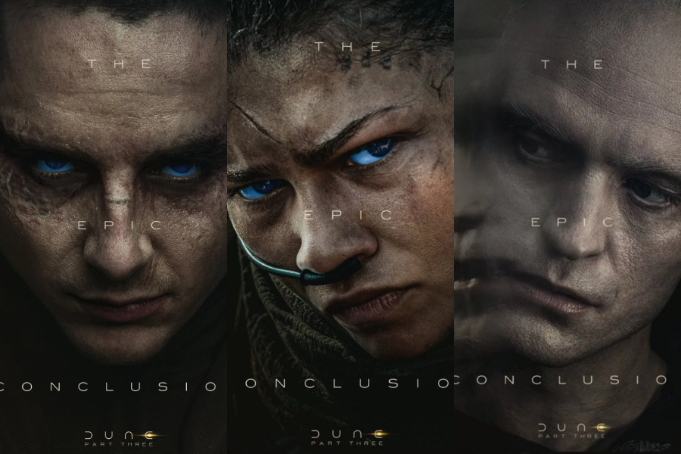
"Dune: Part Three,” also known as “Dune 3,” posters are finally here and they do more than just tease a continuation. They quietly signal a shift. This time, the focus is not primarily on spectacle but on mood, as the chapter appears driven by consequence rather than conquest. The posters follow a very different visual language from the last two films, with unease seeping into how Timothée Chalamet and Zendaya are framed, while Robert Pattinson adds an element of unpredictability. Taken together, the imagery suggests a story that is turning inward, one that questions power, fractures relationships and interrogates the very myth it once built.
Paul Atreides Is No Longer a Hero. He Is a Burdened Symbol
At the point where we left Paul Atreides in “Dune: Part Two,” he had it all. The world had bowed down to him. The new poster, however, feels markedly different. He is no longer a reluctant hero stepping into destiny. Instead, he appears isolated, almost consumed by the weight of his own myth. The poster shows him looking straight into the camera with a mix of anger and pride, suggesting he is no longer becoming the messiah, but living with the consequences of being one.
Related Stories


Chani’s Distance Hints at Emotional and Ideological Conflict
Zendaya’s Chani tasted betrayal by the end of the previous film, when Paul chose to marry Princess Irulan. In the latest poster, she is no longer positioned as a unified force alongside him. There is a visible emotional distance in how she is framed, hinting at a fracture, possibly personal, possibly political. If anything, the visuals suggest that their relationship could be one of the film’s central tensions.
Scale Takes a Backseat to Intimacy
While the Dune franchise is known for its massive visual scale, these posters focus more on faces than spectacle. The emphasis on close ups over sweeping landscapes suggests that this chapter could be more psychological than epic. It trades large scale warfare for internal conflict and character driven storytelling.
The Messiah Myth Is Being Questioned, Not Celebrated
Perhaps the most striking takeaway is how Paul is framed less as a man and more as an idea, almost deified. But instead of glorifying that transformation, the imagery seems to interrogate it. The posters hint at a narrative that questions faith, power and control, asking whether Paul leads the prophecy or is trapped within it.
Robert Pattinson’s Presence Signals a Wild Card Entry
If Robert Pattinson is part of the poster rollout, even in a fleeting or stylized way, it immediately shifts the conversation. Pattinson has built a reputation for choosing unpredictable, psychologically complex roles, and his inclusion hints at a character who could disrupt the existing power dynamic. He plays Scytale, a figure who challenges the Paul Atreides phenomenon, and it will be interesting to see how that conflict unfolds.












Comments are moderated. They may be edited for clarity and reprinting in whole or in part in Variety publications.