



Apr 07, 2026 3:41pm IST
Delhi Reframes the World: Cinema, Conversations, and a City Reawakens
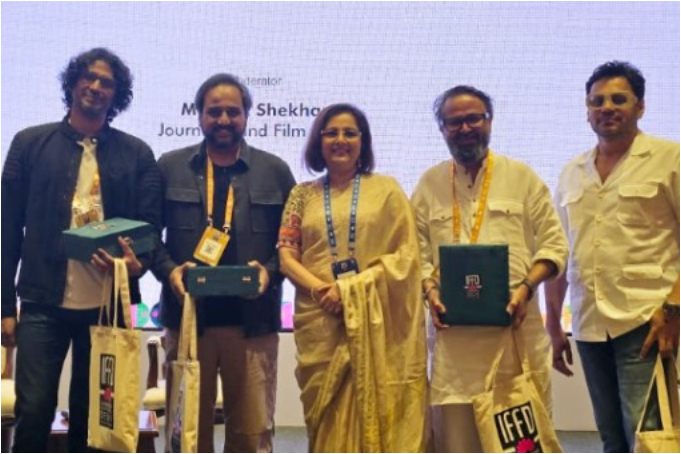
There are cities that host festivals and there are cities that become festivals. Delhi, for a long time, quietly stepped away from that second identity — its once electric relationship with world cinema fading into memory, anecdote and archive.
In the heady decades of the 1970s and ‘80s, when the International Film Festival of India animated the capital, Delhi wasn’t merely a venue — it was a meeting ground of imaginations. Filmmakers arrived with films and questions. Audiences did not merely watch; they engaged, debated, absorbed. Cinema spilled out of auditoriums into cafés, corridors, and classrooms. It shaped a certain intellectual rhythm of the city. Gradually, that rhythm softened. The festival circuit shifted its center of gravity. Other cities rose to prominence.
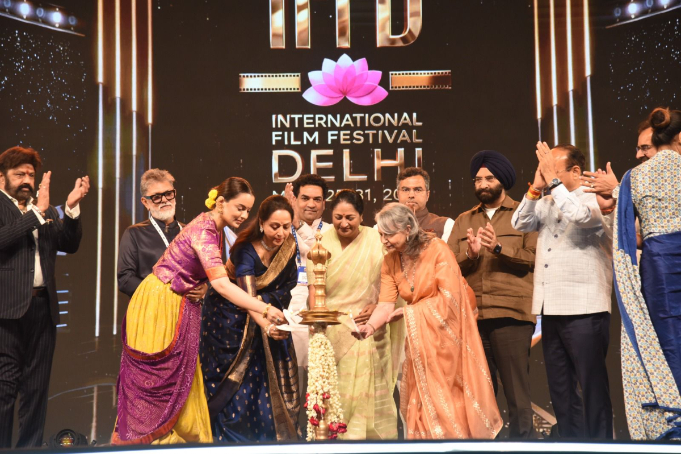
Delhi’s place in global cinematic conversation became something remembered fondly, but experienced less frequently. But cities, like cinema, have a way of returning to their unresolved narratives. The recently concluded International Film Festival of Delhi does not announce itself with the anxiety of a comeback. Instead, it arrives with quiet assurance.
This year, that reimagining found a compelling anchor in Spain as the focus country. Spanish cinema entered the festival not as a curated showcase alone, but as a living dialogue. The presence of Enrique Arce brought an immediacy to this engagement — his work acting as a bridge between popular culture and cinematic craft. Alongside him, Paco Morales represented a broader creative ecosystem, suggesting that cinema does not exist in isolation but in conversation with other artistic practices.
Related Stories
 Equally significant was the festival’s collaboration with Singapore, through its association with the Singapore International Film Festival. This partnership positioned Delhi within a broader Asian cinematic network, reinforcing the idea that the future of film culture lies in regional and transnational collaboration rather than isolated national frameworks.
The presence of Anthony Chen and Jeremy Chua brought with it a sense of contemporary urgency. Their engagement in production labs and mentorship initiatives transformed the festival into a space of active creation. Here, cinema was not merely screened — it was being developed, questioned, and reshaped in real time.
This emphasis on process was perhaps the defining feature of this edition. The festival moved beyond the traditional model of exhibition and embraced its role as an incubator. Mentorship sessions and masterclasses became central to its identity, creating spaces where experience met aspiration.
To hear Manoj Bajpayee speak about the inner life of a character was to understand acting not as performance, but as excavation. Piyush Mishra, with his characteristic intensity, unpacked the layered relationship between writing and performance, reminding audiences that cinema begins long before the camera rolls. Imtiaz Ali brought a philosophical dimension to storytelling, exploring the emotional journeys that define his cinema, while Shekhar Kapur expanded the conversation to the global stage — speaking of imagination as a borderless entity.
Filmmakers such as Abhishek Chaubey and Nikkhil Advani navigated the evolving landscape of Indian cinema, where the lines between mainstream and independent storytelling are increasingly porous. Casting director Mukesh Chhabra illuminated the often-invisible process of discovering faces and shaping performances, while Siddharth Jain provided a crucial perspective on the business and structural frameworks that enable films to exist.
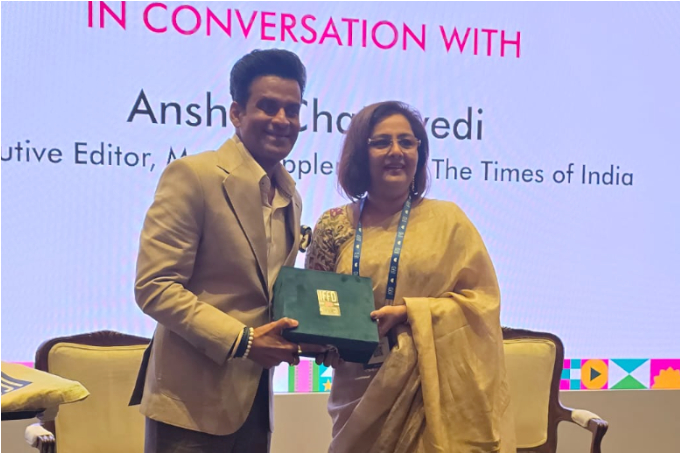 Actors like Adil Hussain brought a deeply introspective understanding of craft, speaking of silence, stillness, and truth in performance. Girija Godbole added a nuanced perspective on working across mediums and cultural contexts, emphasizing adaptability and emotional intelligence.
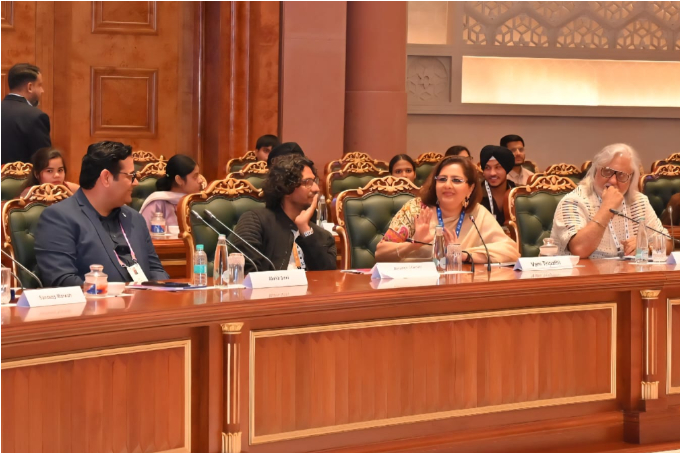
What made these sessions remarkable was not just the stature of the speakers, but the nature of the exchange. These were not top-down lectures but open conversations — fluid, responsive, and deeply human. A young filmmaker could question a veteran; a student could challenge a master. In these moments, the festival became what it was always meant to be: a space of shared inquiry.
At a time when viewing habits are increasingly individualized, shaped by algorithms and confined to personal screens, the festival reasserted the value of collective experience. To sit in a darkened hall with strangers, to laugh, to grieve, to reflect together, remains one of cinema’s most powerful possibilities. And in reclaiming this shared space, the International Film Festival of Delhi also reclaims Delhi’s cultural voice.
There is something distinctly Delhi about the festival’s energy — its openness, its argumentative spirit, its refusal to settle into neat categories. It embraces contradiction, multiplicity, and movement. It is as much about questions as it is about answers. As the curtains fall on this edition, what lingers is not a singular highlight, but a constellation of moments.
In bringing together the sensibilities of Spain, the dynamism of Singapore, and the layered cultural memory of its own history, the International Film Festival of Delhi offers more than just a program of films. It offers a proposition — that cinema, at its most vital, is a space of encounter.
And perhaps that is what Delhi is rediscovering — not just its place on the map, but its ability to bring the world into conversation with itself.
Vani Tripathi Tikoo is an actor and producer and is the Artistic Director of International Film Festival of Delhi.



Comments are moderated. They may be edited for clarity and reprinting in whole or in part in Variety publications.