



Mar 27, 2026 4:12pm IST
‘Bramayugam’ Producer on Mammootty-starrer Getting Screened At the Academy Museum: ‘It Is A Reminder That Authenticity Transcends Geography’ (EXCLUSIVE)
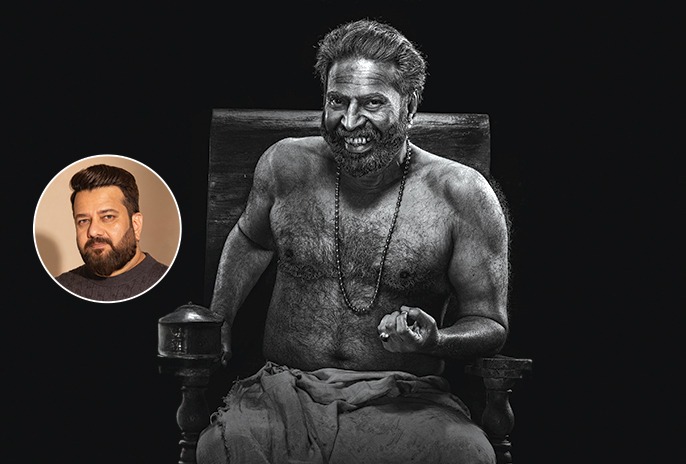
Chakravarthy Ramachandra’s production company Night Shift Studios has delivered two back-to-back blockbusters in Mollywood (Malayalam Film Industry) with “Bramayugam” and “Diés Iraé.” In fact, the former achieved a rare milestone as the Mammootty-starrer was screened at the Oscar Academy Museum in Los Angeles on February 12, 2026, as part of the “Where the Forest Meets the Sea” series.
The producer, who brought back the pure horror genre on the big screens, speaks about balancing arts and commerce, “Bramayugam” and “Kantara” finding pan-India appeal and other aspects, while talking to Variety India.
How do you place your bets on a niche genre like pure horror?
Any genre-specific movie will be classified as niche. Horror, in particular, has a limited audience, and this audience would have watched the best horror films from around the world. My approach to entertain such viewers would be to focus on storytelling, provided it is immersive and genuine.
Is India still at a nascent stage in horror compared to global industries?
India has had horror movies since 1935. The black-and-white era saw blockbusters featuring A-list stars, directors, and producers, making it a golden age of the horror genre. Somewhere in the mid-70s, the genre underwent commercial trials, ultimately settling into the B-grade category.
While global horror benefited from decades of experimentation and strong genre literacy, India had to adapt to treat horror as a serious storytelling form. The intent and craft are catching up, and that’s an exciting phase to be in.
Related Stories
How do you choose scripts across such varied genres?
It always starts with emotional resonance and a unique voice. Genre is less important. If a story stays with me after the narration (usually the story draft), feeling grounded yet cinematic, and the filmmaker has a clear vision, that’s usually a strong starting point.
How do you approach marketing, especially for horror?
The traditional marketing strategies will not work for a horror movie. The talent and the filmmaker will be restricted not to reveal the plot, highlights etc., prior to the release.
I approach marketing as an extension of the film’s storytelling rather than a separate activity. Every element from the title, sound, visuals, to release timing must reinforce the film’s emotional world. With horror, it’s about building atmosphere early and conditioning audiences to feel something before they even watch it. The goal is to intrigue, create discomfort, and start a conversation.
How do you balance art and commerce?
It is always a negotiation, but I will never compromise. Cinema is both an artistic expression and a business. I would never force an addition to the narrative for commercial reasons, thus ensuring the director’s vision is protected while making the film accessible enough to reach its audience. The balance comes from clarity of intent at the development stage itself.
Which films challenged you the most creatively?
All of our projects are unconventional, and they have their own set of challenges. These are often the most rewarding as well.
What did you feel when "Bramayugam" was screened at the Academy Museum?
It was deeply gratifying. To see a rooted, culturally specific story travel that far and be appreciated in such a prestigious space is a reminder that authenticity transcends geography. It was both humbling and validating.
Your thoughts on Mammootty taking unconventional roles?
It’s incredibly inspiring. For someone of his stature to constantly push boundaries speaks volumes about his commitment to the craft. It sets a precedent that reinvention is essential, regardless of where you are in your career.
With audiences exposed to global content, how challenging is it to innovate?
It’s both a challenge and an opportunity. The audience is more aware but also more receptive. You can’t depend on formulas anymore—you must bring sincerity and freshness. This encourages all of us to become better storytellers. Fortunately, in India, with its diversity, each remote region holds a culturally rooted story yet to be told.
On rooted stories like "Bramayugam" and "Kantara," finding pan-India appeal?
Authenticity travels. The more specific a story is to its culture, the more universal it can feel emotionally. Audiences today are willing to experience worlds beyond their own, as long as the storytelling is compelling.
Does box office underperformance affect you?
Of course, it does. There’s a lot of effort, time, and belief that goes into every film. But I also see each film as part of a larger journey. You learn, recalibrate and move forward.
Do you need tentpole films for maximum box office success?
Films can be put into three tiers. The top being big-budget tentpole films, followed by the mid-sized and smaller films. It is the mid-sized and small films that actually fuel the ecosystem. It’s about understanding the scale your story demands and executing it well. Setting out to make a tentpole film alone doesn’t guarantee success.
Will A.I. impact filmmaking in India?
Films are still made for humans. No amount of technology can replicate the human factor of storytelling. A.I. is another powerful tool for filmmakers, especially in pre-visualization, post-production, and efficiencies in workflows.
What’s next for you?
We are building a slate exploring the sub-genres and diversifying into other languages with new voices attached.




Comments are moderated. They may be edited for clarity and reprinting in whole or in part in Variety publications.