



Feb 08, 2026 11:00am IST
Anil Mehta On Bollywood Losing Its Charm: ‘It’s Disheartening Because Many Films Have Not Worked’ (EXCLUSIVE)
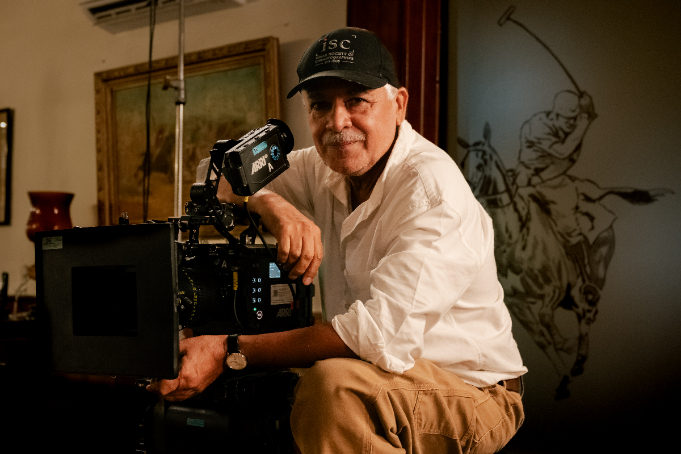
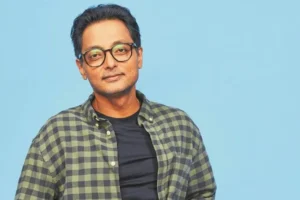
Located in a green neighbourhood of Juhu, cinematographer Anil Mehta’s apartment aesthetic is as appealing as his cinematic visuals. As he sits down for the chat, says he agreed to meet because he wants technicians to get more recognition, “Even at award shows, the technicians section is wrapped up at brisk pace (laughs).” 2025 ended on a busy note for him with two movies, "Ikkis" and "Tu Meri Main Tera Main Tera Tu Meri" hitting the cinema halls. Mehta shares that he met Sriram Raghavan for Ikkis before COVID-19 hit, “We had begun to break down the logistics of the production. But Sriram moved onto "Merry Christmas" as it was a more contained movie. Also, post COVID-19 it had become tough for makers to mount big projects. Recreating the 1971 War in a remote location with all the hardware that goes into war is not easy,” he explains.
Sriram Raghavan and Anil Mehta have collaborated for "Badlapur" (2015) in the past. Describing their partnership as a truly rewarding one, Mehta reveals Sriram worked for a couple of years with the writers of "Ikkis," “I had to say yes. We worked before on "Badlapur," and I knew his process.” Mehta who has worked with Imtiaz Ali, Sanjay Leela Bhansali and Karan Johar on multiple projects says Raghavan and he has a “mutually open relationship” that allows for honest, collaborative flow of ideas.
Memories with Dharmendra
"Ikkis" is the swansong of veteran Bollywood star Dharmendra and theatre debut of Agastya Nanda. “On one hand, we had a complete newcomer in his early 20s, and then the veteran, Dharamji, who we could see had age-related issues. However he was always game to do stuff. He would never say shoot in a studio or close to his home. For Agastya, I think it was very, very trying because he’s young, and this film faced delays. The shoot was not getting over. And at some point, it’s natural to get restless, because one’s life is, at a halt. I think he handled it well and whenever we required him, for whatever purpose, training, recce, etc., he was always there.”
Has Bollywood lost its charm?
People on all social platforms like Reddit are lamenting how Bollywood has lost its former glory. The number of films we make have drastically reduced. Mehta believes, “It is a large disruption by digital platforms by bringing in a lot of spectacular content to audience homes, during the pandemic, and suddenly the viewing habits changed. I firmly believe that the cinema going experience cannot be replaced. There will be ups and downs but audiences will go to the theatre to see a good film. For producers, making films for big screen is important. It’s disheartening because many films have not worked. But that’s cyclical.”
India a complex matrix for global OTT
Unlike South Korea or Western nations like the UK and US, very few projects are commissioned by OTT giants in India. He opines, “India’s viewing audiences are a very complex. There are so many cultures and subcultures in our country which a single OTT is not going to be able to address. This is why Netflix has taken such a long time to understand India and I don’t think they still have it. So if they acquire Warner I would just say that it will be a learning for them as to how to invest in the cinema space and not to stay restricted.”
No hope for Indie filmmakers?
Anil Mehta believes it’s a challenge for independent filmmakers anywhere in the world, irrespective of OTT. He opines, “This has been the pet peeve of Indie makers since the 1970s when I was in film school. I feel the issue is revenue streams in India. The Math is not adding up, and they are going through an inner churn. They are pulling back on more projects than they are commissioning. If platforms cannot see the value of some of the Indian projects then obviously there’s some deep confusion going on somewhere. The funding needs some kind of consistency. India is a difficult country to understand, very simply put. So, you have to trust some native intelligence here also. You can’t be formulating all your policies sitting somewhere out there.”
Best collaborations
A FTII graduate, Anil Mehta credits his start in Bollywood to Sanjay Leela Bhansali. He reminisces how SLB had a deep understanding of what makes a good Hindi film even in his early years. “Both Khamoshi: The Musical and "Hum Dil De Chuke Sanam" were great platforms for me. Working with Sanjay who has such a strong sense of how an Indian or Hindi film works, was a blessing. I got to learn all that from him. He is invested in every aspect of the process of filmmaking whether it is sound or music or costume…. I remember Sanjay and I drove all through Goa, North and South for two weeks looking for a location to set up the lighthouse,” he shares. Whether it is Sanjay, Ashutosh (Gowarikar) or Imtiaz’s films (Ali), all these were collaborative journeys for him. “This is how good filmmaking happens,” he adds.
Moments created at sunset
Imtiaz Ali’s "Highway" (2014) is known for its visceral story-telling. Mehta tells us that Ali and he had “unspoken understanding” of how and when to respond to the locations. Mehta gets candid about a scene that was filmed impromptu because Imtiaz sensed a gorgeous sunset. “We had stopped at Kalpa, Himachal Pradesh for tea at a stall. Imtiaz predicted a great sunset, and he imagined a scene where Veera (Alia Bhatt’s character in "Highway") would talk to the sun, as she is being held captive in the bus and had no one to talk to. We moved the camera vehicle to the bottom of the hillock and formed a human chain to get the gear on top of the hill. Alia changed and memorized her lines. The scene made it to the promo of "Highway" but not to the main film. I remember my colorist later telling me that another cameraman asked if VFX and CGI was used to get the effect,” he reveals with delight.
Corporate working hours in films?
Mehta shares it is his prudent attitude towards work and rest that has proved beneficial for him. He champions the cause of decent working hours, “Filmmaking is strenuous work, for some it is physical; for others mental or emotional. SRK once told me that when he gets home from a shoot, he tells people to leave him alone for two hours. Cinematography is physical work, a director works 24x7 on a movie and actors have to emotionally adapt to the characters. We need a disciplined system,” he asserts. Mehta also rued how hustle culture in the corporate world has left people with no ‘real time’ to dissociate from work,” he laments.
Mehta advocates rational work hours and has opted out of many movies because of that, “I will do longer shifts on an exceptional ay but it cannot be a norm. I have started saying no to commercials for the same reason. Nowadays, 12 hours is the norm. They ask, “Can you please sign 15 hours? There are young vulnerable people who might agree. There has to be strong action.” he affirms.
Heroes behind cameras
Anil’s idol is the late Ashok Mehta. There’s the passion in his voice when he talks about Mehta. The celebrated Indian cinematographer passed away in 2012, “Ashok Mehta did not come from film school. He just landed in Mumbai, and made his career starting off from being a canteen boy to a camera attendant and finally a DoP. His work is unparalleled. It is a privilege that I managed to meet a guy like him though we never worked together,” he says softly.
Content fatigue — an impending doom
The veteran prefers the morning birdsong to watching TV. “There is a certain saturation point to everything. We need to rationalise this content overload,” he says. He confesses he is suitably impressed with what Chennai and Hyderabad film industries are putting up on the marquee. “They are pushing the bar. I loved Atlee’s Jawan with Shah Rukh Khan. However, I do not understand this urge to make a sequel once a movie succeeds,” he says.







Comments are moderated. They may be edited for clarity and reprinting in whole or in part in Variety publications.