



Jan 31, 2026 9:34pm IST
A woman’s Ambition is still Questioned More: Niharika Singhania
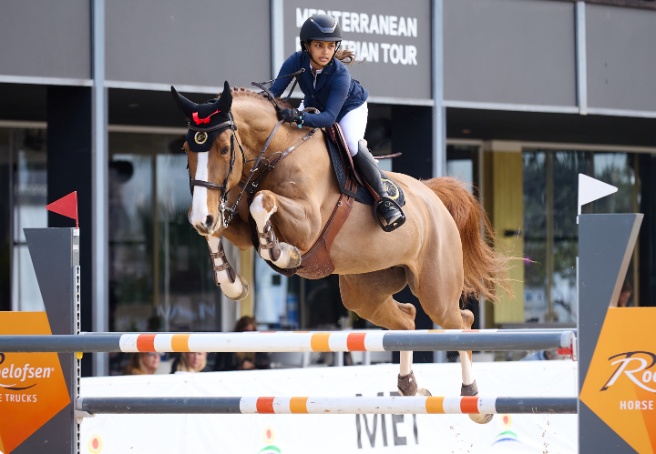
Representing India on the global equestrian showjumping circuit, Niharika Singhania belongs to a new generation of Indian athletes. She redefines excellence - consistently and far from the spotlight. In an exclusive interview with Variety India, she reflects upon the discipline, responsibility and trust built over the years in the saddle and what it means to build a career with a 700-kilo animal without using privilege as a crutch.
Winning an international showjumping competition in Spain is a defining moment. When you look back on that day now, what stays with you the most: the result or the journey that led to that point?
For me, both were significant. A lot of work goes into getting to that point and the result almost validates that you’re on the right track, teaches you a lot about how much it takes things to fall into place perfectly and have that perfect result. While it’s extremely rewarding to see things come together, I’d say the journey still goes on.
In the arena, it's just you and the horse. What does that space teach you about yourself?
It teaches you responsibility. You become aware that you’re not just riding for yourself, but for another being that trusts you completely; you must understand what a privilege that is. I think it also sharpens your ability a lot to make split-second decisions under pressure when you must also stay present and implement them in a fraction of a second.
As a young Indian woman competing globally, what barries have you had to navigate?
Equestrian sport isn’t very visible or advanced in India compared to Europe or the U.S.. So, a lot of the barriers are quiet rather than obvious. You don’t grow up seeing a clear pathway and there aren’t many reference points for what an international career from India looks like. So, when you’re competing abroad, you often navigate systems and expectations and standards, even though you really haven’t been exposed to them from the start. And I think that forces you a lot to adapt very quickly and find your footing, which can sometimes be a bit of a struggle.
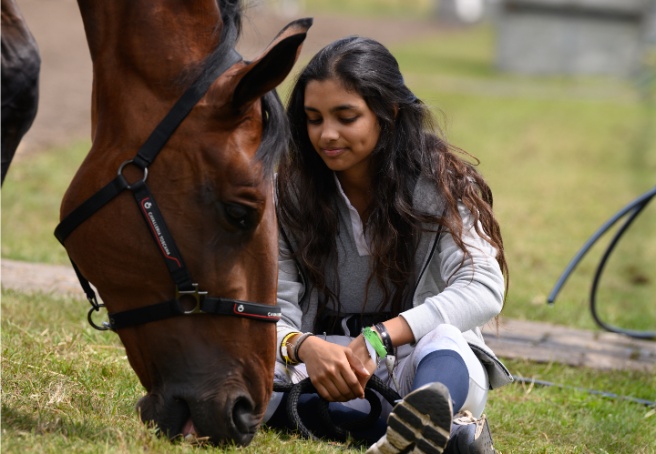
Women in sport are expected to justify their ambition in ways men are not. Agree?
I definitely think a woman’s ambition is still questioned more, even though that is changing quite rapidly today. Equestrian sport is interesting because it’s one of the very few truly co-ed sports where men and women compete directly against each other on equal terms. That said, especially in a country like ours, where show jumping isn’t as developed as in Europe or the US, there are far fewer women at the top level in the sport. Sometimes you even see a ratio of one woman to 10 or 12 men, and because of that, I think being ambitious means a woman can stand out more than it should. But I think the sport is slowly moving in the right direction.
At what point did you realize that being taken seriously would require you to define yourself beyond your famous last name?
It’s always been a fact for me, so there was no actual point at which that changed. I always approached riding from a very personal place, and the fact with horses is that they don’t care where you’re from, what your name is. They only respond to how you treat them and how well you can understand them. Aside from that, show jumping is also a very result-based sport. Once you’re in the ring, nothing will really change the result, aside from the work you’ve put in and what you can objectively live on the day.
Has there been a moment when you felt you stepped out of your father's shadow - not in defiance, but in quiet confidence?
In this field, honestly, I never felt I was in the shadow in the first place. Horses were always my world and my passion from day one. My parents were supportive, but they never involved themselves beyond what was necessary, and I’m very grateful for that. As a young kid, it taught me independence and how to make my own decisions, take responsibility for my progress, and really find my own way quietly.
Access and opportunity have shaped your journey but so has discipline. How do you reconcile privilege with the need to constantly prove your own merit?
Yes, being privileged in sport does make access easier, but that’s one part of it. Accessibility can open doors, but I think at the end of the day, you are working with a 700-kilo animal who has a mind of their own. I think you must put in the hard work, the early mornings, late nights, and everything in between. As my coach likes to say, you have to learn to be a ‘horse person’, not just a person with a horse, whether that means waking up at 4 am to get your horse ready for a competition or sitting in the stables in the middle of the night when the horse is sick. That’s all part of the sport and what makes you a good rider at the end.
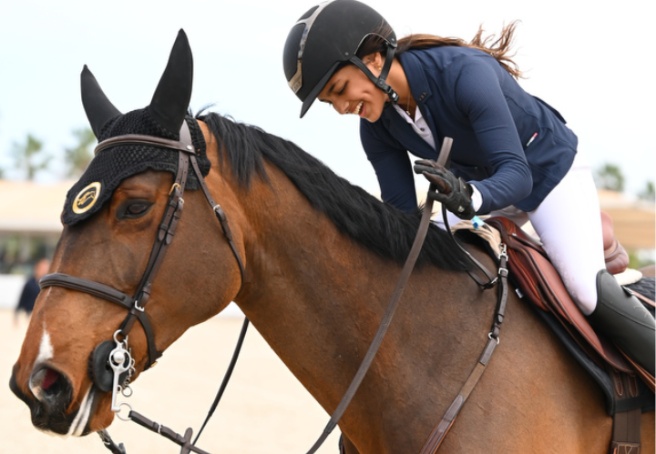
Do you feel responsibility - to the sport, to young riders, to yourself?
Yes, there’s a responsibility to represent the sport properly and not take the opportunities I’ve been given lightly, but even more importantly, I think there’s a huge responsibility towards the horse above anything else. Their well-being always has to come first. We’ve all started somewhere and growing up, I never really saw women competing at the highest level in India, so even if I can be a small source of belief or guidance for the younger riders, that matters to me.
You chose a sport that offers little certainty and visibility in India. What drew you to a path?
Honestly, it was never a choice. From the early days, I fell in love with everything about it and I always knew I would do whatever I could to keep it in my life and whichever capacity I could. There’s something so magical about this sport, about being able to communicate with these animals, to know what they’re thinking, and understand each one of their quirky, unique personalities. It’s just the biggest privilege to be part of their lives. I think you have good days and bad days and of course, as you move up to compete at a higher level, the margins get narrower, the risks get higher. But for me, a few hours in the stables always remind me of why I love it and why I should keep working hard to achieve what I’ve dreamed of.
How have failures or near-misses reshaped the way you approach competition and life?
It has really taught me not to take a bad day or a bad result as failure, but rather as information and experience. I think you learn to analyze, adjust and look forward to the next day and that applies to the sport and outside it.
What fear acoompanies you into the arena?
I do sometimes tend to overanalyze what the horses try to communicate, then get too concerned about them and worry if they’re feeling okay. And then that can sometimes distract me from making mistakes. As a rider, it’s a good thing to listen to your horse and what they’re trying to tell you, but I think sometimes I can take that a bit too far.
What do you want young girls to take away when they see you competing internationally in equestrian sport?
I hope, they see that it’s possible, even if the sport for women isn’t common or visible in India. Growing up in India, there was barely any female representation at the top level. And that was always something that made me wonder if it was even achievable. I really hope that I can be that for them today.




Comments are moderated. They may be edited for clarity and reprinting in whole or in part in Variety publications.