



Feb 13, 2026 4:35pm IST
‘10DANCE’ Creator Keishi Otomo On Keita Machida, Ryoma Takeuchi’s Chemistry, Boy Love Genre And Love For Indian Movies (EXCLUSIVE)
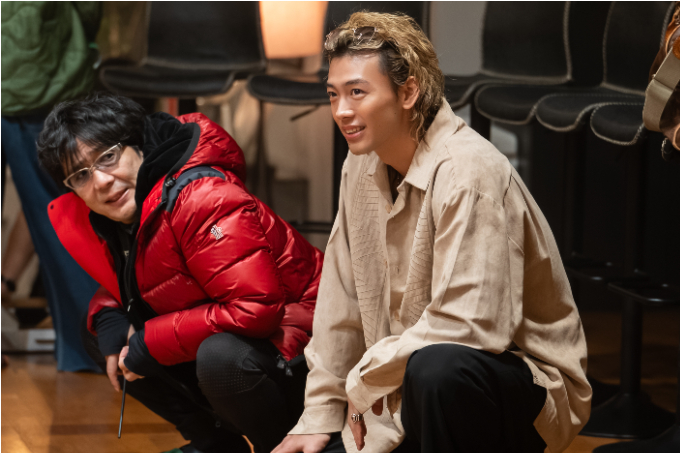
Keishi Otomo, the award-winning Japanese filmmaker, is not ready to rest on his laurels. Known for the highest-grossing "Rurouni Kenshin" series, he began his career from a TV station. In December 2025, his film "10DANCE" was released globally via Netflix. A mature romance starring Ryoma Takeuchi and Keita Machida, the film is a BL (Boy Love) set against the intricate and visually appealing world of ballroom dancing. The genre of same sex relationships between men is gaining popularity in a world that is aiming for greater inclusivity. "10DANCE" was well-received by global viewers who praised the performances, choreography and technical finesse of the film. At 59, Keishi who directed his second BL reveals that he is not afraid to explore new genres.
Excerpts from an interview...
Related Stories


What was the biggest challenge in adapting the manga of 10DANCE to a live action film?
In "10DANCE", the two protagonists, Shinya Sugiki, known as the King of Blackpool, and Shinya Suzuki, a Cuban-born prodigy are portrayed as world-class dancers. The greatest challenge was to depict these characters in a way that made their abilities feel convincing. Dance is both a competitive sport and a form of self- expression. That’s why, the motivations behind every single behavior in the film has to consistently stem from each character’s preferences, judgments, values, and sense of aesthetics as a dancer. When it came to the dance sequences, we initially considered relying on VFX, but that would never allow us to achieve the embodiment of physicality, and the sense of sensual expression, we needed to portray. It became clear that the most important thing was for the actors to train intensively, and through that process, discover the sensibilities and philosophy of real dancers for themselves.
Given the limited time, the training was undoubtedly demanding for them. Visiting the Blackpool Tower, the sacred ground of ballroom dance, was also crucial. For me, it was vital to form a clear image of the actors dancing there with total confidence, as if they had finally found the place where they truly belong.
People praise you for revitalizing the manga to live action adaptations market. Do you feel extra pressure because of the box office milestones?
Rather than box office results themselves being a source of pressure, what really mattered to me was making sure I didn’t fall into a mindset where, by valuing my past successes too much, I’d start hesitating to take on new challenges.
In fact, I’m very determined not to build a career that rests on the success of the "Rurouni Kenshin" series and simply repeats the same themes and motifs. That’s why I want to keep challenging myself with new subjects that can stimulate me as much as possible. "10DANCE" is an extension of that mindset.
Japanese manga has a growing fanbase in India. What do you think is the universal appeal of manga that attracts fans?
As a medium, manga has the advantage that anyone, regardless of age or gender, can pick it up casually. And manga creators are always thinking about how to entertain their readers, constantly coming up with new stories and exciting visual styles. They’re always looking for better ways to communicate with their audience. I think that flexibility is also part of what makes manga so uniquely appealing. For example, if you watch a two-hour movie, every viewer needs that same two hours. But the pace of reading manga differs from person to person. Someone might finish it in 30 minutes, while someone else might take three hours. Each person can enjoy manga at their own pace.
What set '10DANCE' apart?
"10DANCE" is a mature love story about two world-class dancers, both possessing a refined aesthetic sense and utmost professionalism. They sometimes clash and sometimes feel deep respect for one another, ultimately coming to understand and acknowledge each other in profound ways. The two actors, both in their mid-thirties did not simply imitate performances typical of the genre. They uncovered, with great delicacy, the emotional depth of their characters, piece by piece. The story unfolds in a way that is at once beautiful and uncompromising. The cinematography and lighting also aim for a rich, polished texture. The glamorous costumes and makeup, as the stately locations in Blackpool, England, the mecca of ballroom dancing, and the breathtaking are all part of the film’s appeal. "10DANCE" further weaves in musical diversity and a sense of exhilarating uplift, resulting in a gorgeous ‘adult drama’ that engages earnestly with the profound depths of love. This may well be what sets it apart from other works.
The BL genre has exploded on OTT even in conservative nations. Do you feel making a LGBTQ+ project is better for an OTT release or theatrical?
I believe that the subtleties of human emotion invariably reveal themselves in the depths of a performer’s eyes. The great masters of classic Japanese cinema restrained their actors’ overt gestures, capturing, often in close-ups. In doing so, they portrayed psychological depth with quiet, deliberate restraint. To discover and savor those delicate and complex emotions, those nuances that live behind the eyes, a large theatrical screen makes it easier to perceive.
In the late 1990s, when you were studying in California and working in Hollywood, who were the Asian icons you looked up to?
Peter Chan, Johnnie To, Wong Kar-wai, Ang Lee, Wayne Wang. The works of these Asian filmmakers, whose names were widely known and celebrated in Hollywood at the time, were all objects of admiration for me. In particular, I happened to run into Director John Woo at a Chinese market just before he began filming "Mission: Impossible 2," and had the chance to greet him. I was studying action filmmaking around that time, so Director Woo, who was working at the very center of major Hollywood cinema, was, I think, the one I admired most.
Have you ever watched an Indian movie, and what did you think about it?
From the earlier works of Satyajit Ray to the films I have seen in theaters since the 2000s, such as 3 Idiots, RRR, Baahubali, Robot, and Kahaani, I’ve watched a wide range of Indian cinema. I feel that many Indian films are filled with an energy that combines entertainment, art, and music into one, offering a kind of vitality that invigorates the spirit.
What is one genre you have not tapped into and would like to explore in greater detail?
Perhaps suspense or horror. I’ve long wanted to explore the human emotion of fear, its nature, and the psychological impact it has on people, in a grounded, deliberate, and substantive way.
Many feel that Netflix has hit a bullseye with its Korean content. Do you expect Netflix to blow up in the Japanese entertainment market in the same manner?
Netflix has already become an indispensable option in the Japanese entertainment market, both for audiences and for creators. By watching high-quality works from around the world on a daily basis, I feel that viewers’ aesthetic sensibilities have also become more refined. Moreover, in a Japanese content industry that has long produced works on relatively low budgets for a primarily domestic market, Netflix has provided the necessary budgets and a more supportive environment. This has opened up many new possibilities, not only in terms of subject matter but also in production and direction. It has created a fertile ground for young staff to grow, and in recent years many more young people and women have begun to stand out on set. As Japanese works continue to flourish, Netflix’s position as a key player in Japan’s content market will no doubt become even more secure.













Comments are moderated. They may be edited for clarity and reprinting in whole or in part in Variety publications.