



Feb 24, 2026 2:55pm IST
‘We Don’t Need Big Heroes Or Loud Moments’: Sukanya Boruah On Rima Das’ ‘Not A Hero’ Stirring Berlinale 2026 (EXCLUSIVE)
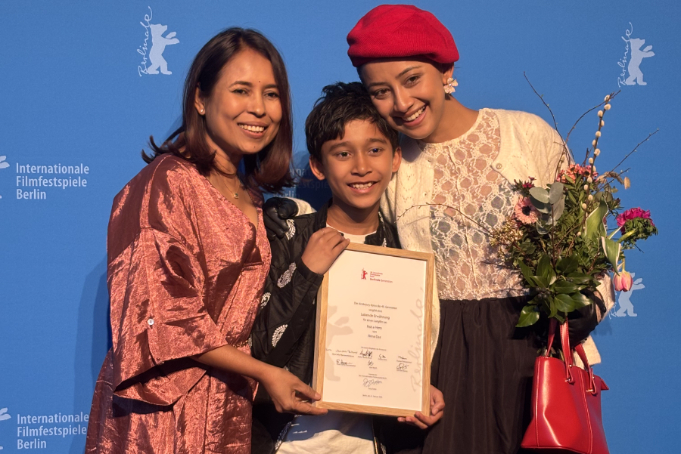
Rima Das’s “Not A Hero” has managed to bag the Crystal Bear Special Mention in the Generation Kplus category at the 2026 Berlin International Film Festival. The movie, about a city boy who moves to his village to stay with his aunt who is not fond of him, captures his coming of age as he makes friends in the village and they set out on a journey to explore life. The film stars Sukanya Boruah, Bhuman Bhargav Das, and Mrinmoy Das in the lead.
In an exclusive chat with Variety India, Sukanya Boruah has spoken about what “Not A Hero” means to her as an actor, how working with Rima Das changed her as a person and how a film that has its heart in the right place doesn’t need a ‘hero’ or noise.
Rima Das’ films are famous for quiet realism. What was harder, acting or unlearning everything commercial cinema has taught you about acting?
With Rima Das, the hardest part wasn’t acting; it was unlearning. In commercial cinema, we are often taught to express more, to project emotions outward. But in her world, everything is internal and personal. The camera is so close, it sees even what you’re trying to hide. She also has so much connection with nature; nature too plays with her emotions. I had to trust stillness. I had to allow myself to just be instead of perform. That was challenging, but also very freeing.
Related Stories
If a film about and for children has to travel abroad to be celebrated, what does it say about Indian audiences or the Indian industry?
I don’t think it’s about audiences lacking sensitivity. Indian audiences are deeply emotional and intuitive. But it’s crazy how international audiences are so in love with cinema from all around the world and how they respect every piece of art. Sometimes it’s about what gets space and support. Stories about children, especially ones that are quiet and reflective, need nurturing. When a film travels and finds love internationally, it doesn’t mean it doesn’t belong at home — it just means stories are universal. I believe there is space in India, too, for these films, and maybe this journey opens more doors.
The film is about childhood, belonging and masculinity. What did it force you to confront about your own idea of strength?
For me, the film isn’t directly about masculinity; it’s about belonging. It’s about a city boy stepping into a village and slowly unlearning what he thought he knew about life, identity and himself.
What it forced me to confront is that strength can be quiet. It can be the courage to feel out of place, to observe instead of control, to adapt instead of resist. Growing up, especially in cities, we’re often taught that strength means proving something. But in this story, strength becomes the ability to listen, to soften and to accept a different rhythm of life. It reminded me that sometimes the strongest thing you can do is allow yourself to change.
Many actors spend years chasing visibility. You began with a film that lets silence speak. Did that feel risky?
It did feel risky sometimes. We live in a time where visibility often feels louder than substance. But I didn’t want to start my journey chasing noise. It’s been nine years in the Assamese industry and five years living in Mumbai, working on multiple projects, and I was really looking forward to something like this — and then it just happened. Beginning with a film that trusts silence felt really honest to me. It reminded me why I started acting — not for attention, but for truth. If silence can move people across cultures, that’s powerful.
If this film proves you don’t need a ‘hero’ to move audiences worldwide, what kind of stories should India be telling right now?













Comments are moderated. They may be edited for clarity and reprinting in whole or in part in Variety publications.