



Feb 05, 2026 1:05pm IST
The Sitar Isn’t Ancient; The Music Is: Anoushka Shankar (EXCLUSIVE)
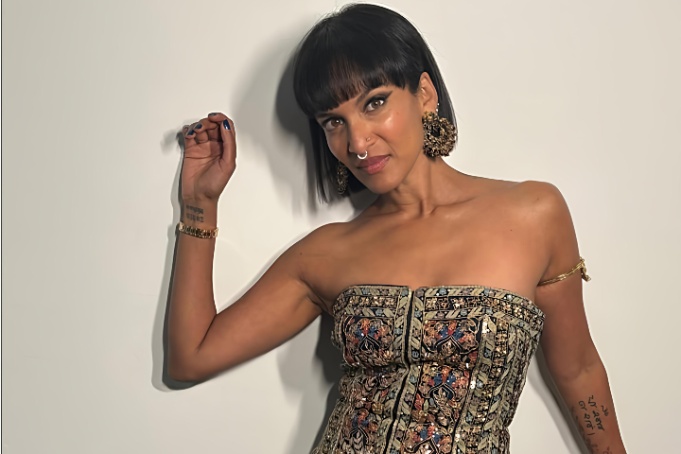
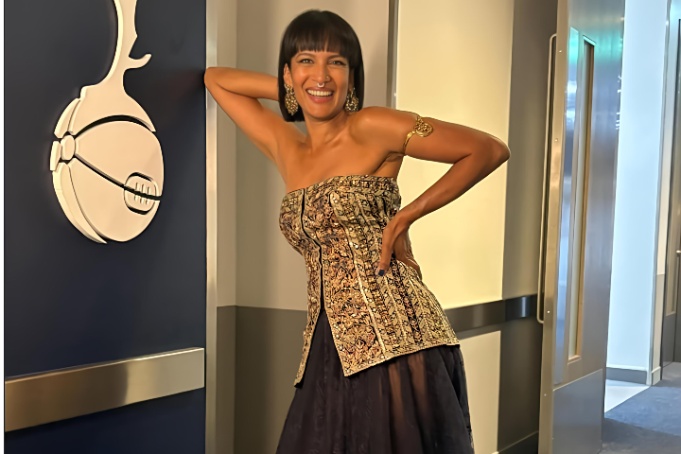
Rooted in Indian classical music yet constantly pushing its boundaries, sitarist Anoushka Shankar, in an exclusive conversation with Variety India, talks about her legacy, her Grammy nominations and how audiences respond to her music. She further opens up about evolution, artistic philosophies and what inspires her…
Excerpts from our chat:
Your global performances began at a very young age, but your artistic voice has continued to evolve. Today, how would you describe who Anoushka Shankar is, as a musician?
I suppose I'd say I'm just a musician or an artist that's trying to explore and express my lived experience through my music. I believe in connection, I believe in the transcendence and the healing power of connecting through art forms for both the maker and the recipient. And so, I'm just on that journey of trying to share my experience and my perspective with people; share beauty, share healing, share hope.
Your collaborations span genres, cultures and continents. What excites you most when Indian classical music enters a global musical conversation?
I really love as a musician when I get to experience what that feels like. There's something magical about stepping out of comfort zone and finding ways to communicate with other artists. It's the same as you know when you're a traveler and when you don't speak the language and the joy and the relief and the connection you feel when suddenly you're able to find a way to connect with someone.
Do international audiences listen to Indian classical music differently from Indian audiences - and does that influence how you perform or compose?
I stopped thinking about it long ago in such a binary way. I do not think it's possible or maybe helpful to divide audiences based on Indian versus non-Indian because we have generational presence outside of India now musically. And so, it's very frequent that I might come across a very deep and knowledgeable listener somewhere like Berlin or Chicago or Sydney and that I might come across listeners in Bombay or Delhi or Kolkata who don't know anything... I'm saying there are listeners. So, within each place there are people who love Indian classical music and listen to it deeply and know a lot. We can't assume that just because we're in India, everybody knows about this music form.
Related Stories
In an age of fast digital consumption, what do you think allows an ancient instrument like the sitar to still resonate so powerfully with global listeners?
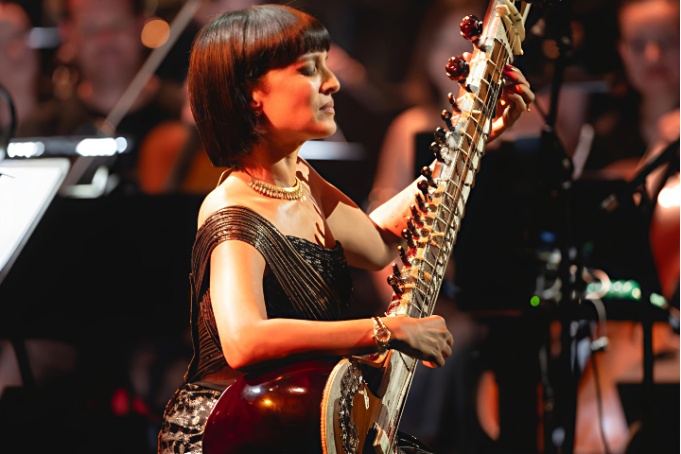
I just want to quickly jump in and say one of the things that's important to me is acknowledging and respecting that the sitar is perhaps the most recognizable Indian classical instrument. However, they are separate things. The music is not the instrument and the instrument is not the music. The sitar is not an ancient instrument. In its current form, it's maximum, like, 150 years old. It is connected to the 'veena'. It has evolutions from there. But it has taken a lot of other influences to become the sitar. And even people like my father were great innovators, making big additions to the instrument, which are very commonly used now. And those are less than 100 years old. It's not an ancient instrument. What we can say is our music continued from ancient times and has its roots, you know, many, many centuries ago. But I also am a real believer that tradition also evolves. I think one of the beautiful things about Indian classical music is that it's an oral tradition. And therefore, you know, in a pre-recording era, even if it was being passed on generation to generation, it was also absorbing the influence of each generation. And I think that's what people can really hear in our music is that it's timely and timeless.
Returning to perform in India always carries a distinct emotional weight. What does this India tour represent for you at this stage of your journey?
The trilogy that I've been releasing over the last three years, which has been quite an unusual experience, these rapid-succession releases that are part of an extended, longer-form story — they started in India. The seed for this idea came to me when I was on a beach in Goa on New Year's Day three years ago. And so, to be back touring, it feels like a beautiful marking and completion of the journey.
Your father and sister have experienced Grammy wins, while your own journey has included multiple nominations across genres. Has that contrast shaped how you think about validation, ambition or artistic fulfillment?
Yeah, it was an interesting process, especially being a younger person where, you know, if I didn't have family members who were such prolific Grammy members, my nominations would have been more of an isolated event just to celebrate. Whereas I obviously had family members right next to me who were, you know, legendary winners. And I had to work through that. The truth is, at this point, even my nominations are, you know, in a factual, non-egotistical way, but in a material way, a true achievement. You know, I'm in a very small percentage of people, of musicians from anywhere in the world, not just Indian music, anywhere in the world to have 14 nominations. Once you're up there, you're in, like, a rarefied strata of recognized artists. So, I can take that accolade, and I can feel proud of it. And I know that having nominations across 20 years is a marker that clearly, as a musical career overall, something is working in that sense and that I'm reaching people. I also saw as part of that same work that nomination, win, not win, none of it ultimately means anything as an artist, as a musician. Separate from as a career, because there is obviously a material benefit to these recognitions. But in a true sense, they don't mean anything. So, whether I win, whether I'm nominated, it doesn't change the music I've made.
Is composing for cinema something you’d like to explore more extensively, or do you prefer engaging with film selectively when a story truly resonates?
Yes, I want to compose for cinema more extensively. The few experiences I've had, especially composing for "Shiraz: A Romance of India" - the 1927 silent film's restoration, and a little bit of the Mira Nair series adaptation of "A Suitable Boy". I really found that it's a beautiful, creative parallel experience to be writing for albums and for stage. And yet it's obviously different because you're in service of a visual story and of the director's vision. I would really love to do that more. When it feels like it resonates and when I feel like I can add something to it.
For young musicians, especially women, who want to pursue classical or instrumental music, what mindset matters more than talent?
I think there's a mix of qualities that are needed. I think the music business and music industry are changing so rapidly that to be able to survive in it, outside of the talent, to be as aware and therefore protected as possible about the industry, to have either extreme amount of music business knowledge or someone you really, really trust in that kind of managerial role to help you with that side of it. To think in terms of marketing, but also to be authentically marketed. Like, what is it that you do that's uniquely you and how do you share that with people. And I think that it comes to my deeper advice, that outside of that key business understanding, I do think it's the talent that matters the most. And by talent, I don't just mean some raw gift that we're born with. I believe every human is born with a creative gift. But I think to be an artist today, to really, really trust in a very, very saturated market, that you as a human have something unique to share. The time you're living in and the exact place you're living in being you, no one else is doing that. So only you can share your unique voice with the world. So don't be afraid to really stick with that authentic voice. Protect that above everything.












Comments are moderated. They may be edited for clarity and reprinting in whole or in part in Variety publications.