



Apr 11, 2026 9:12am IST
Sai Tamhankar on ‘Matka King’ and Pushing Back Against Industry Patterns: “Repetition Is the Real Trap” (Exclusive)
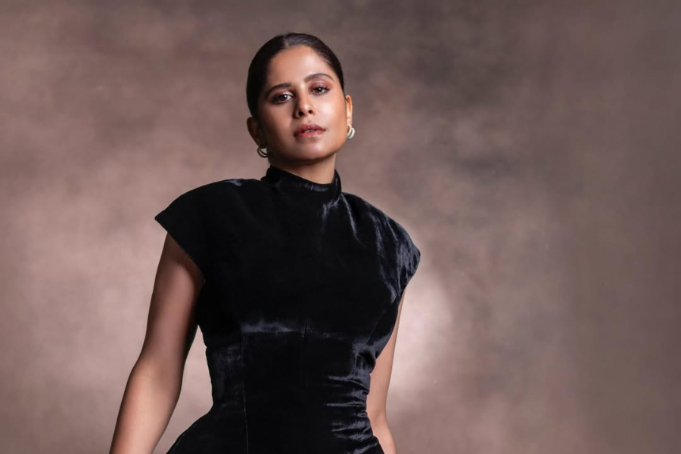
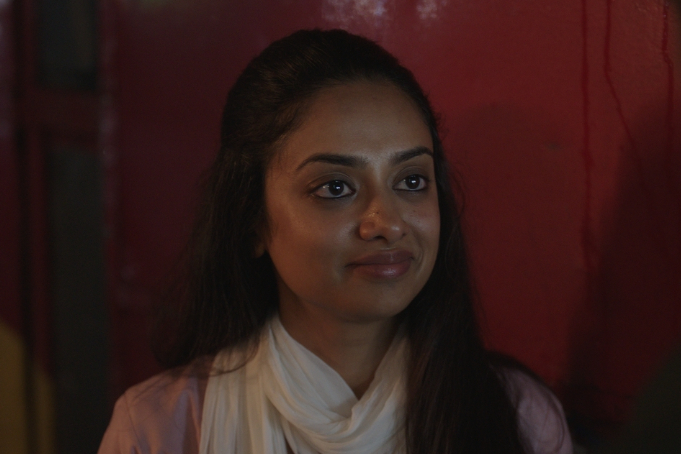
With “Matka King,” directed by Nagraj Manjule, Sai Tamhankar finds herself in a space that could easily have reduced her to a familiar archetype. Instead, she frames it as a character-led opportunity in a world that thrives on power, noise and spectacle but still leaves room for individual voices.
“On paper, you might say she’s playing a wife,” Tamhankar says of her character Barkha. “But she has her own voice, and she is not scared to exercise it.” That distinction matters to her. Because if there is one thing Tamhankar is unwilling to do, it is to repeat herself.
No Interest in Repetition
“In this industry, if something works, you are immediately offered the same thing again,” she says. “And the only way to break that is to say no.” It is not a theoretical stance. Tamhankar has lived through it. After delivering performances that connected, she found herself boxed into a cycle of similar roles, a pattern she describes as one of the industry’s most persistent blind spots.
Related Stories


“Be more imaginative,” she says, almost as a challenge to the system. “You’ve seen what an actor can do. What’s the point of offering the same roles again and again?”
The cost of resisting that cycle is real. Turning down work, especially in a volume-driven industry, comes with uncertainty. But for Tamhankar, the alternative is worse. “Sometimes saying no means you won’t work for a while,” she says. “But there is no other way if you want to do different things.”
She recalls a stretch where she chose not to take up projects because they offered nothing new. “For three years, I did nothing. Because I was being offered the same kind of roles.” That decision, she insists, is not about being selective for the sake of it. It is about survival as a performer. “At the very least, I want my next release to feel different from the last one.”
In an ecosystem increasingly driven by packaging, positioning and perception, Tamhankar’s approach remains blunt. “Doing is proving,” she says. For her, the idea of pitching oneself in a room has limits. The real currency is still the work. “If something scares me or challenges me, I go and do it first.”
That instinct led her to projects others questioned, including her digital outing “B.E. Rojgaar.” At a time when YouTube was not seen as a serious space for actors with an established body of work, she leaned into it. “People told me, ‘Why are you doing YouTube?’” she recalls. “But I saw it as a chance to shed my old skin and become something new.”
It is a pattern that defines her career. No fixed trajectory, no long-term blueprint. Just movement. “I don’t have a plan,” she says. “I flow. Work generates work.”
Calling Out the System
Sai Tamhankar is equally direct about what she sees as flawed industry trends, particularly the growing emphasis on social media metrics in casting decisions. “You are being cast according to your followers,” she says. “I think that’s a very problematic trend.”
She does not deny its presence, but she refuses to align with it. “If you are good at your job, you will get work,” she adds. “PR cannot replace that.”
It is a stance that comes with its own risks, especially in a system where visibility often dictates opportunity. But Tamhankar seems uninterested in playing that game. “These trends come and go,” she says. “What stays is your work.”
Within this context, “Matka King” becomes more than just another project. It is a space where Tamhankar finds alignment between intent and execution.
Working with Nagraj Manjule, Sai Tamhankar says, eliminates a lot of the usual friction that comes with performance. “There is very little to manage when he is directing,” she says. “He understands human relationships far better than most of us.”
That understanding feeds directly into Barkha’s arc, a character shaped by her exposure to power and her eventual rejection of it. “She goes through this noise of money, fame and control,” Tamhankar says. “But she realizes that her voice matters more.”
It is a journey that mirrors the kind of roles she is actively seeking out now. “I like women with spine,” she says. “I don’t want to play characters who are helpless.”









Comments are moderated. They may be edited for clarity and reprinting in whole or in part in Variety publications.