



Jan 31, 2026 10:00pm IST
Inside India’s Oscars Race: Money, Momentum, and a Missing System

When we talk about foreign language films nominated at the Oscars, rarely does an Indian film come to mind. Lagaan (2001) was the last official Indian entry to make it to the nominations for Best Foreign Language Film at the biggest movie award night ever. It’s not because we don’t make films that qualify for the category. Trouble is, winning an Oscar has more about marketing and networking than it is about filmmaking.
With Homebound also failing to make it to the Oscar nominations, the industry is abuzz with conversations around why Bollywood, known for making the highest number of films in the world, every year has never won an Oscar for Best Film? Variety India spoke to experts who have spent time in the Academy ecosystem, some even on multiple occasions, to understand why India continues to miss the target when it comes to finding a place among the strongest contenders.
Season Of Hope And Long Memory
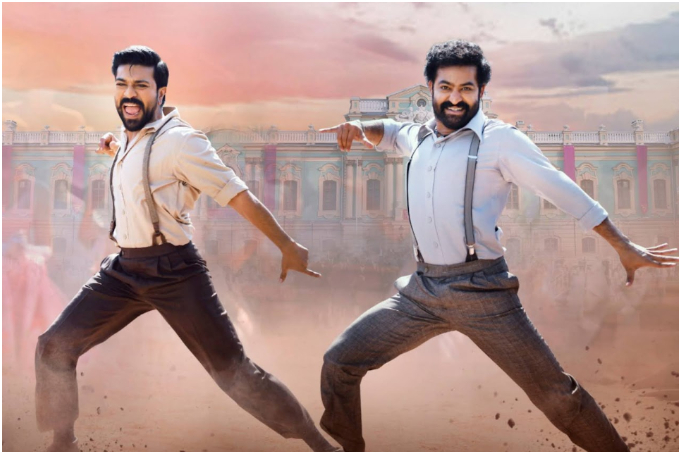
Neeraj Ghaywan’s second directorial, Homebound, starring Ishaan Khatter, Janhvi Kapoor, and Vishal Jethwa, had a rather interesting journey at the Oscars campaigning but couldn't make the cut. Even as a country, India's relationship with The Academy Awards has been very tricky. The last widely remembered Oscar win before RRR’s Best Original Song ‘Naatu Naatu’ at the 95th Academy Awards remains Bhanu Athaiya’s award for costumes for Gandhi back in 1983. The Elephant Whisperers achieved its own milestone with a win for Best Documentary Short Film and Period. End of Sentence. was honoured at the 91st Academy Awards. These triumphs come a full 10 years after Slumdog Millionaire swept the Oscars and Anil Kapoor danced on the global stage. However, the film is a British production set in India, not an Indian creation.
A History Marked By Gaps
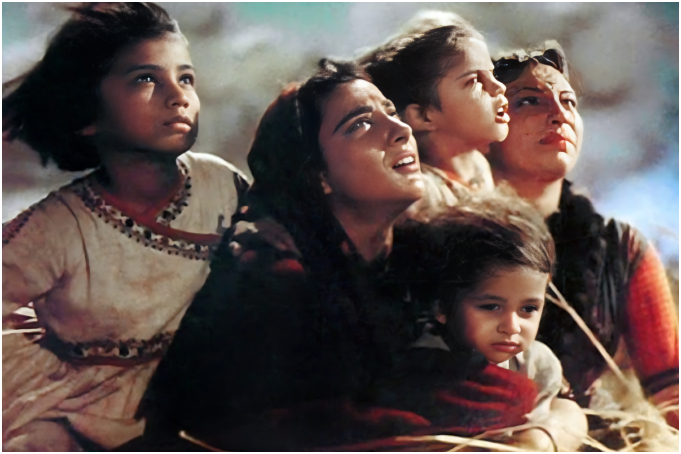
India’s tryst with the Oscars began in 1957 with Mother India, more than 40 years after we made our first film, Raja Harishchandra. Since then, India has sent a film almost every single year and yet the success rate remains minimal. The diversity of submissions has been undeniable. Films from multiple genres, regions and languages have represented the country but never made the cut. “It’s an expensive affair,” says writer-director Mozez Singh, who has experienced these circuits closely and understands the nuances of the system.
Related Stories
The Biggest Challenge
India’s challenge at the Oscars has never been about storytelling, but about structure, strategy, and sustained international positioning. Oscar-winning producer Guneet Monga believes Indian cinema succeeds when it plans globally from the outset. According to her, “India is one of the most prolific film industries in the world, but volume has never been the determining factor for global awards visibility. What has historically held us back is not our storytelling ability, but the lack of a unified, long-term international strategy. In most countries that regularly break through at the Oscars, the journey begins long before the awards campaign with strong festival positioning, global distribution partners, and a consistent ecosystem that champions films across languages and genres. India is still building that infrastructure. We are a multilingual, decentralized industry, and without a cohesive approach to international visibility outside of the diaspora, many remarkable films simply don’t get discovered in time.”
She continues, “The Oscars are ultimately a U.S.-based award. To compete effectively, a film needs a strong festival launch, a U.S. distributor, a targeted campaign, and year-round visibility. When these pieces align, as they did with The Elephant Whisperers, Period. End of Sentence., RRR, Anuja and several documentaries and shorts -- Indian films absolutely shine.” Monga adds, “Films that succeed at the Oscars usually begin with a strong international launch at a major festival and are supported by a U.S. distributor or awards team that understands how to reach Academy voters. They also have a clear category strategy from the outset, whether that’s music, shorts, documentary, or international feature. Indian films are deeply loved around the world, but converting that love into awards momentum requires infrastructure and intentional positioning. As more filmmakers plan internationally from the beginning and as more global distributors invest in Indian storytelling, we will see Indian cinema breaking through with greater consistency across categories.”
Why A Good Film Is Not Enough
Mozez, who helmed Yo Yo Honey Singh: Famous for Netflix reveals that the selection is not based only on artistic quality. It is also heavily dependent on whether the makers have the financial backing to sustain the enormous marketing campaign required to compete at the Oscars. He reveals that filmmakers must spend strategically to appear at every relevant event before and around the Oscars nomination season. Luncheons, screenings, gatherings, galas and endless meet-and-greet moments form an essential part of the campaign. As a result, when films are considered for submission, the financial capability of the team becomes a major deciding factor. “There has to be money and that money has to support the entire cause or you are not going to be able to match the amount others are spending to campaign their films,” he emphasises.
Mozez shares how this plays out in real time. “I know films have been selected in the last few years based on whether the producer has resources to support the Oscar campaign. If there’s no money, the film simply cannot go far, no matter how strong it is. In that case, selectors often shift to another film that does have a financial structure in place. It is unfortunate, but it’s the truth. If a small arthouse film backed by passionate but limited producers is selected, it may have the intent and the quality, but without financial fuel, the campaign will not reach a meaningful stage.”
Missing System
According to Singh, Government involvement is crucial, and industry support must be more cohesive. “There have to be studios involved. The government needs to step in. They must treat the selected film as something truly special and push it with seriousness. We rarely see national-level commitment that other foreign-language contenders receive. Homebound is a beautiful film with incredible performances, a sensitive director and one of the biggest producers attached. But even then, it needs far more support at every level to create lasting emotional value among voters. What we lack is a long-term dedicated cultural commitment.” He adds that the future needs a unified approach, stronger belief, and consistent investment — not just financially, but culturally.
Finding balance
Filmmaker Neeraj Ghaywan has a more optimistic take. He believes there is support that films do receive from the government, but the Homebound team hasn’t availed those grants. Neeraj feels awareness around independent films in India remains bleak, even though there’s a system meant to promote them, “I feel, is that there is a certain sense of a European idiom or a European grammar of filmmaking that is mostly appreciated at film festivals. Our reference point in cinema, apart from Satyajit Ray and some other Indian Hindi films and South Indian films, is limited.”
He explains how he had to work on two cuts of his 2015 film Masaan for overseas audiences, “The Indian version has Vicky Kaushal crying his heart out and the scene is longer. But in the international version, as soon as he starts crying, it cuts out, because they don’t like melodrama. I’m trying to find a balance between both, because independent filmmakers also want at least a decent theatrical run.”
Viewing Culture
Ghaywan points to French cinema culture as an example, where films receive recognition without rigid labels. “In France, all films are viewed as proper cinema. There is no demarcation between commercial cinema and any different kind. We don’t have that kind of viewing culture for independent-minded films. I wish there was a way that we could somehow find a grammar that becomes universal.”
Sending The Right Film
Chaitanya Tamhane, who has represented India at the prestigious awards night with his debut feature Court (2015) believes the biggest mistake Indians make is assuming they understand the Oscars system. “I think a lot of what works for the Academy and what doesn’t, is completely disconnected from ground reality. People just make their own assumptions.”
He believes that one of the reasons Indian films have not had success at the Oscars is because, jury members select films that have zero awareness, profile, and buzz in the American film landscape. “That has obviously been the biggest problem. First, we need to send the right films. That is the most important element. To do that, you need to assign the right people in the first place — the people who select the entry for the Oscars. That is a very, very important point.”
Talking about the bleak visibility of Indian films at the Oscars, Tamhane observes, “A lot of countries come in with a lot of money to make their presence felt at the Oscars because they look at it as a matter of national pride and national positioning. So, of course, it is a super commercial endeavour. It should always be a priority for the government, to be represented in the right light and to actually put up a good show when it comes to campaigning for the Oscars. There should be a section specially dedicated to the budget. If the priority is to excel in art, then these measures have to be taken.”
India’s struggle at the Oscars is not a question of talent, storytelling or cinematic ambition. It is a question of structure. The journey from national selection to global recognition is shaped by strategy, funding and visibility. Last year, Oscar-winning director of Anora, Sean Baker revealed they spent $6M dollars to make the film and $18M dollars to market it. And therein lies the answer.


















Comments are moderated. They may be edited for clarity and reprinting in whole or in part in Variety publications.