



Feb 03, 2026 4:50pm IST
Indian studios want ‘new’ but not ‘too new’, ‘ambitious’ but not ‘risky’: MayaSabha director Rahi Anil Barve
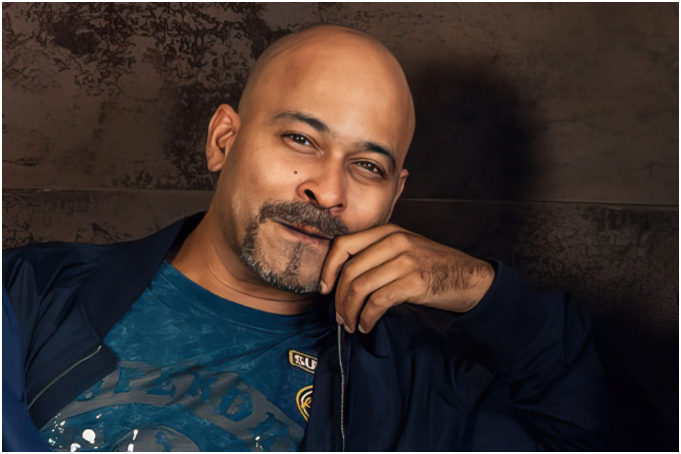
Tumbbad, which attained the status of a modern classic in the Indian horror genre over the years, took nine years to release. Director Rahi Anil Barve bluntly said it’s “foolish” to spend that much time on one movie. Little did he know that his second feature film would also follow the same trajectory. MayaSabha: The Hall of Illusion, released on January 30, after eight turbulent years marked by funding issues, production nightmares, internal fights, collapsing timelines and the long disruption of the COVID-19 pandemic.
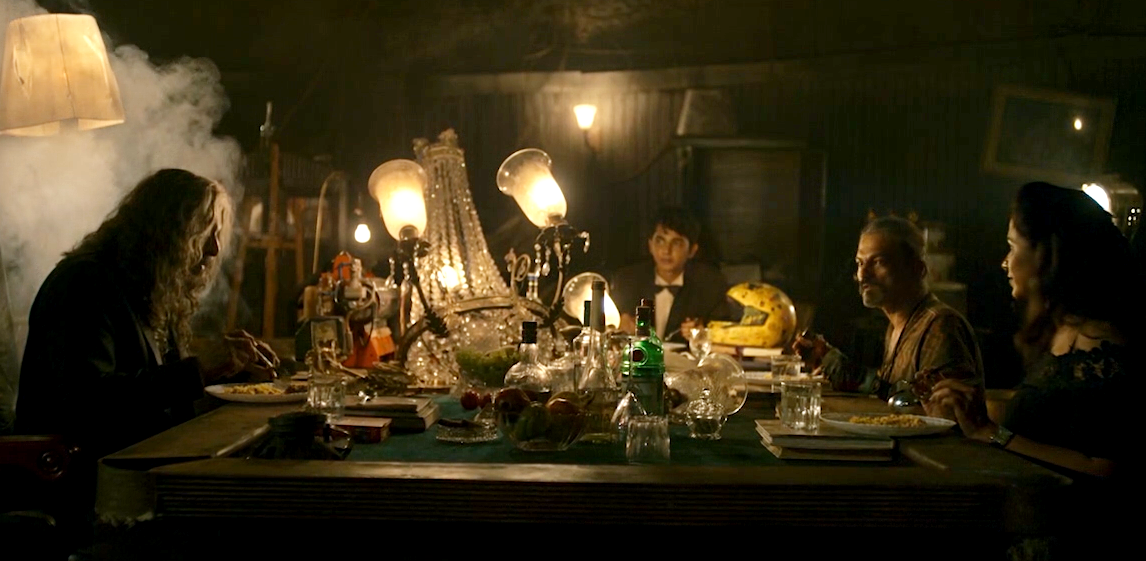
Starring Jaaved Jaaferi, Veena Jamkar, Deepak Damle and Mohd. Samad in lead roles, MayaSabha is a small film with strange uniqueness. An unclassifiable, untouchable project that fits no known Hindi film framework. Tumbbad’s appreciation helped Rahi make a credible name, but did little to ease financing challenges. In this candid interview, he talks about why films are becoming increasingly difficult to mount in today’s climate, why actors, producers and studios remain hesitant to back unconventional films like Tumbbad and Mayasabha and how A.I. is going to reshape filmmaking in India. Excerpts from an interview:
How did MayaSabha originate?
After Tumbbad, my biggest project till then, Gulkanda Tales, was greenlit immediately. I knew the next few years were going to vanish into labour, sweat and battles. Before Gulkanda consumed me, I wanted to make something quick and personal, something I could finish fast. That became MayaSabha. But the film didn’t fit into any known Hindi-film framework. It was impossible to label. One collapsing theatre, one night, four strange people hunting for secret gold, deeply layered character arcs, everyone manipulating everyone, no pure hero or villain, and an ending that breaks every acceptable category of conventional thrillers and tragedies. For the Bollywood studio system, MayaSabha was unclassifiable. Untouchable. We finished shooting in 2018. Sometime later COVID struck. Then the long battles of Gulkanda Tales and Rakt Brahmand began. The last six years have been the hardest phase of my life.
Mayasabha didn’t have giant studios or mountains of money behind it. Focusing fully on its post-production while juggling the other projects was almost impossible. By late 2023, Gulkanda Tales was completed and due to shifting political pressures, an entirely new war began just to get it released.
Jaaved Jaaferi has described MayaSabha as the best film of his career.
Jaavedji is a freak of nature in the best possible way — no ego, insane discipline, and a commitment level unheard of, in this insecure industry. A true artiste. He's the one actor in this country whose talent has been used less than 5% so far. We’ve seen him for decades, yet his real acting super-powers have remained completely invisible behind the industry’s clichés.
He loved the script, yes, but more importantly, he trusted me. He understood the film better than many of us did. He kept giving, giving, giving… even when the shoot stretched far beyond sanity. He held the emotional core of the story together while the rest of us were constantly drowning in production fires.
Related Stories
Why did MayaSabha take so long?
The honest answer: I wasn’t ready to make it in 2018. The long answer: Because everything that could go wrong, went wrong — funding issues, creative clashes, collapsing timelines, the lockdown, my own exhaustion, and my commitment to Gulkanda Tales. After Tumbbad’s acclaim, the industry expected my next to be another Tumbbad. Ironically, Tumbbad is a film nobody in the industry believed in, when I was struggling to make it for ten years. People think acclaim makes the industry welcome you. It does the opposite. Suddenly everyone is scared of you doing anything different, or smaller. They want you to scale it up. They expect a ₹100-crore Gulkanda Tales or Pahadpangira, a ₹150-crore Rakt Brahmand. A small and unique film like MayaSabha is considered a career risk. But for me, every film has always been a risk. And this one had zero industry support. So it took six years.
 Has getting funding for your unconventional ideas become easier?
Easier? No. Just different. They take meetings faster now. Indian studios want “new” but not “too new.” They want “ambitious” but not “risky.” They want “like Tumbbad,” but also “not like Tumbbad.” By now, I could have been 10 times richer than I currently am, with at least 3-4 mid-to-big-budget, high-publicity OTT projects from major banners bearing my name. Some of them would have been terrible, surely, but hugely marketed and safe. That’s not an exaggeration. But the moment you get intoxicated by success and start running behind these external temptations, something very crucial quietly leaves you — your own creative fire, and the impossible dreams that only you can see, long before the world values them. The way I never abandoned Tumbbad till it was born, that’s exactly how I will never abandon Gulkanda Tales, Pahadpangira or Rakt Brahmand until they’re released — no matter how many obstacles come my way. Because these are my own worlds. Not paid, mechanical assignments for someone else. For me, this is far more important than success or money.
Why do studios refrain from backing films like Tumbbad?
The executives who greenlight films don’t get rewarded for taking risks — they only get punished for failure. So naturally, they choose safe scripts, safe stars and safe worlds. My projects are not safe from any angle. That’s why they’ve always struggled within the system. Even after Tumbbad, the only reason I was able to secure a 100-crore budget for Gulkanda Tales or push Pahadpangira forward is because of a few gutsy producers who understand the thin line between risk and recklessness.
How do established actors respond when you pitch them your stories?
Actors love listening. They rarely love committing. Actors genuinely want to do different work — until they actually see the budget, the politics, the timelines, and the madness involved. That’s when the reality check arrives. Stars are the most insecure breed in the industry. I don’t blame them. They walk every day on a golden-edged sword called “flop”. Behind all the glamour, riches, and media attention, nobody sees the bleeding feet they keep carefully hidden. Some have told me openly: “Rahi, your worlds are brilliant — Tumbbad, Gulkanda Tales, Pahadpangira — but they don’t have any precedent. No safety net. No successful template. No similar film that has already worked." A few were even more blunt: “Never make something too original before it’s tried and tested.” Most actors want to be brave. Very few actually are.
 Tumbbad and MayaSabha both took almost a decade to reach audiences. Gulkanda Tales has been in the making since 2020, and Rakt Brahmand also seems to be facing hurdles. Working on a project for years and still seeing them struggle for release is definitely distressing. Emotionally and creatively, how do you cope with all this?
I don’t cope gracefully. I survive. There are years when nothing moves — even after you’ve moved mountains — and hundreds of crores of work remain stuck. You start feeling like you’re rotting inside your own ambition. But then one good scene, one good frame, one good performance is enough to remind you why you do this in the first place. And honestly, that helps.
You started your career as an animator before. How did this transition to storytelling really happen?
The transition wasn’t a plan. I’m a Class 10 dropout. By sixteen, I was doing peon-level jobs. I worked brutally hard on myself, and by twenty, I was already financially settled as a successful animator. Many of my friends from that time now work abroad on projects like GTA 6, or they’ve opened their own studios, like Prasad Sutar. I could have taken that path easily — a stable career, financial peace, a family, a predictable routine. But none of that ever attracted me. Filmmaking was an obsession, not a career choice.
What’s your perspective on the horror films we make? In recent years, horror has frequently been blended with comedy, sleaze, and other commercial elements, sometimes diluting the purity of the genre.
Honestly, I understand why they do it. Horror is hard. Real fear is harder. Comedy and sleaze are escape routes for filmmakers who don’t want to dive too deep. It weakens the genre but it’s easy money. I will definitely try that shit one day.
With AI increasingly entering the filmmaking ecosystem, how do you see it reshaping the creative and technical landscape? What excites or concerns you most about AI's influence on cinema?
For the past six months, I’ve been making a full 4K film called Gorilla on my personal PC. The first 40 minutes are ready; 50 more to go. I’ve spent less than a few lakhs, working like a maniac in whatever free time I get. Two years ago, the same film would have cost me more than ₹6 crore and an entire team of artists. I won’t lie — making it creatively and visually is still immensely hard. Good AI filmmaking will remain rare, no matter how advanced the technology becomes.
What excites me? Speed. Freedom. The ability to visualise madness instantly. AI will break the monopoly of VFX houses and finally open the playground for poor filmmakers. And what scares? Mediocrity produced faster. Studios using AI to replace imagination instead of amplifying it. But I believe the real artists will survive. The tools don’t matter. Madness matters.
How prepared is India to support ambitious films?
Not prepared. We have the talent, not the ecosystem.






Comments are moderated. They may be edited for clarity and reprinting in whole or in part in Variety publications.