



Feb 03, 2026 5:00pm IST
Gondhal Director Santosh Davakhar: People Hesitate to Spend Two Hundred Bucks on a Marathi film
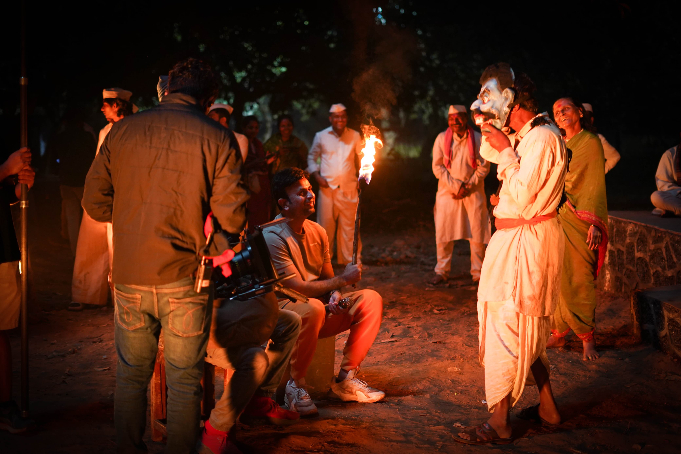
A true-blue cinephile, Santosh Davakhar explains why his win for Best Director at IFFI 2025 is special on multiple levels. His film Gondhal, a thriller set against the backdrop of folklore, won him the prestigious Silver Peacock Award at the 56th International Film Festival of India. “The Government of India is doing a great job with the festival. Gondhal’s win is truly special for Marathi cinema,” he says.
He points out that the last Indian to win Best Director at IFFI was Lijo Jose Pellissery for Jallikattu in 2019. Though Davakhar has been associated with films for a while, Gondhal marks his first feature film as a director. Inspired by the Marathi folk tradition, he weaves a story of power struggles, rebellion and deceit.
Excerpts from a conversation...
Where did the idea for Gondhal come from?
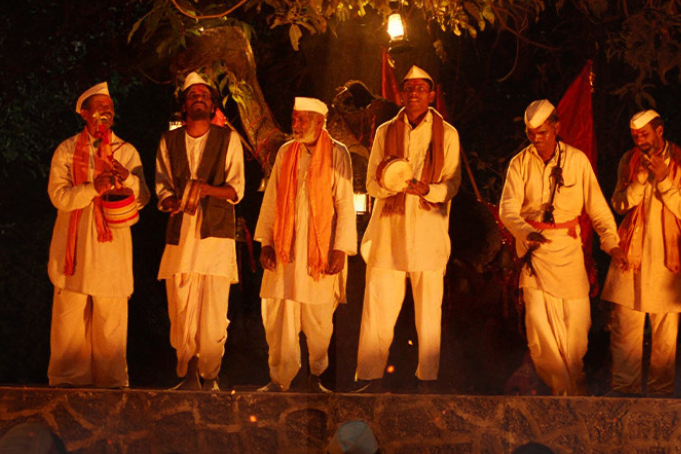
I was in Cannes in 2017, for the preview of my short film and spent all my spare time watching world cinema. Every day, I watched three to four films.International films are deeply rooted in realism. After that experience, I began dreaming about making a film rooted in Indian culture, but designed for a global audience — a short film that would suit the palate of world cinema fans. I remember attending Gondhal performances with my grandparents when I was five. Today, a Gondhal lasts around five hours.Back then, they’d go on all night. The ‘divti’ (fire torch) would remain lit till morning, and there was the tradition of ‘Paanch Pauli’ (a traditional folk dance). I feel it is important to showcase our culture. We need to preserve these traditions. Today, many kids don’t even know what the Gondhal is.
Related Stories

Now almost every filmmaker is looking at films based on Hindu folklore and mythology. Comment.
I designed Gondhal keeping the sensibility of world cinema in mind. In India, mass films do great business at the box-office, and our audience’s taste is very different. Lovers of world cinema prefer films rooted in realism, raw emotions, and subtle performances. Indian audiences often like films with a clear hero and villain. Larger-than-life heroism, loud background music and one man fighting a hundred people, has little appeal internationally. We used real actors, real sounds, and an immersive setting so people would feel like they were part of that world.
You wrote a murderous female lead...
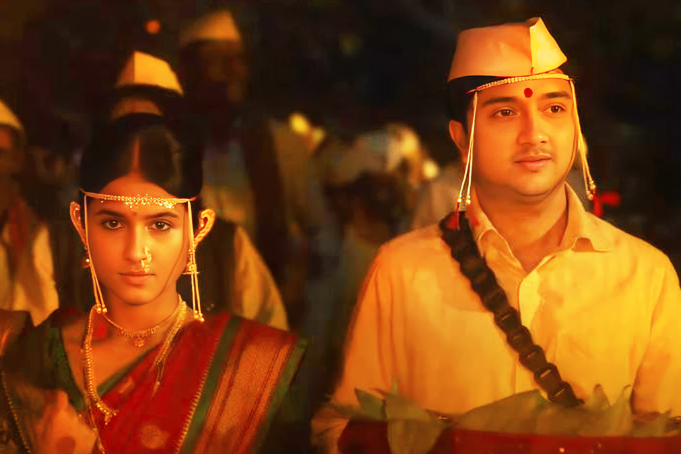
In India, people prefer characters with strong emotions — mostly positive ones. We don’t embrace realism. In Gondhal, every character is selfish. They want to fulfill their needs by hook or crook. That’s the reality of life. I envisioned the film around Suman (Ishitaa Deshmukh) and the pursuit of her motive. The Gondhal became the backdrop for conspiracy, deceit, and rebellion. Once you define the dos and don’ts of your main character, everything else becomes easier. We also did not fine-tune the sound excessively, which is why it feels raw and authentic.
What’s presently plaguing the Marathi film industry?
I feel Maharashtrians prefer Hindi films more than films in their native language. In contrast, South Indian audiences have a strong sense of regional pride — they prioritize films in their local languages over Hindi content. That’s why their industries are thriving. In Mumbai, people hesitate to spend Rs 200 on a Marathi film made on a budget of Rs 2-3 crore. I spent close to Rs 7 crore on Gondhal. Audiences watch low-budget Marathi films on OTT platforms instead. Our audience is largely drawn to mass entertainers. Ironically, I have seen more non-Marathi audiences keen to watch our films in theaters.
What’s most disappointing for Marathi filmmakers?
Many Maharashtrian filmmakers have won the Rajat Kamal (one of the highest honours at the National Film Awards), yet few people even know their names. You either make a film for the box office or for awards. Films like Titli (2014), Fandry (2013), Court (2014), and Godavari (2021) were brilliant films but not hits. Court even won the Swarna Kamal (Golden Lotus). On the bright side, after Gondhal’s success at IFFI and at the box office, we are receiving requests to dub the film into other regional languages.
How exciting is the Silver Peacock Award win?
Every critic gave the film a thumbs-up. The team is on cloud nine. It is overwhelming that we pulled off a film like Gondhal. Ilaiyaraaja sir blessed us with his music. I feel extremely lucky to win such an honour with my debut film. Cinematographer Amalendu Chaudhary, (Stree, Chhichhore, and Shiddat), came on board because he liked the screenplay. I must also thank Mariyano Studios for their support.
Should Indian filmmakers utilize film festivals better?
I often see Indian celebrities using Cannes mainly as a platform for global photo-ops. They come, click pictures, post selfies on Instagram, and leave. But Cannes is a great place to watch films. Instead of attending screenings, many prefer doing everything else. If you’re seeking inspiration, watching world cinema at such festivals is the best place to start.
What steps are needed to make Indian films that travel globally?
I feel Film and Television Institute of India (FTII) should introduce programmes that expose film students to world cinema. Once students gain that exposure, they will start visualizing stories differently. It took me eight to 10 years to understand how the global audience thinks. Learning world cinema should be compulsory. This will also improve India’s chances at the Oscars.
Which international filmmakers do you admire?
I admire Alfonso Cuarón’s work — films like Gravity (2013) and Roma (2018). Sam Mendes is another favourite.












Comments are moderated. They may be edited for clarity and reprinting in whole or in part in Variety publications.