



Feb 14, 2026 11:44am IST
From Celebrating Jubilees To Rejoicing Over Box-Office Numbers: How Movie Celebrations Have Evolved
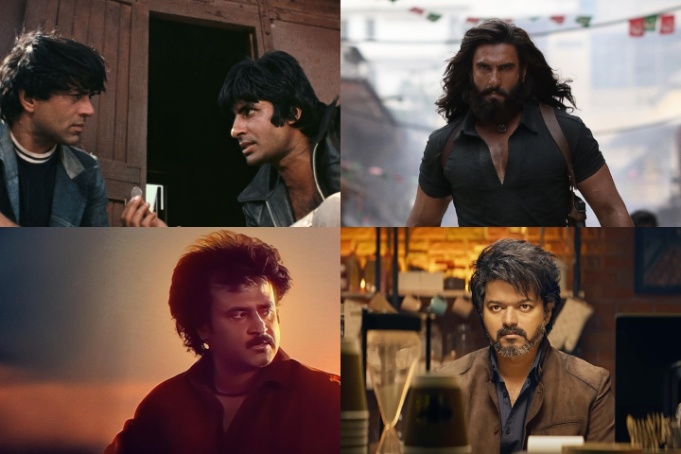
Over the past 110 years, Indian cinema has evolved in myriad ways. Not only in its technical craft and storytelling, but also in how the industry measures success and celebrates it.
After the inception of Indian cinema in 1913 with Dadasaheb Phalke’s “Raja Harishchandra,” the first full-length feature film in the country, 1934 emerged as a landmark year. Director V. Shantaram’s “Amrit Manthan” became the first Indian film to celebrate a silver jubilee, completing a 25-week theatrical run. Produced simultaneously in Hindi and Marathi, the film also introduced advanced filming techniques.
Two years later, Prabhat Film Company’s “Sant Tukaram,” directed by Vishnupant Govind Damle and Sheikh Fattelal, achieved the milestone of a golden jubilee, completing a 50-week run in 1936.
In the following decades, Ashok Kumar and Raj Kapoor further cemented Bollywood’s prominence by delivering jubilee hits such as “Kismet” (1943), “Barsaat” (1949) and “Sangam” (1964). The baton was later passed to Rajesh Khanna and Amitabh Bachchan in the 1970s, as they dominated cinema halls with titles like “Aradhana” (1969), “Anand” (1971), “Kati Patang” (1971), “Deewaar” (1975), “Amar Akbar Anthony” (1977), “Don” (1978), “Trishul” (1978) and “Laawaris” (1981).
Till this period, three films, “Sholay” (1975), “Mughal-E-Azam” (1960) and “Barsaat” (1943), held records for some of the longest theatrical runs, with five, three and two years respectively.
From the 1980s onward, however, the expansion in film releases and a changing exhibition landscape led to a steady decline in jubilee hits. Only 12 Hindi films completed 25 theatrical weeks in the next 21 years, including “Hero” (1983), “Nagina” (1986), “Karma” (1986), “Maine Pyar Kiya” (1989), “Mohra” (1994), “Karan Arjun” (1995), “Sabse Bada Khiladi” (1995), “Raja Hindustani” (1996), “Kaho Naa Pyaar Hai” (2000), “Mohabbatein” (2000) and “Gadar” (2001).
Related Stories


Box-Office at the Forefront
With Aamir Khan’s “Ghajini,” box office performance became a dominant talking point as the film inaugurated the ₹100 crore club. Post that, every major release began to be judged by its theatrical numbers. In the years since, films like “3 Idiots,” “Dhoom 3,” “PK,” “Dangal,” “Baahubali 2,” “KGF 2,” “RRR,” “Jawan,” “Pushpa 2,” “Stree 2,” “Chhaava” and “Dhurandhar” have set new benchmarks during their theatrical runs.
To understand how this shift has transformed the culture of film celebrations across Hindi and South Indian cinema, Variety India spoke to trade experts.
Fewer Screens and Limited Shows in the 1970s and 1980s
Veteran trade analyst Taran Adarsh recalls how limited exhibition directly contributed to longer theatrical runs.
“In those days, when a film used to release in Mumbai city, I remember that in the 70s and 80s it would release in 10 to 14 theatres across Mumbai and the suburbs. It would run only three or four shows. So there were limited screens and limited shows. Audiences would watch the film whether they liked it or disliked it. The film would then run for 25, 50 and 100 weeks. But today, we have 40 to 50 shows in a single multiplex in one day. Times are very different. The exhibition outlook has changed,” Adarsh says.
No Social Media, No Piracy, and Slower Word-of-Mouth
Sreedhar Pillai says today’s environment cannot be compared to earlier decades, particularly because of piracy and social media.
“Times are changing. Let me go back to the 70s and 80s, or the 80s and 90s, which was the golden period of the Tamil box office. There was a limited screen release. Today, a film releases in almost all screens. It goes to all vendors and is released everywhere. After that, there is no shifting. It is just one wide release,” Pillai explains.
“But in those days, it was exciting because the number of days a film ran cannot be compared to today. There was no piracy as it exists now. No piracy, no social media, nothing. A film in Chennai city, let’s say a Vijay starrer today, releases in about 100 to 150 screens, while Rajinikanth films in the 80s and 90s used to release only in five screens, across five different locations.”
The Multiplex Boom and Shorter OTT Windows
Echoing Pillai’s sentiments, Chennai-based trade tracker Ramesh Bala says the multiplex boom has drastically reduced the shelf life of films in theatres, particularly with OTT arrivals now coming within weeks.
“Earlier, a movie used to release in fewer screens. In Tamil Nadu and Chennai city, a movie used to release in four to five screens. Now, a movie releases in 40 screens. So naturally, the number of days has shrunk from 75 to 100 days to 25 days, or three weeks. It is because of the wide release and the multiplex concept,” Bala says.
“Nowadays, movies are available on OTT in four weeks. So there is no point in running a movie for 50 days if it becomes available after four weeks on OTT. So they go for a wide release and collect as much as possible in those four weeks,” he adds.
A Logical Progression
Vishek Chauhan, Chief Executive Officer at Roopbani Cinema in Bihar, believes box office numbers have become the most relevant yardstick today, as theatres are no longer the single source of entertainment.
“Earlier, we had no competition. Theatres were the single source of entertainment for the masses. So we would celebrate and we would have longer runs. It is a logical progression. Both are celebrations. Times have changed and evolved,” Chauhan says.
Ultimately, the shift from jubilee milestones to weekend box office headlines reflects how the business of cinema has accelerated. In an era of wide releases, instant audience reactions, and shorter theatrical windows, success is now measured in speed rather than longevity. While silver and golden jubilees once symbolized sustained word-of-mouth and cultural staying power, today’s celebrations are built around opening-day momentum and record-breaking weekend totals. The language of triumph has changed, but the industry’s obsession with numbers remains as constant as ever.
Read More About: Bollywood, Dhurandhar, indian cinema, Sholay
More from Variety


Most Popular













Comments are moderated. They may be edited for clarity and reprinting in whole or in part in Variety publications.