



Oct 19, 2026 2:54pm IST
Documentary Filmmaker Hossein Martin Fazeli: ‘We’re Not Taking Phoolan to The World, We’re Bringing The World to Phoolan’ (EXCLUSIVE)
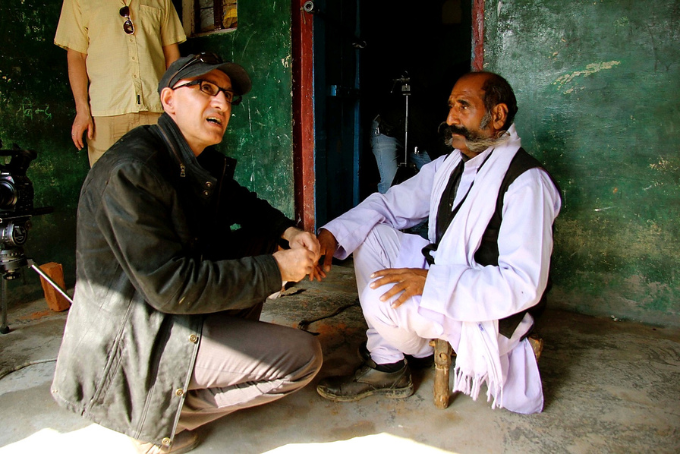
As a filmmaker, Hossein Martin Fazeli recognizes that Phoolan Devi’s short, extraordinary life has all the elements to make it a riveting story. But, more importantly, in today’s hostile and bitterly divided world, her story, he believes, acquires even greater relevance. Hossein, who stumbled upon Phoolan Devi while researching the Iranian women’s movement for another documentary, sees her as a woman who was much wronged and who broke through social conventions and restrictions to find her voice and seek revenge as she saw fit. The director shares the story of “Phoolan” in an interview with Variety India and tells us why he thinks “her heroism far outweighed her flaws.”
How did ‘Phoolan’ come about?
Several years ago, I was working on a documentary about the Iranian women’s movement, which at the time was the largest nonviolent civil-rights movement in the region. As part of my research, I was watching a video about women’s rights activism around the world. It was around midnight. I was exhausted, surrounded by papers, and only half-paying attention. Then, for perhaps thirty seconds, Phoolan Devi appeared on the screen. I went back to the video and replayed that little segment again and again. I simply couldn’t believe what I was seeing. Phoolan’s story seemed almost unbelievable: a poor, lower-caste village girl, married off as a child, subjected to horrific violence and humiliation. She became an outlaw, survived the Chambal, surrendered on her own terms, spent years in prison and eventually emerged as an elected member of Parliament. My first reaction, strangely enough, was embarrassment. How did I not know about this woman? I assumed there must already be dozens of documentaries about her. So, I asked my colleagues to find me the films. The next day, one of them called and said, essentially: “There really isn’t a comprehensive documentary about her.” Almost immediately I said: “Then we have to make one.” And that was the beginning of a journey that has lasted years.
Why is it important for this generation to know who Phoolan Devi was, what she represented and what she fought against?
Because the fight Phoolan was part of is not over. It is 2026 and sexual violence remains one of the great human-rights crises of our time. I think there are two other dimensions to her story that are equally important. The first is very simple: Phoolan’s life is extraordinary drama. At the end of the day, whatever my commitment to human rights may be, I am a dramatist. And Phoolan’s life almost defies fiction. A child bride. A survivor of horrific abuse. An outlaw in the Chambal. One of the most wanted people in India. A spectacular surrender before thousands of people. Eleven years in prison. At times, a factual film about her life almost plays like a Quentin Tarantino film, except that these things actually happened. But the third dimension is perhaps the most important to me: her story is tremendously empowering. Here was a girl born into extreme poverty, caste oppression and a deeply patriarchal world. Somehow, that girl eventually became an elected member of Parliament in the largest democracy in the world. That is no small feat.
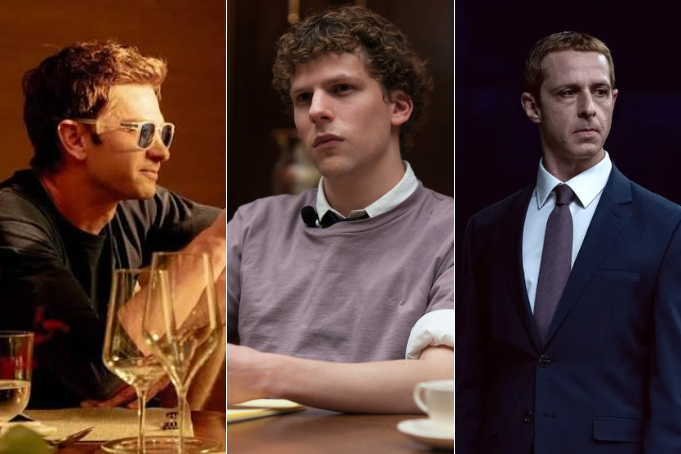
Richie Mehta’s film, ‘Phoolan,’ is also currently doing the festival rounds.
Much of the world still doesn’t know who Phoolan Devi was. In fact, I suspect a significant part of the younger generation in India knows very little about her beyond the mythology: the “Bandit Queen.” Many questions are still alive today, questions that Phoolan asked with her own life.
So, I welcome the renewed interest, including Richie Mehta’s film. If his film brings a new generation to Phoolan Devi and makes people curious about who she really was, that can only be a good thing.
Related Stories
Your documentary is titled ‘Phoolan,’ as is Richie Mehta’s film. Do you intend to retain that title?
We chose “Phoolan” as the title of our documentary many years ago, so we were certainly surprised when we learned that Richie Mehta’s film would also be called “Phoolan.’ But then, in this strange world of cinema, remarkable coincidences do occasionally happen. I still love “Phoolan.” It is simple, powerful, and it has been the identity of our film throughout this long journey, so I’m reluctant to give it up. What we may do instead is add something to it. "Phoolan: The Documentary” is one possibility. “Phoolan: The Real Story” is another. We’re discussing it with the team now.
Any expectations from the documentary in terms of her legacy and the unanswered questions surrounding her death?
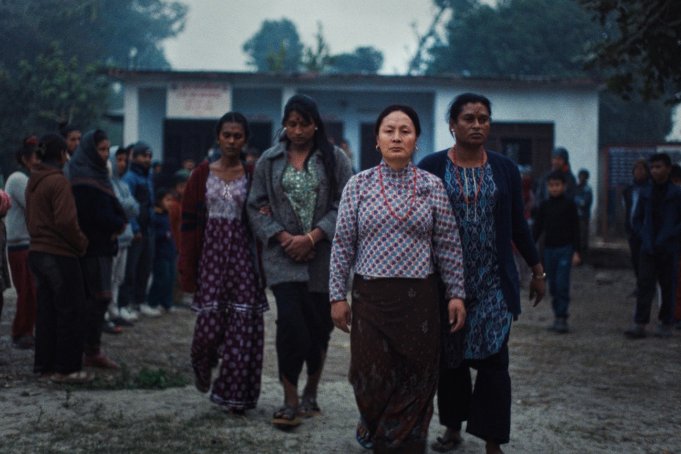
I believe one of my primary jobs as a documentary filmmaker is to inspire action. Phoolan’s life did not end with her. In Lucknow, we filmed an extraordinary organization called the Red Brigade, founded by Usha Vishwakarma and a group of young women, many of them survivors of sexual violence. They help survivors navigate the justice system, provide access to legal assistance and, teach women how to physically defend themselves. Today, the organization says it has trained more than 300,000 women and girls in self-defense. Usha told me that learning about Phoolan and her rebellion inspired her to fight for women’s rights, a journey that eventually led her to establish the Red Brigade. And that is only one manifestation of Phoolan's legacy. Across India, you encounter women and grassroots organizations for whom Phoolan remains a symbol of resistance and hope. Perhaps the greatest justice we can offer Phoolan now is to remember her in her full complexity: not as a saint, not as a devil, not merely as a victim or an outlaw, but as a human being who refused to accept the place society had assigned to her.
Phoolan’s life can be viewed as a story of revenge and one of empowerment. Does your documentary navigate both perspectives?
Yes, it’s all there, because Phoolan was all of those things. I sometimes describe her, somewhat provocatively, as a combination of Gandhi, Che Guevara and Al Capone, all in one! There was resistance, political transformation and empowerment in her life, but there was also rage, revenge and violence. I have no interest in sanitizing any of that. Phoolan was a flawed hero. But in my view, her heroism far outweighed her flaws. But ultimately, every film is an interpretation, including a documentary. As filmmakers, we select, frame and construct a narrative from reality, and then the audience interprets that narrative through their own experiences, and beliefs. I certainly have my own interpretation of Phoolan, and the film inevitably reflects it.
Popular on Variety
The dominant public image of Phoolan Devi has often been that of a ruthless woman seeking revenge at any cost…
Phoolan was not a bloodthirsty, vengeful psychopath obsessed with settling scores. She had been wronged terribly. She was gang-raped for days when she was only seventeen. Yes, she sought revenge against those she believed were responsible. She used violence, but who are we to judge? None of us has endured the brutality Phoolan did. And vengeance was only one part of Phoolan. There was another side to her, a compassionate side that contributed to her reputation as a kind of Robin Hood in the Chambal: taking from the rich and giving to the poor, and protecting young women and girls from sexual violence. And most importantly; Phoolan changed.
During her years in prison, she began practicing yoga and meditation and eventually renounced violence. Phoolan herself said that when she walked out of prison, there was no more vengeance left in her heart. We explore these transformations in detail in the film.
What does your documentary bring to the story of Phoolan Devi that audiences have not seen or understood before?
There are several things my team and I are bringing to this documentary that I think make it particularly special.
First, we have extraordinary access. Over the years, we have built an audiovisual historical archive of Phoolan Devi’s life. We interviewed members of her family, former gang members, people who knew her in the Chambal, witnesses from Behmai, police officers involved in her surrender, people who knew her during her years in prison, and colleagues from her political life. Some of those people with firsthand knowledge of her life, like Raj Chaturvedi, the police officer who persuaded Phoolan to surrender. We also gained access to extraordinary primary-source material, including unseen photographs and recordings, as well as Phoolan’s own handwritten notebooks, which few people even know exists. One of our interviewees, Susie Coelho, spent a month with Phoolan in Gwalior jail, and through her we gained access to remarkable photographs and tape recordings from that period. One of our principal references is her autobiography, ‘I, Phoolan Devi.’ We have licensed excerpts from the book. Throughout the documentary, Phoolan recalls her own life in her own words. Those words are, of course, performed by an actress, but they are Phoolan’s words. So, in a very real sense, this is Phoolan on Phoolan. And finally, we are not making a film about an “Indian character.” Her story transcends India. It transcends borders, race and nationality.
I think of figures such as Gandhi, Che Guevara or Malcolm X. I’m not making a moral comparison between them. I’m talking about the size of the character and the ability of one human life to acquire meaning far beyond the geography in which it unfolded. Phoolan was larger than life. That universality is central to our film. We’re not taking Phoolan to the world. We’re bringing the world to Phoolan.





Comments are moderated. They may be edited for clarity and reprinting in whole or in part in Variety publications.