



Jan 31, 2026 9:56pm IST
Bollywood’s Beauty Boom: Hype, Hope And the Hard Numbers Behind Celebrity Skincare
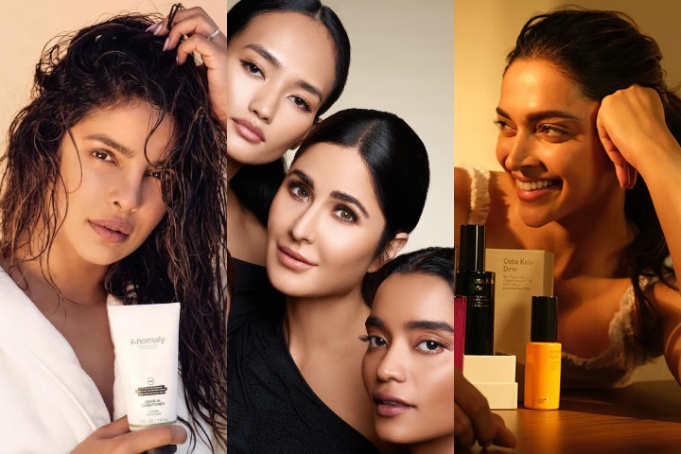
India is witnessing an unprecedented wave of celebrity beauty launches, each promising to bottle a star’s radiance in a serum, a lipstick, or a shampoo. Deepika Padukone has 82°E, Katrina Kaif is building Kay Beauty, Kriti Sanon is riding high on Hyphen, and Priyanka Chopra Jonas has scaled a global haircare label with Anomaly.
What looks like a glamorous trend from a distance is, up close, a brutally competitive business. The Indian beauty market is crowded, price-sensitive, digitally chaotic and stacked with brands that already fight tooth-and-nail for repeat customers. What’s more, customer acquisition costs are exploding, consumer loyalty is fickle, and ingredient literacy has never been higher. And as B-Town’s beauties are learning, fame guarantees attention, but attention is not retention.
Star power may guarantee the opening weekend, but longevity - like any Bollywood franchise - depends on script, execution, and economics, not just fame. Behind the glossy campaigns and aspirational packaging lies a more interesting story: which celebrity brands are building lasting businesses, and which ones are running on fumes.
The Era of Celebrity Beauty
Globally, the template is irresistible. Rare Beauty, Fenty, Goop - celebrity beauty has minted billionaires and rewritten personal brand economics. In India, the conditions are equally ripe. Skincare and makeup have become cultural touchstones for urban women aged 25 to 40. Platforms like Nykaa, Tira, Amazon, and Purplle, have not only matured retail infrastructure but also reduced distribution friction. Influencers have trained consumers to treat beauty like tech, with endless new launches, reviews, and routines. For Bolly beauties, the allure is clear: a beauty brand is a hedge against the volatility of film careers, a way to monetise identity, and a path to building long-term legacy beyond the box office. But building a beauty brand is not the same as endorsing one. In fact, it’s far closer to running an FMCG operation, and this is where the cracks, and the triumphs, begin to appear.
Related Stories
 82°E: The Limits of Star Power
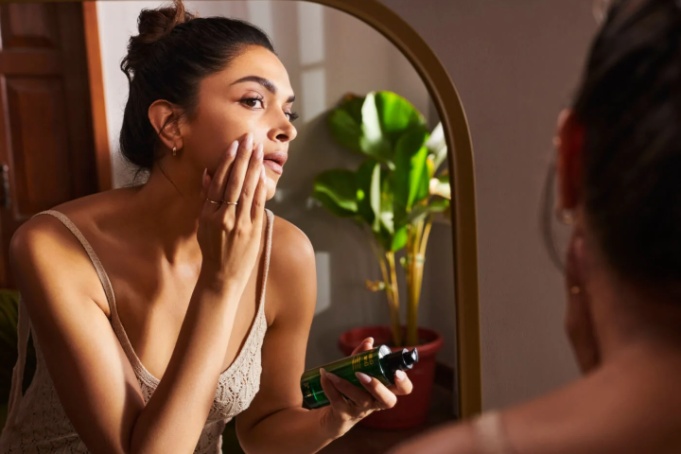
Deepika Padukone’s 82°E entered the market in 2022 with impeccable branding, a serene aesthetic, and a founder with credibility. But beauty, unlike cinema, doesn’t reward mystique; it rewards performance. The brand reported ₹21.2 crore in revenue in FY24, shrinking by 30 percent to ₹14.7 crore in FY25, while net losses remained steep at a chunky ₹12 crore, as per the Ministry of Corporate Affairs filings. According to a report by MoneyControl, marketing spends fell nearly 80 percent to just ₹4.4 crore this year, signalling a brand refocusing rather than accelerating.
Consumer sentiment mirrors the financials. Fans praise select products, but the ingredient-literate skincare community critiques 82°E as “overpriced for what it is,” calling the formulas too “mid” for the luxury positioning. The brand has attention, no doubt. What it struggles with is trust and repeat purchase—the two metrics that actually build a solid skincare business.
 Kay: Most Successful Beauty Brand
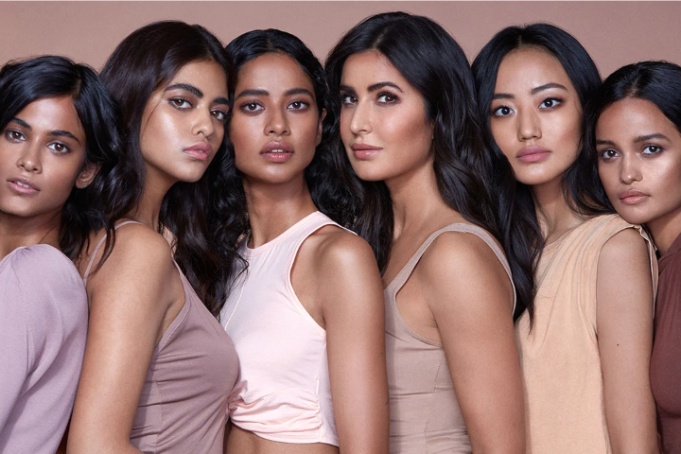
Katrina Kaif’s Kay Beauty is arguably India’s most commercially successful celebrity-founded beauty brand yet. The numbers are unambiguous and boringly solid: over ₹350 crore in annual GMV, 45 percent YoY revenue growth, and media reports placing profits at ₹11.3 crore in FY24 (Financial Express). With Nykaa’s mighty distribution engine behind it, Kay Beauty has achieved profitability, scale,and sustainability. This success isn’t rooted in glamour; it’s rooted in operational maturity. Kay’s shade ranges are intentionally built for Indian skin tones. Textures perform. Prices hit the “aspirational but accessible” sweet spot. And reviews across Nykaa for hero products often land in the 4.3 to 4.7 range. Kay Beauty behaves less like a celebrity passion project and more like a tightly run consumer business. If India has a Rare Beauty-like contender, Kay Beauty is it. The brand is now expanding internationally to the Middle East and the UK (with beauty retailer Space NK), riding a wave of interest from South Asian diaspora, product credibility, and corporate muscle.
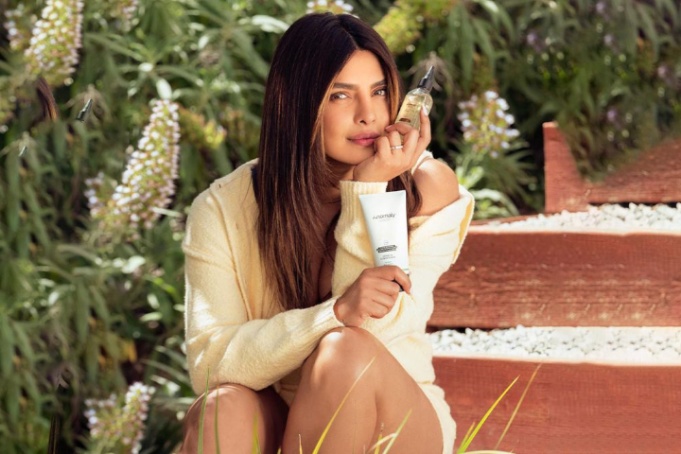 Anomaly: Chopra's Global Outlier
Though not built for India specifically, Priyanka Chopra Jonas’ Anomaly is impossible to ignore because it proves something many celebrity brands forget: affordability scales. The brand launched in the U.S. in early 2021, followed by India in 2022, and has reportedly generated around $50 million (roughly ₹425 crore) in global revenue in FY24, making it one of the Top 10 celebrity beauty brands globally. Selling through mass retailers like Walmart and Target at $6–10 price points (roughly ₹550–900), Anomaly’s thesis is the opposite of traditional celebrity beauty - no luxury markup, no exclusivity, no mystique.And it works. Reviews hover around 4 to 4.3 stars, with customers praising quality relative to cost. Anomaly demonstrates the power of meeting consumers where they are, not where celebrity mythology says they should be.
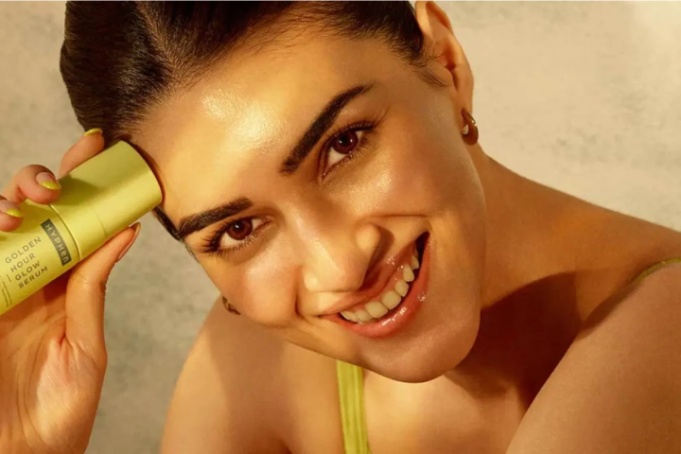 Hyphen: Marketing Over Substance?
Kriti Sanon’s Hyphen might be the most fascinating of the new wave—and the most debated.
The brand claims ₹400 crore ARR, millions of customers, and 60% repeat rates. On social media, Hyphen looks unstoppable: its aesthetic is sharp, reviews are glowing, and it has a clear grip on Indian Gen-Z and millennial skincare culture since launching in 2023. Yet, MCA (Ministry of Corporate Affairs) filings show roughly ₹7 crore revenue in FY24, sparking debates about the difference between the projected appearance of scale (Gross Merchandise Value, Annual Recurring Revenue) versus the actual audited revenue. Skeptics argue the marketing math is stronger than the accounting; supporters argue the brand is growing at a pace that the filings will eventually reflect. If the ₹400 crore figure holds up to scrutiny, it would represent one of the fastest scaling stories in Indian beauty history. If it doesn’t, it represents exactly what critics fear about celebrity brands: marketing over substance. Hyphen embodies the new “celebrity founder” era: marketing-forward, fast-moving and culturally tuned in. But its balance sheet is the plot twist everyone is watching.
9SKIN: Nayanthara's Luxe-Forward Line
Nayanthara’s 9SKIN occupies a different niche: highly aesthetic, premium-leaning, and curated in feel. The product range covers serums, oils, day and night creams, priced between ₹999 and ₹1,899. On the brand’s own platform, reviews are glowing; on skincare forums and among cosmetic chemists, reactions are…less so. Ingredient-savvy consumers critique the formulations as heavy on plant oils and essential oils, lighter on performance-focused actives. Some describe it as “luxury vibes without clinical depth.” Without public revenue disclosures or visible national distribution, 9SKIN still feels more boutique than breakout. But in South Indian markets, where Nayanthara’s star power is singular, the brand has cultural pull, even if the business trajectory is still unclear.
The Bigger Truth: Beauty Isn't Cinema
The rise of celebrity beauty in India signals a deep shift: actors are no longer content being faces of brands; they want to own brands. But ownership demands something unglamorous: consistency, innovation, margins, supply chain expertise, distribution, and deep consumer insights. In cinema, a star can occasionally redeem a weak script. In beauty, the script is the product, and no amount of celebrity shine can save a formula that doesn’t deliver or a business model that’s engineered on vibes instead of numbers. Kay Beauty and Anomaly succeed because they operate like serious businesses. Hyphen wins in culture, even as its P&L sparks debate. 82°E demonstrates that fame alone cannot engineer loyalty. What we’re really witnessing is the democratisation of beauty. Bollywood may bring star power, but consumers hold the remote control. They will try anything once. But they only rebuy what works. Celebrities can drive curiosity. They can deliver reach. They can flood Instagram with launch buzz. But sustaining a beauty brand requires something no star can fake: product-market fit and relentless operational execution.
Zahra Khan is a reformed journalist, fractional CMO, and cultural strategist who has built brands for Amazon, Gucci, and her own media startup. She knows the difference between spin and substance. You can find her on Instagram: @zahrakhan25.
















Comments are moderated. They may be edited for clarity and reprinting in whole or in part in Variety publications.