



Feb 04, 2026 2:54pm IST
Akshaye Khanna in Dhurandhar, Bobby Deol in Animal: When Villains Outclassed Heroes
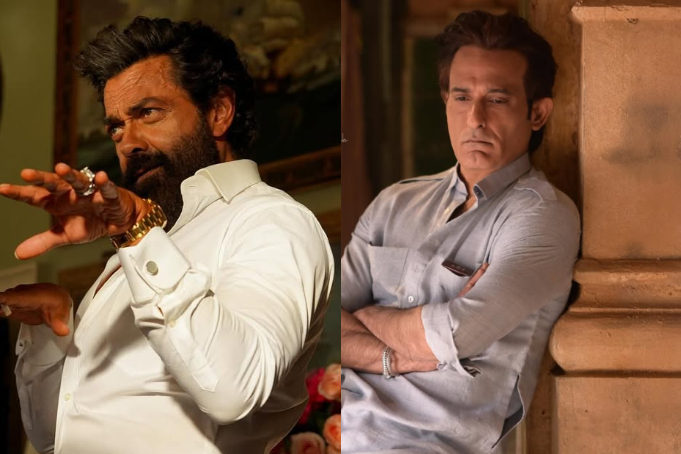
As a viewer, we often prefer watching the movie for the lead hero but there are some movies that are majorly known for their villains. During the 1980s-90s, Bollywood movies were defined and remembered more by their villains than their heroes, with negative characters often becoming the most memorable and culturally influential figures on screen. On their way from the mid-20th-century's black-and-white-like moral fights to nowadays complicated stories, the audience has been shaped by the villains and their crimes. The first villains in Bollywood were the exact moral opposites of the heroes showing the audience the way of righteousness, evil incarnate in the image of characters such as smugglers, corrupt officials, and tyrannical landlords.
By the 2000s, Bollywood villains had become more layered, more human, and more philosophically aligned, and often the good and bad aspects would be mixed to reflect the complexity of contemporary dramatic works and the desire for multifaceted characters in the audience.
Recently, this cinematic dynamic was defined by Akshaye Khanna’s portrayal of Mughal emperor Aurangzeb in Chhaava released on February 14, 2025. Akshaye’s performance brought a fresh intensity and layered menace to the role, making the villainous character a central talking point around the film. This resurgence of villainous dominance in Bollywood storytelling harkens back to long-standing traditions where antagonists captured imaginations and defined movies.
Here are six notable villains who have redefined the narrative by overshadowing their heroic counterparts, offering compelling insights into why these performances have left a deeper mark on the audience.
Related Stories
Akshaye Khanna as Rehman Dakait in Dhurandhar
Dhurandhar (2025) was a mammoth success at the box office and people could not stop raving about Rehman Dakait. Akshaye Khanna stole the show with his acting prowess, swag and charisma in every frame. Social media was abuzz with debate on who was the main star of Dhurandhar, Ranveer Singh or Akshaye Khanna with his outing as a gangster.
Akshaye Khanna as Aurangzeb in Chhaava
Akshaye Khanna as Aurangzeb in Chhaava (2025), he could’ve played it straight, just another cold, historically bad emperor. But Khanna digs deeper. He shows you a man torn by ambition and haunted by his own choices. One minute, Aurangzeb is ruthless; the next, you catch a glimpse of doubt. That’s what sets this performance apart. Khanna lets you in on the struggle for power and the weight of legacy, so Aurangzeb doesn’t feel like a distant figure from a textbook. He’s real, and you get why he does what he does. That’s why people remember him, not just as a villain, but as a person.
Riteish Deshmukh as Dadabhai in Raid 2
Raid 2 (2025) flips the script on Riteish Deshmukh. Usually, he’s the funny guy or the hero. Here? He’s all menace and sharp intelligence. You can’t ignore him — he owns every scene with a quiet threat that makes the hero almost fade into the background. Deshmukh doesn’t just play mean; he makes you believe this villain is thinking three steps ahead. It’s a big shift for him, and it works. Suddenly, you see how playing the bad guy can change everything for an actor.
Kamal Haasan as Supreme Yaskin in Kalki 2898 AD
Kamal Haasan steps into the role of Supreme Yaskin in Kalki 2898 AD, and even though he’s not on screen for long, he leaves a mark. He brings this chilling, authoritative vibe—Yaskin owns every scene, looming over a bleak future with absolute power. His hunt for a life-extending serum throws him right up against the heroes, and you can feel his ambition and ruthlessness every time he appears. Kamal Haasan’s known for diving deep, and you see that here. Yaskin isn’t just a dictator; he’s got layers, real beliefs, and complicated motives that make him more than your average villain. By the end, you’re left wanting more, he’s the sort of character who flips the usual hero-villain script with his intensity and depth.
Bobby Deol as Abrar Haque in Animal
Abrar Haque isn’t your typical villain in Animal (2023). He’s explosive, unpredictable, and just plain raw, thanks to Bobby Deol, who throws himself into the chaos. You feel the anger and the pain fighting for control, and it’s impossible to look away. Critics jumped on his performance, not just because he’s terrifying, but because he lets you see the cracks, those moments where Abrar almost seems vulnerable. That’s what makes him so memorable. He doesn’t just fill the usual villain mould. Instead, he pulls you into his darkness and somehow, you end up caring about what’s eating him.
R Madhavan as Vanraj Kashyap in Shaitaan
In Shaitaan, R Madhavan turns into Vanraj Kashyap, a villain who creeps under your skin not by shouting or swinging fists, but through unsettling mind games and real-world menace. Madhavan steps away from his usual hero roles and nails something different, his Vanraj is subtle, real, and deeply unsettling. He skips the clichés and gives us a villain who feels disturbingly possible, leaving audiences with a sense of unease that lasts. It’s a performance that shows just how gripping a layered, realistic antagonist can be.
Ranveer Singh as Alauddin Khilji in Padmaavat
Ranveer Singh's Alauddin Khilji in Padmaavat (2018) makes you forget your standard historical villain as he is a storm of obsession and wild ambition. Singh plays him big, bold, and a bit unhinged, mixing grand gestures with this raw, psychological edge. The result? Khilji’s both terrifying and impossible to ignore. People loved it. That performance stuck around long after the credits rolled, and for good reason, it’s one of those rare Bollywood villains who feels genuinely dangerous and magnetic.









Comments are moderated. They may be edited for clarity and reprinting in whole or in part in Variety publications.