



Apr 01, 2026 10:06am IST
From ‘Project Hail Mary’ to ‘The Odyssey’, 5 Hollywood IMAX Spectacles That Use Little To No A.I.
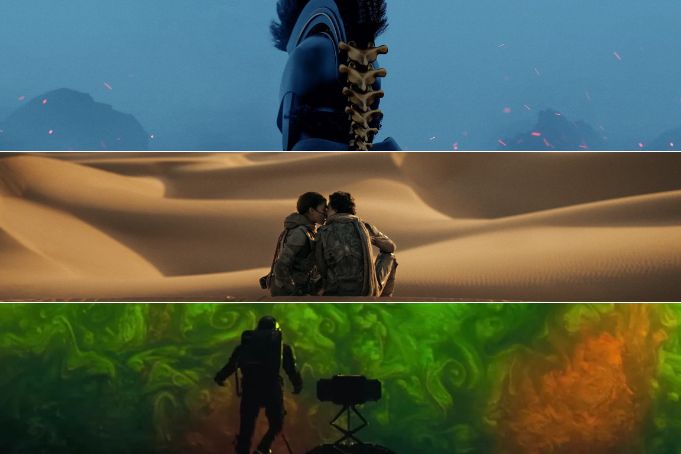
When “Frankenstein” director Guillermo del Toro said “F*ck AI” in his Gotham Awards speech, it resonated with creators and artists across industries. As artificial intelligence threatens to take over different aspects of creating art, there are still those who value the human experience of creating. It not only imbues the art with a soul but also lays a certain responsibility and accountability on the artist for what he creates that can easily be shirked off if the work is created by a machine.
Fortunately, we have analog-loving filmmakers who have mounted IMAX-sized spectacles using minimal to no AI. Their films are set in real locations and employ practical effects and inspired tricks to create absolute cinema. Here’s a list of five films, shot in IMAX or for IMAX screens, that have mounted entire fictional universes using some good old movie magic and no generative AI.
Project Hail Mary (2026)
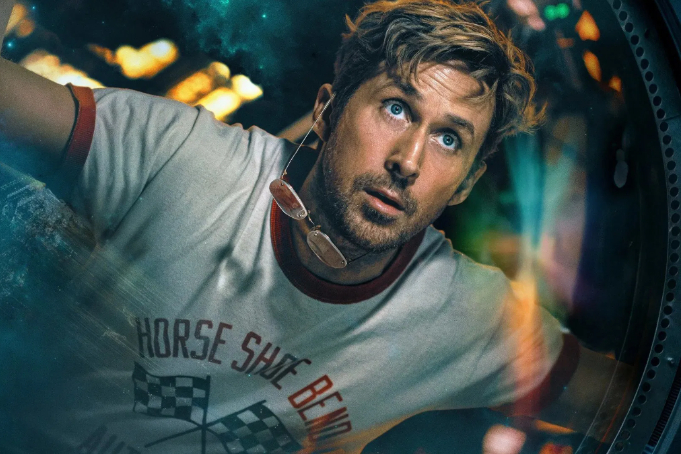
In his book, "Project Hail Mary," author Andy Weir wrote out any use of AI during the mission because he wanted Ryland Grace to use hard science and math to perform his experiments and solve problems. In the Ryan Gosling starrer, directors Phil Lord and Christopher Miller chose not to use any green or blue screens to show the interiors of Grace’s spaceship and constructed elaborate sets to give it a more authentic feel. Everyone’s new favourite alien, Rocky, too, was an actual animatronic puppet, designed, operated and voiced by theater artist James Ortiz.
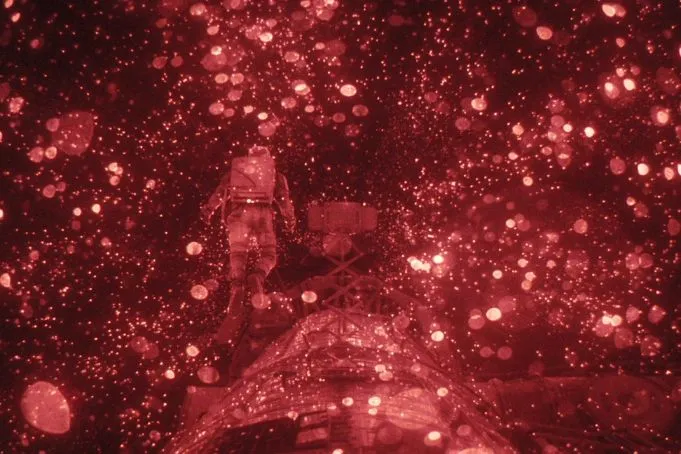
One of the most goosebumps-inducing scenes from the film is Gosling’s Ryland Grace standing in a swarm of glowing pink ‘astrophage.’ This scene, too, was shot using practical effects and a neat camera trick. The production crew built a cage around Gosling, fitted with chicken wire, on which tiny infrared LED lights that are invisible to the naked human eye were attached. Water was poured in front of the lens to refract the light. Cinematographer Greig Fraser then used two IMAX-certified ARRI Alexa 65 cameras with their infrared filters removed to shoot this scene, which allowed the cameras to “see” the lights, thus creating this stunning pink bokeh effect!
Related Stories
The Odyssey (2026)
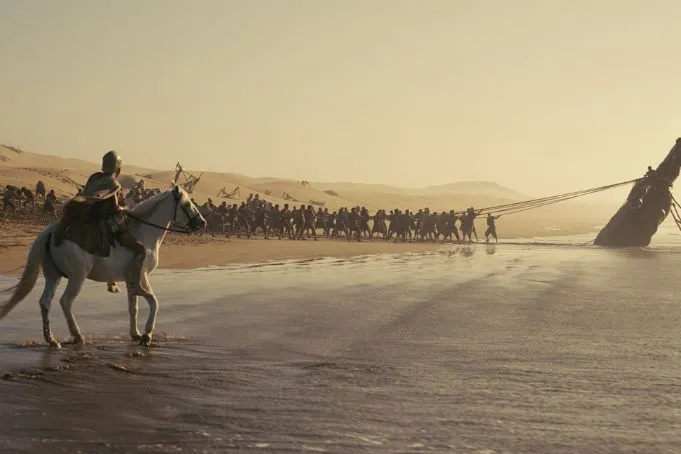
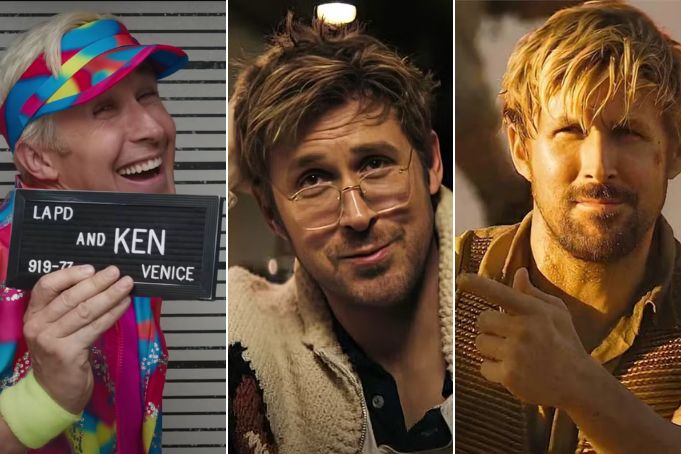
Christopher Nolan’s soon-to-be-released "The Odyssey" is the first feature film shot entirely on IMAX 70mm film cameras, and in true Nolan style, employs little to no AI and CGI. The film is shot in real locations in Greece, and actual life-sized animatronic creatures have been built to depict the monsters from the story, such as the Cyclops. Even the Trojan Horse is a life-size, tactile wooden figure.
In a 2023 interview with Wired, Christopher Nolan called himself “the old analog fusty filmmaker,” and has repeatedly proven it. For “Oppenheimer” he used a combination of real-world locations, analog “science experiments,” higher frame rates, forced perspectives and a layering of practical effects. Cinematographer Hoyte van Hoytema shot using IMAX cameras and customised lenses to make the explosion during the Trinity Test scene look the way it did. For both "Tenet" and "Dunkirk," too, Nolan opted for large-format IMAX cameras and real stunts to create authentic, larger-than-life visuals.
Dune: Part One and Two (2021, 2024)
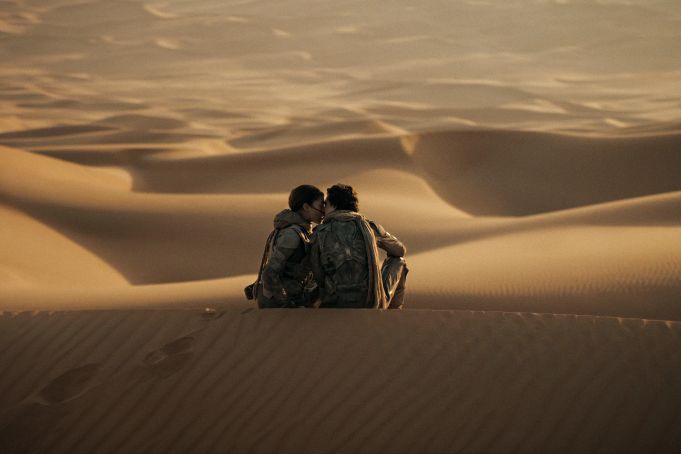
In the fictional world of Frank Herbert’s "Dune," thinking machines are forbidden. On filmmaker Denis Villeneuve’s sets, "Dune" comes alive in real-world locations like the deserts of Wadi Rum in Jordan and Liwa Oasis in Abu Dhabi, instead of CGI-created landscapes. Practical effects and real props, such as the life-size ornithopters we see on Arrakis, were used to make the planet and its analog technology feel real and possible. Cinematographer Greig Fraser shot on the ARRI Alexa cameras, transferred it to 35mm film stock and then scanned it back to digital to achieve the film's look and texture.
Villeneuve’s stance on AI is pretty clear; he has said he would miss the “collective act of creativity, which is so beautifully human” if films began being made using AI. Admittedly, Villeneuve and Fraser did use previsualization tools, which use AI, to help plan production, lighting and character blocking in the desert scenes. Furthermore, the blue eyes of the Fremen were achieved by VFX artists in post-production using an MLM (machine learning model) to track and mask the eyes of the actors.
Mission Impossible: The Final Reckoning (2025)
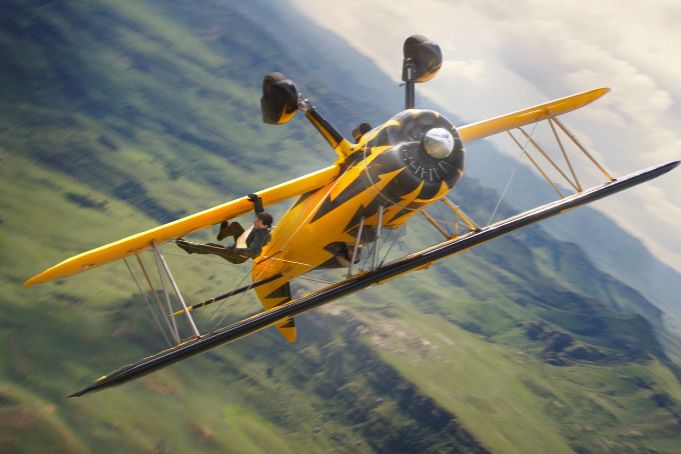
Tom Cruise barely uses stunt doubles to shoot those death-defying stunts. "Mission Impossible 7 and 8’s" main antagonist is The Entity, a sentient AI that wants to take control of the world. It would be awkward if these films employed AI to do the hard work, wouldn’t it? Christopher McQuarrie’s "Mission Impossible: Dead Reckoning Part One" and "The Final Reckoning" both feature mind-boggling stunts—like the underwater scene—in real locations and are captured using IMAX-certified digital cameras in an expanded IMAX aspect ratio. Any AI that might’ve been used was strictly in post-production for VFX to enhance what was filmed, de-age actors and clean up visuals.
Sinners (2025)
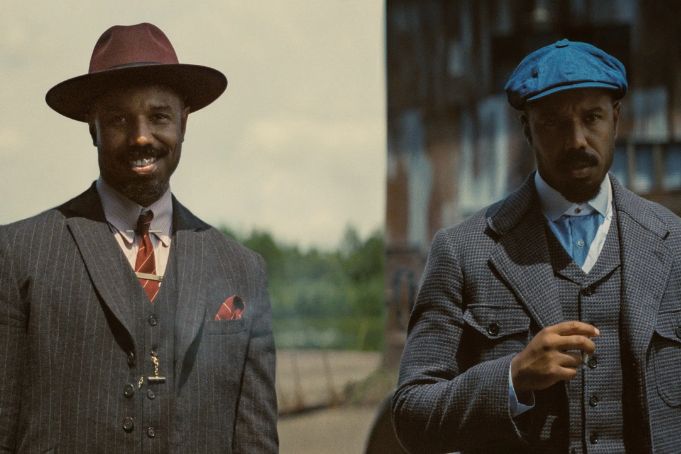
The custom Panavision lenses created for “Oppenheimer” were once again used to film Oscars history. Ryan Coogler’s "Sinners," shot by cinematographer Autumn Durald Arkapaw (who won an Oscar for it), looks like it’s straight outta the 1940s colour film era, not because of AI magic in post-production, but because of a grainy texture achieved using analog methods and manipulating celluloid properties.
Even the twinning shots of Michael B. Jordan’s Smoke and Stack were achieved by building a custom 360-degree Halo Rig, mounted with 10-12 cameras, that Jordan would wear. The rig helped capture his head movements from every angle. And only then was machine learning used to create a 3D avatar of his head that was superimposed on his body double.
Read More About: AI, Dune Part Three, IMAX, Mission: Impossible - Final Reckoning, Project Hail Mary, Sinners, The Odyssey

Most Popular







Comments are moderated. They may be edited for clarity and reprinting in whole or in part in Variety publications.