



Apr 12, 2026 6:48pm IST
Remembering Asha Bhosle: A Timeless Musical Legacy
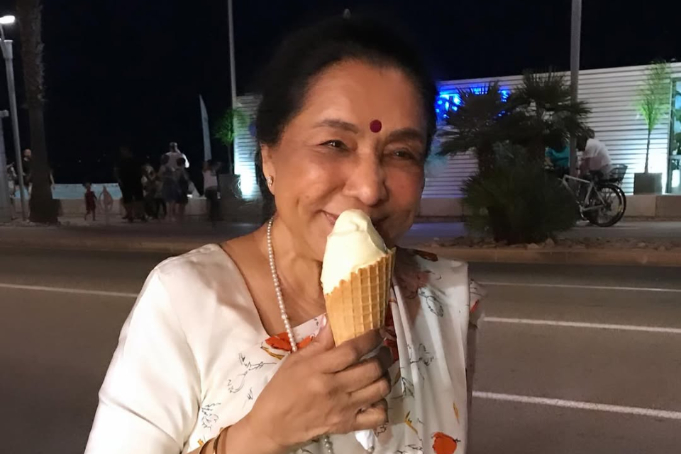
The last ‘hope’ (Asha) for film music has gone. Asha Bhosle is no more. On a personal level, just four days back, Variety India had connected with her son, Anand, for a possible interview. He explained that due to age-related factors, she was no longer talking to the media.
But for Asha, age was never a deterrent, nor did it ever slow her down. Her long and prolific career began at the tender age of 10 with a Marathi children’s song, “Chala Chala Nav Bala” for the Marathi film, “Mazhe Bal” and culminated with a lively film song concert in 2026 and a recorded track called “The Shadowy Light” by the British Group, Gorillaz, in their Fusion album, “Mountain (Parvat)” in February this year, in which she shared vocals with the Gorillaz, a British band, and Gruff Ryhs.
Related Stories


Here, we present the Asha Bhosle Files, priceless, piquant and powerful quotes from someone whose “voice will reverberate till eternity,” as lyricist Sameer Anjaan puts it. “The secret of what you term my ever-youthful voice is unceasing ‘riyaaz’ and no bad habits. I avoid both sour things and cold items like ice cream and this discipline has been inculcated in me since the age of 13.
“My riyaaz follows the usual pattern. I begin with the ‘kharaj’, the low notes, practice 'Sa' for 15 minutes and then gradually go higher. That is also perfect for preventing my voice from aging.
“More than moving with the times, I am more about Paani tera rang kaisa—I blend into everything. I see nothing wrong in singing the latest trendiest things and everything else. The new sounds are all about rhythm and beats, but there is little newness otherwise, as most composers are living off our old legends and their styles.
“Though I sing 'Sharaara' (“Mere Yaar Ki Shaadi Hai”/ 2002) or 'Khallas' (“Company” / 2002) in my concerts, even the children and youngsters crave older songs like 'Aaiye meherbaan' ('Howrah Bridge' / 1958) and know the lyrics! I agree that today’s music is right for youngsters, but they are crazy about older songs!
“Right from the beginning, I had the privilege of getting composers who were teachers as well, and also my brother, Pt. Hridaynath Mangeshkar. They taught me everything—how to concentrate on enhancing every word with my pronunciation, how to manage the breath and pauses, and how to infuse the correct and optimum bhavana (feeling) in my singing. Hansraj Behl, who introduced me to Hindi films with ‘Chunaria’(1948)taught me so much about Hindi and Urdu inflections. Outside films, there were Sudhir Phadke, Vasant Pawar and Ilaiyaraaja.
“The system of singing piecemeal is ruining a singer’s skills. There is no focus that we need to maintain a look at every aspect for five minutes to carry a song. On stage as well, today’s singers land in trouble as the quick-fix recordings rob their singing of emotions that are needed to touch you.
“The sibling rivalry between Lata (Mangeshkar) didi and me will always remain, as the media needs to write about us all the time!
“My sister and I were opposites. I think I have gone more on my father, while Lata didi has inherited more traits from my mother! From the beginning, I was a rebel! As a kid, I would shock my mother with blasphemous statements like ‘Show me where God is! If there is a God, why are we suffering so much?’ I was not even serious about singing! My attitude was majboori se gaana padta hai, (singing out of compulsion). It was only after a bad marriage that I became serious, as I had to support myself and my kids!
“Great singers in the world sing with a mix of their heart and their brain, aur tabhi gaana dil mein baith jayega!(That’s when the song occupies a place in one’s heart) That’s what differentiates singers from crooners. But a song is remembered primarily for the words and then the tune.
“Pancham (R.D. Burman)’s idea of companionship was sitting side by side with me on the sofa, his glass in hand, listening to all kinds of music till the wee hours of the morning, when I had to remind him to sleep or at least let me go to bed as I had a recording the next day!
“I first saw my husband at the recording of his father S.D. Burman’s song “Main Pankh Lagaake Udd Jaoon” from “Armaan” (1953). In walked this short, rather unimpressive child in shorts who asked for my autograph. Dada told me he was his only son. I then found him to be a regular and one day, I asked Dada in his presence, “Why do you allow him here? Let him complete his education first!” Pancham was so angry, he did not speak to me for days!”
“The secret of my long innings in a nutshell? One, I talk straight and I am frank with everyone. Two, people love me!”









Comments are moderated. They may be edited for clarity and reprinting in whole or in part in Variety publications.