



Apr 11, 2026 5:02pm IST
From ‘The Odyssey’ and ‘Avengers: Doomsday’ to ‘God of War’: Why 2026 is Quickly Proving to Be The Year of the Nerds!
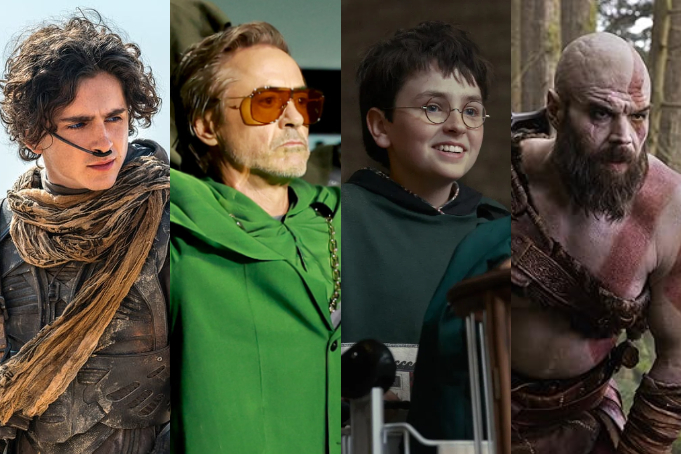
2026 is shaping up to be the year of the nerds in the most literal sense, with the biggest titles across film and streaming all rooted in books, comics and video games that already come with fiercely loyal fanbases. From sprawling literary epics to dense comic arcs and console-born mythologies, the mainstream is being driven by worlds audiences have long inhabited.
It is not the first time Hollywood has leaned this way, the late 1970s and 1980s saw early waves with "Star Wars" and "Batman" turning fandom into box office power, but what was once a growing trend now feels like the default setting. The difference in 2026 is scale and certainty. These are not experiments or calculated risks anymore, they are the main event, proving that “nerd culture” is no longer a subculture but the engine driving global entertainment.
Project Hail Mary: Science fiction rooted in problem solving and scale
Adapted from Project Hail Mary, this film signals a different kind of blockbuster ambition, one that leans heavily on science, isolation and character-driven tension rather than spectacle alone. It reflects a growing confidence in audiences to engage with dense, idea-led storytelling on a global scale. By staying close to its source material’s technical detail and emotional core, the film positions itself as proof that intellectually driven science fiction can exist comfortably within the mainstream theatrical space.
Dune: Part Three: The high point of book-to-blockbuster ambition
Few franchises right now capture the scale of literary adaptation like "Dune" . With "Dune: Part Three" , the journey through Dune’s dense universe continues without compromise. The film leans into its politics and philosophy instead of smoothing them out, proving that audiences are willing to engage with complexity if the world-building is immersive enough.
Related Stories
The Odyssey: Turning one of the oldest texts into spectacle
Adapting Homer's epic "The Odyssey" is less about retelling and more about reinterpreting. Its presence in a lineup like this shows how even foundational literature is now part of the blockbuster pipeline. If a story comes with legacy, it can be reimagined at scale.
Avengers: Doomsday: Comic-book storytelling at its most maximalist
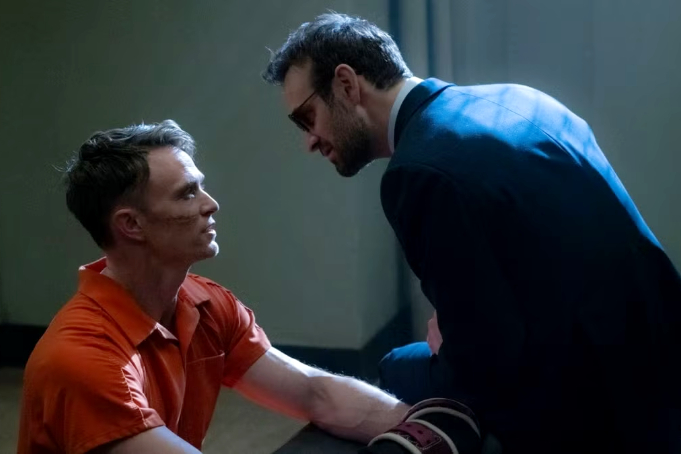
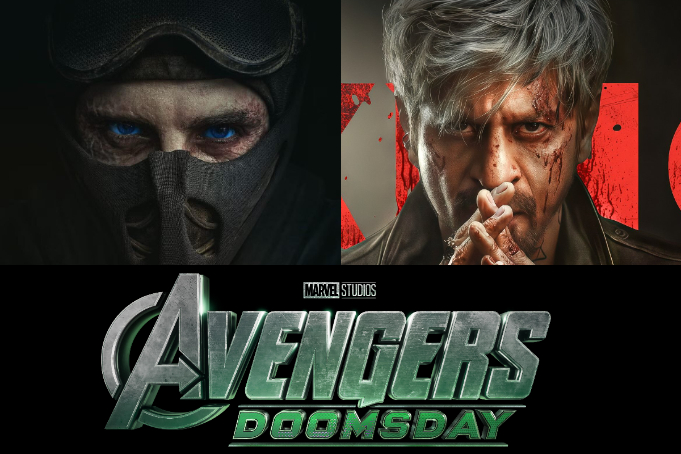
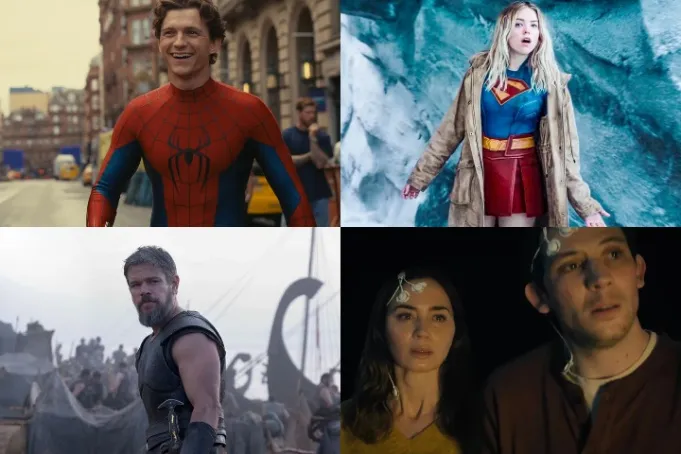
The Marvel machine isn’t pulling back. "Avengers: Doomsday" signals a deeper dive into comic lore, pulling from long-running arcs within Marvel Comics. These are no longer entry-level superhero films. They assume the audience already understands the mythology.
Spider-Man: Brand New Day: Leaning into fan memory and debate
By drawing from a divisive storyline within Marvel Comics, "Spider-Man: Brand New Day" reflects a new kind of confidence. Studios are no longer avoiding complicated arcs. They are embracing them, knowing the audience is already invested in the discourse.
Harry Potter: Expanding a beloved book's world for a new generation
Based on "Harry Potter," this long-form reboot shows how adaptation itself is evolving. Instead of compressing the books into films, the series format allows for expansion, detail and a more immersive return to a familiar world.
The Super Mario Galaxy Movie: Gaming IP goes cinematic
If there was any doubt about gaming IP dominating the mainstream, this should settle it. Built on the legacy of "The Super Mario Galaxy," the film represents how video game worlds are now being treated with the same seriousness and scale as books and comics. What was once considered risky territory is now prime blockbuster material.
God of War: Console mythology becomes prestige television
"God of War," based on the iconic "God of War" game, highlights how gaming narratives are moving into long-form storytelling. With rich mythology, emotional arcs and expansive worlds already built in, video games are no longer just influencing cinema: they are becoming it. The show is being made for Amazon Prime Video, with the first look revealed recently.
Taken together, these titles make one thing clear: 2026 is not just about franchises, it is about origin points. Books, comics and games are no longer source material sitting in the background. They are the main event.
The 1980s may have seen Hollywood’s first major adaptation boom, with comic books and genre novels turning into blockbusters, and the 1990s expanded that approach. But this moment feels far more assured. These are not experiments. They are fully formed ecosystems with global audiences already locked in.
The nerd is no longer niche. The nerd is the default.






Comments are moderated. They may be edited for clarity and reprinting in whole or in part in Variety publications.